Follow Us

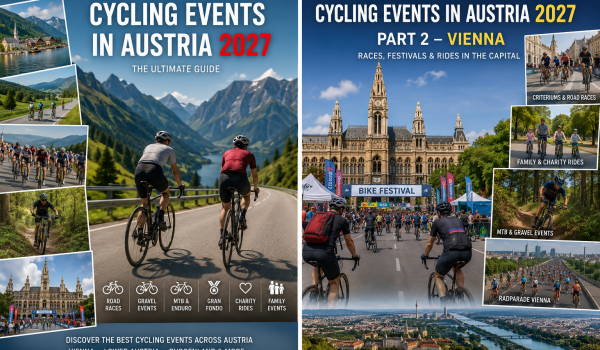
The Ultimate Guide to Cycling Events in Austria 2027

Part 4 – Burgenland: Austria’s Flattest Roads, Endless Vineyards and the Legendary Neusiedler See Radmarathon

“Ride Where Austria Meets Hungary – Endless Roads, World-Class Cycling and Europe’s Unique Steppe Landscape”


Welcome to Burgenland

When most cyclists think of Austria, they imagine steep Alpine passes, dramatic mountain scenery and endless climbing.

Burgenland is the exact opposite.

Located in Austria’s easternmost corner along the Hungarian border, Burgenland is the country’s sunniest federal state and home to some of the fastest, flattest and most enjoyable road cycling in Central Europe.

Instead of mountain passes, you’ll find open landscapes, vineyards, picturesque villages, quiet roads and one of Europe’s most remarkable natural wonders—the Lake Neusiedl (Neusiedler See).

For endurance cyclists, triathletes, beginners and gravel riders, Burgenland offers an experience unlike anywhere else in Austria.


Why Cyclists Love Burgenland

Burgenland may not have Austria’s highest mountains, but it offers something many riders value even more—consistency.

You can ride for hours without major climbs, making it one of the best destinations in Europe for:

  • endurance training;
  • Gran Fondo preparation;
  • first-time road cyclists;
  • family cycling holidays;
  • gravel adventures;
  • spring training camps;
  • e-bike touring.

The region enjoys one of Austria’s warmest climates, with many cyclists beginning their outdoor season here weeks before Alpine roads become snow-free.


Lake Neusiedl – Austria’s Cycling Paradise

Everything in Burgenland revolves around Lake Neusiedl.

Although commonly referred to as a lake, it behaves more like an inland sea.

It stretches across the Austrian-Hungarian border and is one of the largest steppe lakes in Europe.

Surprisingly, despite covering more than 300 km², the average depth is only around one metre.

Strong winds constantly shape the landscape, making the area famous not only among cyclists but also among sailors, windsurfers and birdwatchers.

The surrounding region has been designated a UNESCO World Heritage Cultural Landscape, reflecting the unique relationship between nature, traditional agriculture and centuries of winemaking.


The Neusiedler See Cycle Route (B10)

One of Austria’s most famous cycling routes is the Neusiedler See Cycle Route, often known as the B10.

This circular route follows the shores of the lake through Austria and Hungary.

Depending on the exact variation, the complete loop covers approximately 120–130 kilometres.

The route passes:

  • vineyards;
  • reed beds;
  • national park landscapes;
  • historic market towns;
  • traditional wine villages;
  • lakeside beaches;
  • nature reserves.

Its gentle terrain makes it suitable for cyclists of all abilities.


Neusiedler See Radmarathon

The highlight of Burgenland’s cycling calendar is undoubtedly the Neusiedler See Radmarathon.

This internationally recognised event attracts thousands of participants every year and is one of Austria’s premier road cycling races.

The event offers:

  • closed roads;
  • electronic timing;
  • excellent organisation;
  • professional feed stations;
  • spectacular scenery;
  • international participants.

Unlike many Alpine sportives, success here depends less on climbing ability and more on maintaining a strong, consistent pace across long open roads.

Wind often becomes the greatest challenge.


Why This Event Is Special

Many riders underestimate Burgenland because of its lack of mountains.

That is a mistake.

Strong crosswinds coming off the lake frequently split the field into groups, making positioning and teamwork just as important as physical fitness.

Professional riders often describe the race as “a battle against the wind rather than the terrain.”

For first-time Gran Fondo participants, however, the event remains approachable thanks to its predictable gradients and excellent support.


Difficulty

⭐⭐⭐☆☆

Physically moderate.

Tactically demanding.

Weather dependent.


Best Bike

A lightweight endurance road bike with aerodynamic wheels is ideal.

Comfort matters less than maintaining speed across long, exposed sections.


AustriaTrails Recommendation

Many participants fly into Vienna before travelling to Burgenland.

Rather than transporting a bicycle through airports and train stations, international visitors often choose to rent a premium road bike from AustriaTrails.

Our professionally serviced road bikes can be delivered to:

  • Vienna International Airport;
  • hotels in Vienna;
  • Eisenstadt;
  • Rust;
  • Neusiedl am See;
  • accommodation near the race start.

This allows riders to travel light while enjoying a race-ready bicycle prepared specifically for their measurements.


Eisenstadt – Haydn’s City

Burgenland’s capital, Eisenstadt, is much more than an administrative centre.

It is closely associated with the composer Joseph Haydn, who spent much of his career serving the Esterházy family.

Cyclists visiting Eisenstadt can combine excellent riding with cultural attractions such as:

  • Esterházy Palace;
  • Haydn Church;
  • historic old town;
  • traditional cafés;
  • wine taverns.

The surrounding roads are quiet, smooth and ideal for training.


Rust – Austria’s Wine Capital

Among cyclists, Rust is famous for its charming medieval streets.

Among wine lovers, it is legendary.

Rust has produced exceptional wines for centuries and is one of Austria’s most beautiful small towns.

After a long ride around Lake Neusiedl, many cyclists stop here to enjoy local cuisine and traditional wines.

The town is also famous for its white storks, which nest on rooftops throughout the historic centre.


Podersdorf am See

For many visitors, Podersdorf represents the classic image of Lake Neusiedl.

Its iconic lighthouse has become one of Austria’s most photographed cycling landmarks.

Here you’ll find:

  • beaches;
  • cafés;
  • bike rentals;
  • sailing schools;
  • kite surfers;
  • wide-open lake views.

The roads leading to Podersdorf are particularly popular among endurance cyclists.


National Park Neusiedler See–Seewinkel

Cycling in Burgenland isn’t only about roads.

The Neusiedler See–Seewinkel National Park protects one of Europe’s most important wetland ecosystems.

The region is home to more than 340 bird species, making it one of the continent’s premier birdwatching destinations.

While riding through the park, it’s common to see:

  • grey herons;
  • spoonbills;
  • white storks;
  • marsh harriers;
  • great egrets.

The open landscape creates an atmosphere unlike anywhere else in Austria.


Gravel Riding in Burgenland

Although Burgenland is famous for road cycling, it has quietly become one of Austria’s finest gravel destinations.

Hundreds of kilometres of gravel roads connect:

  • vineyards;
  • orchards;
  • reed beds;
  • forests;
  • agricultural tracks;
  • lakeside paths.

Most routes are technically easy, making them perfect for riders who want to experience gravel cycling without difficult mountain terrain.


Wine Country on Two Wheels

Burgenland is one of Austria’s leading wine-producing regions.

Cyclists frequently pass through villages where vineyards have been cultivated for generations.

Popular wine regions include:

  • Leithaberg;
  • Neusiedlersee DAC;
  • Mittelburgenland;
  • Eisenberg DAC.

For visitors, this creates a unique opportunity to combine cycling with wine tasting—preferably after the ride is finished.


Why Burgenland Is Perfect for Beginners

Many visitors assume Austria is suitable only for strong climbers.

Burgenland proves the opposite.

It is one of the easiest regions in Central Europe for recreational road cycling.

The gentle terrain allows cyclists to focus on:

  • improving endurance;
  • enjoying the scenery;
  • learning group riding;
  • increasing confidence;
  • covering longer distances.

It is also an excellent destination for couples where one rider has significantly more cycling experience than the other.


E-Bike Paradise

The region’s extensive network of paved cycling paths makes Burgenland particularly attractive for e-bike holidays.

Charging stations are widely available, and many villages offer cafés, restaurants and accommodation specifically catering to cyclists.

This combination of accessibility and infrastructure has made Burgenland one of Austria’s fastest-growing cycling tourism destinations.


Local Tip

If you plan to ride the complete Lake Neusiedl circuit, begin early in the morning.

The light over the reed beds is spectacular at sunrise, temperatures are cooler, and the afternoon winds are often significantly stronger.

Many experienced cyclists also choose to ride the loop clockwise, allowing them to enjoy some of the most scenic lake views during the second half of the day.


AustriaTrails Recommendation

Burgenland is only about one hour from Vienna, making it one of the easiest cycling regions to reach from AustriaTrails’ base.

Whether you’re planning to participate in the Neusiedler See Radmarathon, spend a weekend exploring the vineyards or complete the famous lake circuit, we can provide:

  • premium road bikes;
  • carbon gravel bikes;
  • touring e-bikes;
  • professional bike fitting;
  • helmet and accessories;
  • delivery to hotels, apartments and selected event locations.

Travelling with your own bicycle is no longer necessary—simply arrive in Austria and start riding.

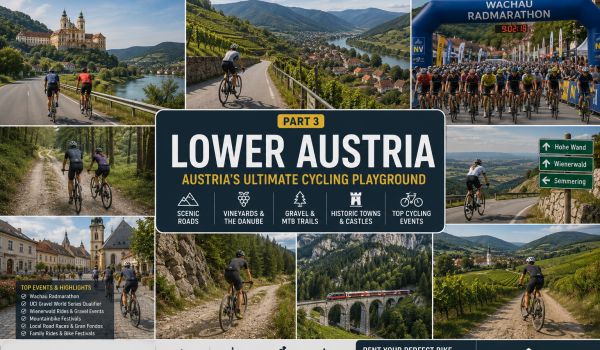
The Ultimate Guide to Cycling Events in Austria 2027 (part 3)

Part 3 – Lower Austria: Austria’s Ultimate Cycling Playground

“From the Vineyards of Wachau to the Forest Trails of Wienerwald”


Welcome to Lower Austria

If Vienna is the gateway to Austrian cycling, Lower Austria (Niederösterreich) is where the real adventure begins.

Stretching from the banks of the Danube River to the foothills of the Alps, Lower Austria is the country’s largest federal state and undoubtedly its most diverse cycling destination.

Few regions in Europe offer such an incredible variety of riding within a relatively compact area. In a single weekend, you can ride through UNESCO-listed vineyards, climb Alpine roads, explore dense forests, race along the Danube, tackle technical mountain bike trails, or participate in one of Austria’s largest cycling marathons.

For international cyclists, Lower Austria has another major advantage—it is incredibly accessible. Most of the region lies within one to two hours of Vienna International Airport, making it easy to arrive in the morning and be on the bike before lunch.

Whether you’re planning your first cycling holiday in Austria or returning to discover new routes, Lower Austria deserves several days—or even an entire week—of exploration.


Why Lower Austria Is the Best Cycling Region in Austria

Every Austrian region has its strengths.

Tyrol offers legendary Alpine climbs.

Salzburg boasts breathtaking lakes.

Burgenland provides endless flat roads and ideal spring conditions.

But Lower Austria combines everything.

Within a relatively short driving distance, you’ll find:

  • World-famous road cycling routes
  • UNESCO World Heritage landscapes
  • Hundreds of kilometres of gravel roads
  • Flowing mountain bike trails
  • Challenging Alpine climbs
  • Family-friendly cycling paths
  • Historic castles and monasteries
  • Traditional wine villages
  • Professional cycling events
  • International Gran Fondos
  • Quiet country roads with remarkably little traffic

This diversity makes Lower Austria a favourite destination not only for Austrian cyclists but also for riders from Germany, the Czech Republic, Slovakia, Hungary, Italy and beyond.


The Wachau Valley – Austria’s Cycling Jewel

If there is one place that every cyclist should visit, it is Wachau.

Recognised as a UNESCO World Heritage Site, the Wachau Valley stretches along the Danube River between Melk and Krems, offering one of Europe’s most scenic cycling landscapes.

Steep vineyards rise above medieval villages.

Ancient castles overlook the river.

Apricot orchards bloom in spring.

Terraces covered in grapevines create postcard-perfect views around every bend.

Unlike many famous cycling destinations that are defined by one spectacular climb, Wachau captivates riders through constant variety.

Every kilometre feels different.


Wachau Radmarathon (austria cycling events)

Without question, the most famous cycling event in Lower Austria is the Wachau Radmarathon.

Held annually in September, it attracts thousands of cyclists from across Europe.

Participants can choose from several distances, allowing both experienced racers and enthusiastic amateurs to enjoy the event.

Roads are lined with spectators.

Feed stations are exceptionally organised.

The atmosphere is relaxed yet highly professional.

Unlike purely competitive races, the Wachau Radmarathon feels like a celebration of cycling itself.


Why Riders Love It

Several features make this event special:

  • spectacular vineyard scenery;
  • quiet country roads;
  • excellent road surface;
  • well-organised logistics;
  • welcoming local communities;
  • manageable climbs suitable for strong amateurs.

The route rewards endurance rather than explosive climbing ability, making it an excellent choice for riders seeking their first major Gran Fondo experience.


Difficulty

⭐⭐⭐⭐☆

Intermediate to advanced.


Best Bike

A lightweight endurance road bike with 30–32 mm tyres offers an excellent balance between speed and comfort on Lower Austria’s varied roads.


AustriaTrails Recommendation

Many international riders choose to fly into Vienna and rent a premium road bike instead of transporting their own.

AustriaTrails delivers professionally prepared bicycles directly to hotels, apartments or accommodation throughout Vienna, Krems, Melk and the surrounding Wachau region.

This allows visitors to enjoy the event without worrying about airline baggage fees, oversized bike boxes or potential transport damage.


Krems an der Donau

Krems is often considered the unofficial cycling capital of Wachau.

The medieval town combines:

  • beautiful architecture;
  • excellent restaurants;
  • bicycle-friendly accommodation;
  • riverside cycling;
  • vineyard climbs;
  • gravel roads.

Many organised rides begin or finish here.

For cyclists, it is one of the best places to spend several nights.


Cycling Around Melk

Most visitors know Melk because of its magnificent Benedictine Abbey.

Cyclists know it for something else.

Fantastic roads.

Quiet villages.

Rolling vineyards.

Perfect tarmac.

Beautiful Danube scenery.

The surrounding area offers excellent riding for both beginners and experienced cyclists.


St. Pölten – More Than Just a Capital

As the capital of Lower Austria, St. Pölten is often overlooked by cyclists.

That is a mistake.

The surrounding region offers:

  • rolling hills;
  • quiet country roads;
  • fast endurance routes;
  • excellent cafés;
  • connections to numerous organised rides.

Several local cycling clubs organise recreational events throughout the season, creating a welcoming atmosphere for visiting riders.


Mödling – The Gateway to the Vienna Woods

Only a short distance south of Vienna lies Mödling, one of the best starting points for exploring the Wienerwald.

The area is famous for:

  • forest climbs;
  • panoramic viewpoints;
  • medieval castle ruins;
  • technical gravel tracks;
  • mountain bike routes.

For cyclists staying in Vienna, Mödling is often the first destination beyond the city limits—and one that quickly becomes a favourite.


Baden bei Wien – Spa Town Meets Cycling Paradise

Baden is internationally known for its thermal springs.

Cyclists know it for something entirely different.

The roads surrounding Baden provide:

  • smooth asphalt;
  • scenic vineyard climbs;
  • quiet forest roads;
  • excellent cafés;
  • countless route options.

Many local riders consider Baden one of Austria’s finest areas for year-round road cycling.


The Vienna Woods (Wienerwald)

No visit to Lower Austria is complete without riding through the Wienerwald.

This vast forest landscape begins almost at Vienna’s edge and stretches deep into Lower Austria.

Here you’ll discover:

  • endless gravel roads;
  • flowing forest trails;
  • hidden castles;
  • limestone cliffs;
  • panoramic viewpoints;
  • historic monasteries.

The terrain suits nearly every cycling discipline.

Road cyclists enjoy twisting forest roads with minimal traffic.

Gravel riders find hundreds of kilometres of compact forest tracks.

Mountain bikers can access legal trail networks and nearby trail centres.


Semmering – Austria’s Historic Mountain Pass

Few places combine sporting challenge and history like Semmering.

Known for its UNESCO-listed mountain railway, Semmering also offers some of Lower Austria’s most rewarding climbing routes.

Cyclists are treated to:

  • sweeping Alpine curves;
  • dense forests;
  • cool mountain air;
  • dramatic viewpoints.

Although less famous than Austria’s highest Alpine passes, Semmering provides an unforgettable experience without requiring elite-level fitness.


Gravel Cycling in Lower Austria

Lower Austria is rapidly becoming one of Europe’s premier gravel destinations.

Unlike many regions where gravel routes consist mainly of forestry roads, Lower Austria offers incredible diversity.

You can ride:

  • vineyard tracks;
  • riverside gravel;
  • Alpine fire roads;
  • forest double-track;
  • agricultural roads;
  • former military routes.

Many local route combinations exceed 100 kilometres while remaining almost entirely away from heavy traffic.


Hidden Cycling Gems

One of Lower Austria’s greatest strengths is how many remarkable places remain relatively undiscovered.

Among them:

  • Schloss Hof
  • Myra Waterfalls
  • Helenental
  • Hohe Wand
  • Schneeberg foothills
  • Gutenstein
  • Hainfeld
  • Lilienfeld
  • Pielach Valley
  • Triesting Valley

Each offers unique landscapes and outstanding cycling opportunities without the crowds often found in more famous Alpine destinations.


Why Lower Austria Should Be on Every Cyclist’s Bucket List

Some destinations impress you with one spectacular climb.

Others with a famous race.

Lower Austria is different.

It offers an entire cycling lifestyle.

Ride through vineyards in the morning.

Enjoy coffee in a medieval square.

Climb into forested hills.

Descend to the Danube.

Finish the day with local wine and traditional Austrian cuisine.

Very few regions in Europe deliver such variety within such short distances.


Coming Next

Part 4 will take us east to Burgenland, where we’ll explore the famous Neusiedler See Radmarathon, endless lakeside roads, gravel adventures, wine country, and one of the best regions in Europe for long-distance endurance cycling.

The Ultimate Guide to Cycling Events in Austria 2027 (part 2)

Part 2 – Vienna: The Cycling Capital of Austria


Vienna – Where Austria’s Cycling Season Begins

If Austria had one city that every cyclist should visit at least once, it would undoubtedly be Vienna.

The Austrian capital is far more than a historic city famous for imperial palaces, classical music and coffee houses. During the last decade Vienna has transformed itself into one of Central Europe’s most bicycle-friendly capitals, investing heavily in cycling infrastructure, new bike lanes and cycling tourism. Today the city attracts commuters, recreational riders, amateur racers, gravel enthusiasts and professional athletes from all over Europe.

For international visitors, Vienna is also the perfect gateway to Austrian cycling. Vienna International Airport offers direct flights from hundreds of cities, while excellent rail connections make it easy to reach every major cycling destination in the country.

For many cyclists, their Austrian adventure begins the moment they roll out from Vienna.


Why Vienna Is Perfect for Cycling

Unlike many European capitals, Vienna offers an exceptional variety of riding.

Within 20 minutes you can be:

  • riding fast intervals on the famous Prater Hauptallee
  • climbing into the Vienna Woods (Wienerwald)
  • cruising along the Danube
  • exploring vineyards
  • riding quiet roads towards Klosterneuburg
  • heading into Lower Austria
  • enjoying hundreds of kilometres of dedicated cycle paths

The city itself is relatively flat, making it suitable for cyclists of every fitness level.

If you want mountains, they’re only a short ride away.


Cycling Infrastructure

Vienna consistently ranks among Europe’s best cities for cycling.

Visitors appreciate:

  • excellent road quality
  • clearly marked bike lanes
  • numerous bicycle repair stations
  • public drinking fountains
  • bike-friendly public transport
  • secure bicycle parking
  • thousands of rental bike parking locations

This makes Vienna especially attractive for riders visiting Austria for the first time.


Cycling Events in Vienna

Unlike the Alpine regions, Vienna is less about brutal mountain races and more about:

  • cycling festivals
  • road events
  • criteriums
  • family rides
  • charity events
  • BMX
  • freestyle competitions
  • community cycling
  • urban cycling culture

This unique atmosphere makes Vienna an excellent destination even for cyclists who never plan to race.


The Biggest Cycling Event in Vienna

Bike Festival Vienna (ARGUS Bike Festival)

Without question, the largest cycling event in Austria is the Bike Festival Vienna, traditionally held on Rathausplatz in front of the magnificent Vienna City Hall.

The 2027 edition is scheduled for 10–11 April 2027 and is expected to attract well over 100,000 visitors across the weekend. Admission is free.

Unlike a traditional race, this is a celebration of everything related to bicycles.

Visitors can explore:

  • more than 100 exhibitors
  • the latest road bikes
  • gravel bikes
  • mountain bikes
  • e-bikes
  • cargo bikes
  • cycling accessories
  • cycling tourism destinations
  • workshops
  • family activities
  • stunt shows
  • test rides
  • cycling clubs
  • food courts

For anyone planning a cycling holiday in Austria, this is arguably the best weekend of the year to visit Vienna.


Test the Latest Bikes

One of the festival’s biggest attractions is the opportunity to test dozens of bicycles from leading manufacturers.

Visitors can compare:

  • carbon road bikes
  • endurance bikes
  • aero bikes
  • gravel bikes
  • e-MTBs
  • trekking bikes
  • cargo bikes

Instead of relying solely on specifications, you can actually ride different models before making a purchasing decision.


Dirt Battle Vienna

One of the most spectacular attractions is Dirt Battle Vienna.

Professional riders perform enormous jumps, tricks and aerial manoeuvres on specially constructed dirt ramps.

Even visitors with little interest in mountain biking usually stop to watch.

The event continues the legacy of Vienna’s internationally known freestyle competitions and regularly attracts elite riders from across Europe.


E-MTB Arena

Electric mountain bikes have become one of the fastest-growing segments of the cycling industry.

At the Bike Festival you can experience:

  • technical test tracks
  • climbing demonstrations
  • coaching sessions
  • riding clinics
  • professional advice

For many visitors this becomes their first experience riding a modern e-MTB.


Kids Bike World

Families are an important part of Austrian cycling culture.

The dedicated Kids Bike World offers:

  • balance bike courses
  • children’s obstacle courses
  • bicycle safety education
  • free bike testing
  • supervised activities

Young riders can try premium children’s bicycles in a safe environment with equipment checks and age-appropriate courses.


The Famous RADpaRADe

Perhaps the most iconic moment of the festival weekend is the RADpaRADe.

Thousands of cyclists ride together through the heart of Vienna on roads that are temporarily closed to motor traffic.

Imagine cycling around the famous Ringstraße while passing:

  • Vienna State Opera
  • Parliament
  • Burgtheater
  • Hofburg Palace
  • MuseumsQuartier
  • Rathaus

The atmosphere is unforgettable.

It isn’t a race.

It is a celebration of cycling.

For many visitors, this is the highlight of the entire weekend.


Who Should Visit the Bike Festival?

The answer is simple:

Everyone.

Whether you are:

  • a beginner
  • an experienced cyclist
  • a family
  • a tourist
  • a racer
  • an e-bike rider

there is something to enjoy.


Road Cycling Around Vienna

Although Vienna itself hosts relatively few large competitive road races compared with Austria’s Alpine regions, it serves as the starting point for some of the country’s finest road rides.

Popular training destinations include:

Vienna – Klosterneuburg

A classic warm-up ride.

Rolling roads.

Excellent asphalt.

Beautiful Danube views.

Perfect for endurance training.


Vienna – Kahlenberg

Probably Vienna’s most famous climb.

Only a few kilometres long.

Steep enough to challenge experienced cyclists.

The panoramic views over Vienna are spectacular.

Professional riders frequently include it in their training.


Vienna – Leopoldsberg

Often combined with Kahlenberg.

Narrow roads.

Forest scenery.

Minimal traffic during weekdays.

One of the city’s favourite training climbs.


Vienna – Wienerwald

The Vienna Woods offer hundreds of kilometres of quiet roads.

Perfect for:

  • long endurance rides
  • climbing practice
  • gravel adventures
  • café stops
  • weekend cycling

This area forms the natural bridge between Vienna and Lower Austria.


Gravel Riding Near Vienna

Few visitors realise how much gravel riding surrounds Vienna.

Within minutes of leaving the city you can discover:

  • forest roads
  • vineyard trails
  • military roads
  • river paths
  • nature reserves

Popular gravel destinations include:

  • Lainzer Tiergarten
  • Wienerwald
  • Bisamberg
  • Marchfeld
  • Lobau National Park

Many gravel cyclists spend an entire week exploring these routes without repeating a single ride.


Mountain Biking

Although Vienna is a major city, mountain biking is surprisingly accessible.

The Vienna Woods feature legal MTB trails for riders of different abilities, while nearby trail centres provide purpose-built routes with climbs, descents and technical sections.

Within an hour’s drive, riders can also reach some of Lower Austria’s best mountain bike destinations.


Cycling Clubs and Community Events

Vienna has one of Austria’s largest cycling communities.

Throughout the year you’ll find:

  • group rides
  • women’s rides
  • charity rides
  • beginner rides
  • gravel meetups
  • social coffee rides
  • bikepacking gatherings

Many events welcome international participants, making them an excellent opportunity to meet local cyclists.


Why Vienna Is the Best Starting Point for a Cycling Holiday

Even if your main goal is riding in the Alps or participating in a marathon elsewhere in Austria, Vienna remains the most practical arrival point.

Advantages include:

  • the country’s largest airport
  • extensive hotel options
  • excellent rail network
  • easy motorway access
  • numerous bicycle shops
  • experienced mechanics
  • convenient access to Lower Austria and Burgenland

You can land in the morning and be riding before lunchtime.


AustriaTrails Recommendation – Rent Your Bike in Vienna

For international cyclists, Vienna is the most convenient place to start a cycling adventure.

Instead of transporting your own bicycle through airports, train stations and hotels, many riders now prefer to rent a premium bike upon arrival.

AustriaTrails offers:

  • Premium carbon road bikes
  • High-performance gravel bikes
  • Full-suspension mountain bikes
  • Touring e-bikes
  • Electric mountain bikes

Every bicycle is professionally serviced, adjusted to your measurements and ready to ride.

Delivery is available to:

  • Vienna International Airport
  • Hotels
  • Apartments
  • Business addresses
  • Selected cycling events
  • Vienna city centre

This allows you to arrive with only your cycling shoes, helmet and clothing while avoiding airline bike fees, oversized luggage and the risk of transport damage.


Local Tip

If you’re visiting Vienna for the Bike Festival, don’t leave immediately afterward.

Spend at least three or four additional days exploring the surrounding cycling routes. Within an hour of the city you can ride through vineyards, medieval towns, Danube river landscapes and the forest roads of the Wienerwald—an experience that perfectly complements the urban cycling atmosphere of the festival.


Coming Next

In Part 3, we’ll leave the capital and head into Lower Austria—the country’s most diverse cycling region.

You’ll discover legendary events such as the Wachau Radmarathon, races around St. Pölten, Krems, Mödling, Baden, Wiener Neustadt, Semmering, and dozens of road, gravel and mountain bike events that make Lower Austria one of the finest cycling destinations in Europe.

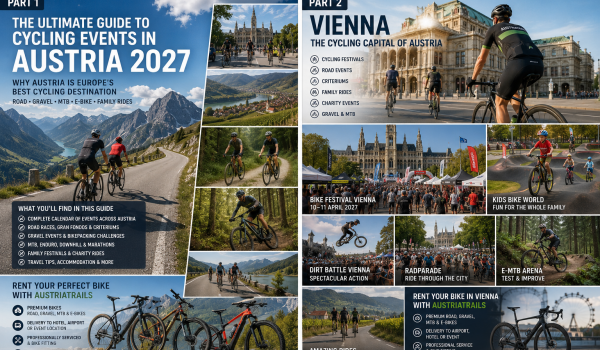
The Ultimate Guide to Cycling Events in Austria 2027 (part 1)

Part 1 — Why Austria Is One of Europe’s Best Cycling Destinations (And How to Choose the Perfect Event)

The Complete Guide for Road Cyclists, Gravel Riders, Mountain Bikers and E-Bike Enthusiasts


Welcome to Austria – Europe’s Cycling Paradise

If there is one country that perfectly combines breathtaking scenery, world-class roads, legendary mountain passes, charming villages, outstanding infrastructure and a deep cycling culture, it is Austria.

Every year, hundreds of thousands of cyclists travel from Germany, the Netherlands, Belgium, Italy, Switzerland, the United Kingdom, the United States and many other countries to experience riding in the Austrian Alps, the Danube Valley, Vienna Woods, Wachau vineyards, Lake Neusiedl, Salzkammergut and countless hidden gems.

Austria is home to:

  • UCI-sanctioned races
  • Gran Fondos
  • Road marathons
  • Gravel adventures
  • Mountain bike festivals
  • XC and Enduro competitions
  • Downhill races
  • Family cycling festivals
  • Charity rides
  • Kids races
  • Ultra-distance events
  • Multi-day stage races
  • Bikepacking challenges

Whether you are an elite racer chasing podiums or simply looking for your first amateur cycling event, Austria offers an incredible calendar throughout the year. Many major events return annually, while organizers continue to confirm dates and details for the 2027 season as registration progresses.

This guide has been created to become the most comprehensive English-language resource about cycling events in Austria cycling events 2027

By the time you finish reading, you’ll know:

  • which events suit your riding style;
  • which races are worth travelling for;
  • how difficult each event is;
  • which bicycle you should ride;
  • where to stay;
  • how to travel;
  • and how to make your cycling trip to Austria as easy as possible.

Why Austria Is One of Europe’s Greatest Cycling Countries

Many visitors immediately think about France, Italy or Spain when planning a cycling holiday.

Austria deserves to be on that same list.

Few countries combine such a variety of landscapes within relatively short travel distances.

Within a single week you can ride:

  • flat lakeside roads around Lake Neusiedl,
  • rolling vineyards in Lower Austria,
  • fast Danube cycle routes,
  • technical Alpine climbs,
  • world-famous mountain passes,
  • dense forest gravel roads,
  • flowy mountain bike parks,
  • historic city centres,
  • and quiet countryside roads with almost no traffic.

That diversity is exactly why Austria hosts such a wide variety of cycling events.


Why International Riders Love Austrian Events

Austria has built an excellent reputation among international cyclists.

Some of the biggest reasons include:

Exceptional road quality

Many roads are smooth enough to rival professional race venues.

Road cyclists immediately notice the difference.


Outstanding safety

Compared to many European countries, Austrian roads are generally well maintained, clearly signposted and supported by excellent emergency services during organised events.


Efficient transport

Austria is compact.

You can fly into Vienna, Salzburg, Graz or Innsbruck and reach most cycling destinations within only a few hours.


Incredible scenery

Every ride feels different.

One weekend you might ride through vineyards overlooking the Danube.

The next you’re climbing above 2,000 metres surrounded by glaciers.


Professional organisation

Most Austrian events are organised extremely well.

Typical features include:

  • electronic timing;
  • closed roads or managed traffic;
  • well-stocked feed stations;
  • medical support;
  • mechanical assistance;
  • professional signage.

This makes Austria particularly attractive for first-time participants.


Austria Is Not Only About Mountains

Many international cyclists imagine Austria as one enormous mountain range.

That is only partly true.

In reality, every region offers completely different terrain.

Vienna

Ideal for:

  • beginners;
  • road cycling;
  • urban events;
  • charity rides;
  • cycling festivals;
  • family cycling.

Lower Austria

Perhaps the most diverse cycling region.

You can find:

  • Danube roads;
  • vineyards;
  • rolling hills;
  • gravel forests;
  • Alpine climbs;
  • marathon events.

This region alone deserves an entire cycling holiday.


Burgenland

Completely different.

Wide open landscapes.

Lake Neusiedl.

Wine villages.

Gentle roads.

Perfect for:

  • endurance rides;
  • gravel;
  • beginners;
  • spring training camps;
  • Gran Fondos.

Styria

Known for long climbs, forests and excellent mountain biking.


Tyrol

The kingdom of Alpine cycling.

Many legendary climbs begin here.


Salzburg

Mountain lakes.

Historic villages.

Beautiful but demanding terrain.


Carinthia

One of Austria’s sunniest regions.

Ideal for long-distance road cycling.


Vorarlberg

Small but spectacular.

Excellent mountain scenery.


Which Type of Event Is Right for You?

Austria offers something for every cyclist.

Let’s look at the main categories.


Road Cycling Events

Perfect if you enjoy:

  • speed;
  • climbing;
  • endurance;
  • professional atmosphere.

These events range from beginner-friendly sportives to internationally recognised Gran Fondos.

Typical distances:

  • 60 km
  • 90 km
  • 120 km
  • 150 km
  • 200+ km

Recommended bike

An endurance road bike.

Lightweight.

Reliable.

Comfortable enough for several hours in the saddle.


AustriaTrails Recommendation

Travelling with a road bike can be expensive.

Many airlines charge significant oversize baggage fees, and transporting a bike box adds complexity to your trip.

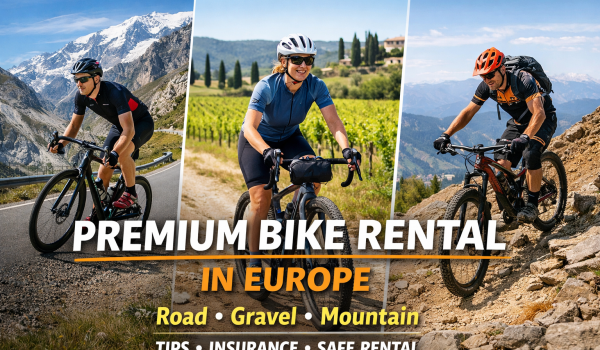
Instead, many international riders choose to rent a professionally maintained premium road bike upon arrival.

AustriaTrails offers modern road bikes from leading manufacturers, professionally serviced and adjusted before every rental. Delivery is available to hotels, apartments, Vienna International Airport, and many event locations across Vienna, Lower Austria and Burgenland.


Gravel Events

Gravel cycling continues to grow faster than almost any other cycling discipline.

Austria is perfectly suited for it.

Thousands of kilometres of:

  • forest roads;
  • vineyard trails;
  • alpine gravel;
  • old military roads;
  • river paths.

Many new gravel races appear every year.


Recommended bike

A dedicated gravel bike.

Tyres between:

38–45 mm

are usually ideal.


Mountain Bike Events

Austria is one of Europe’s mountain bike capitals.

Expect:

  • marathon races;
  • XC;
  • Enduro;
  • Downhill;
  • Bike parks;
  • technical Alpine trails.

These events attract riders from across Europe.


Recommended bike

Depends on the event.

Usually:

  • XC hardtail
  • Full suspension trail bike
  • Enduro bike

Family Cycling Festivals

Not every cycling event is a race.

Austria also hosts many festivals where families can enjoy:

  • demo bikes;
  • kids courses;
  • pump tracks;
  • skills parks;
  • food trucks;
  • live music;
  • cycling exhibitions.

One of the best-known examples is Vienna’s major annual bicycle festival, which combines exhibitions, demonstrations, test rides and activities for riders of all ages. The 2027 edition is scheduled for April 10–11.


Charity Rides

Many Austrian cycling events support:

  • children’s hospitals;
  • cancer research;
  • local communities;
  • environmental initiatives.

These rides are usually non-competitive.

Perfect for recreational cyclists.


Gran Fondos

Perhaps the most exciting category.

Gran Fondos combine:

  • closed roads;
  • thousands of participants;
  • professional timing;
  • spectacular scenery.

Austria hosts several internationally recognised Gran Fondo events, including the UCI Neusiedler See Radmarathon in Burgenland.


Why More Cyclists Are Renting Bikes Instead of Flying With Them

This trend is growing rapidly.

Reasons include:

✔ Airline fees

✔ Risk of damage

✔ Lost luggage

✔ Transport inconvenience

✔ Hotel storage

✔ Assembly time

✔ Airport transfers

Many experienced cyclists now travel with nothing more than:

  • shoes;
  • helmet;
  • pedals;
  • cycling clothing.

Everything else is waiting for them.


Why Rent From AustriaTrails?

AustriaTrails specializes in premium bicycle rentals for riders travelling to Austria.

Instead of transporting your own bike, you can reserve a professionally maintained bicycle that is prepared specifically for your measurements and riding style.

Available categories include:

  • Premium Road Bikes
  • Carbon Gravel Bikes
  • Full Suspension Mountain Bikes
  • Hardtail MTBs
  • Touring E-Bikes
  • Electric Mountain Bikes

Each bicycle is serviced before every rental and can be delivered to your hotel, apartment, airport or selected cycling event within Vienna, Lower Austria and Burgenland.

For visitors arriving from overseas or travelling by train, this often saves time, reduces transport costs and eliminates the risk of damage during transit.


What You’ll Find in the Rest of This Guide

In the following chapters, we’ll explore every major cycling region of Austria.

You’ll discover:

  • the biggest races;
  • hidden local events;
  • gravel festivals;
  • MTB competitions;
  • charity rides;
  • family festivals;
  • road marathons;
  • cycling weekends worth travelling for.

We’ll also explain:

  • which events are best for beginners;
  • where to stay;
  • which bike to rent;
  • how to reach each venue;
  • and what else to explore while you’re there.

Next: Part 2 – Vienna: The Complete Guide to Cycling Events in Austria’s Capital, where we’ll cover the city’s flagship cycling festivals, road races, criteriums, family events, charity rides, and why Vienna is one of the best starting points for an unforgettable cycling holiday in Austria.

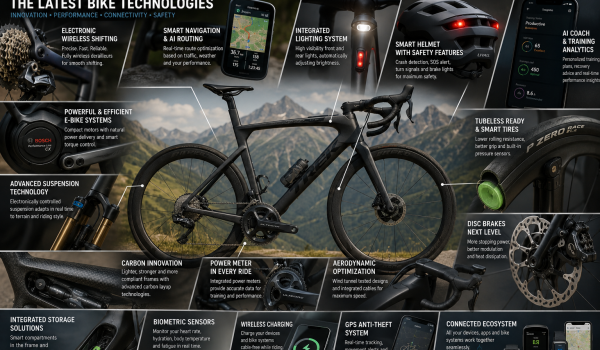
The Future of Cycling in 2035

How Technology, Artificial Intelligence and New Mobility Will Transform the Bicycle Industry

By AustriaTrails


Part 1 — The Bicycle Is About to Change More in the Next 10 Years Than It Did in the Previous 50

Introduction

For more than a century, the bicycle has remained one of humanity’s most elegant inventions. Two wheels, a lightweight frame, pedals, a chain, and handlebars have defined cycling since the late nineteenth century. While materials evolved—from steel to aluminum, titanium, and carbon fiber—and components became lighter and more precise, the bicycle itself changed gradually.

The next decade will be different.

Artificial intelligence, robotics, advanced batteries, smart materials, additive manufacturing, and connected mobility are converging at unprecedented speed. At the same time, cities are redesigning streets for bicycles, governments are investing heavily in cycling infrastructure, and consumers increasingly expect their vehicles to be connected, intelligent, and personalized.

The bicycle of 2035 will still have two wheels. But almost everything else—from the way it is designed and manufactured to how it assists, protects, and interacts with its rider—may be fundamentally different.

This article explores the technologies most likely to shape cycling over the next decade, distinguishes between confirmed industry trends and informed forecasts, and offers a vision of where bicycles may be heading by 2035.


Why Cycling Is Entering a New Era

The bicycle industry has experienced several technological revolutions.

The first was mass production, which made bicycles affordable.

The second came with lightweight aluminum and carbon fiber frames.

The third introduced suspension systems and hydraulic disc brakes.

The fourth brought electric assistance.

Today, we are entering what could become the fifth revolution: intelligent bicycles.

Unlike previous advances, this transformation is not driven by a single invention. Instead, multiple technologies are maturing simultaneously:

  • artificial intelligence;
  • cloud connectivity;
  • advanced sensors;
  • powerful electric drive systems;
  • solid-state battery research;
  • digital manufacturing;
  • predictive maintenance;
  • autonomous safety systems.

For the first time, bicycles are beginning to behave like computers on wheels.


The Biggest Trends Already Changing Cycling

Many futuristic concepts are no longer theoretical.

Electronic shifting, once reserved for professional racing, is steadily expanding into more product segments. Wireless drivetrains reduce cable routing, simplify assembly, and enable continuous software improvements.

Suspension manufacturers are experimenting with electronically controlled damping.

Electric bicycles have become lighter, quieter, and significantly more powerful.

Navigation systems now integrate live weather, route recommendations, and performance analytics.

Fitness data increasingly influences riding experience in real time.

The important question is no longer whether bicycles will become smarter, but how quickly.


Materials of the Future

For years, carbon fiber represented the pinnacle of bicycle engineering.

By 2035, carbon will remain important, but it may no longer dominate premium manufacturing.

Several promising directions are emerging.

Advanced Carbon Composites

Future carbon frames are expected to become more damage-resistant through improved resin systems and manufacturing methods. Small impacts that currently require professional inspection may become less critical thanks to tougher composite structures.

Manufacturers are also exploring automated carbon layup using robotic systems, improving consistency while reducing production costs.


Thermoplastic Carbon

Unlike conventional thermoset composites, thermoplastic carbon can be reheated and reshaped.

Potential advantages include:

  • easier recycling;
  • faster manufacturing;
  • simplified repairs;
  • reduced waste.

This technology could significantly improve the environmental footprint of high-end bicycles.


Graphene-Enhanced Materials

Graphene has long been promoted as a revolutionary material.

Although expectations were initially exaggerated, practical applications continue to grow.

Future bicycles may use graphene not as a primary structural material but as a reinforcement inside composite layers.

Possible benefits include:

  • increased stiffness;
  • improved vibration damping;
  • better heat dissipation;
  • greater resistance to fatigue.

Bio-Based Composites

Environmental concerns are encouraging manufacturers to investigate renewable fibers.

Flax, bamboo, hemp, and recycled carbon may become common in commuter and touring bicycles.

These materials may never replace aerospace-grade carbon in professional racing, but they could dramatically reduce manufacturing emissions.


Manufacturing Will Change Completely

Today’s bicycle factories rely heavily on manual labor.

By 2035, manufacturing could become highly automated.

Robotic carbon layup.

AI quality inspection.

Digital twins for every frame.

Automated paint systems.

3D-printed titanium lugs.

On-demand production.

Instead of warehouses filled with thousands of bicycles, manufacturers may increasingly build bicycles only after customers place orders.


Artificial Intelligence Becomes the Invisible Mechanic

The bicycle itself may remain mechanically simple.

Its intelligence, however, will increase dramatically.

Future bikes will constantly analyze:

  • cadence;
  • power output;
  • heart rate;
  • rider fatigue;
  • terrain;
  • wind;
  • temperature;
  • tire pressure;
  • battery status;
  • drivetrain wear.

Rather than displaying raw numbers, AI systems will interpret this information and make recommendations.

Examples:

“Shift earlier to reduce fatigue.”

“Lower tire pressure by 0.15 bar.”

“Recharge tonight for tomorrow’s planned ride.”

“Your rear brake pads have approximately 200 km remaining.”

Instead of replacing cyclists, AI will function as an experienced coach and mechanic riding alongside them.


Predictive Maintenance

One of the most practical applications of AI will be maintenance.

Today’s servicing is usually based on mileage.

Tomorrow it will be based on actual component condition.

Every ride generates valuable information:

  • vibration;
  • bearing resistance;
  • brake temperature;
  • drivetrain efficiency;
  • suspension movement.

Machine-learning algorithms will detect subtle changes long before riders notice problems.

Imagine receiving a notification saying:

“Front wheel bearing expected to require replacement within the next 400 km.”

Or:

“Chain wear accelerating due to recent muddy rides.”

Unexpected mechanical failures could become significantly less common.


The Future of Electric Bikes

Electric bicycles have already transformed commuting.

By 2035, they may redefine nearly every cycling discipline.


Motors Become Smaller and Smarter

Power is no longer the main challenge.

Efficiency is.

Future motors will focus on:

  • lower weight;
  • quieter operation;
  • smoother assistance;
  • intelligent torque delivery.

Instead of fixed assistance modes, AI could continuously adjust motor behavior based on:

  • rider fitness;
  • road gradient;
  • weather;
  • battery level;
  • destination.

The bike will understand not only where you are riding—but why.


Batteries

Battery technology remains one of the biggest unknowns.

Solid-state batteries are widely viewed as a promising direction, though large-scale adoption timelines remain uncertain.

If manufacturing challenges are overcome, potential benefits include:

  • higher energy density;
  • faster charging;
  • lower fire risk;
  • longer lifespan.

Even without a breakthrough, incremental improvements are likely to deliver lighter batteries with greater range over the coming decade.


Charging

Charging infrastructure will become increasingly diverse.

Possible developments include:

  • wireless charging stands;
  • solar-assisted charging;
  • removable battery ecosystems;
  • regenerative charging during long descents (useful but unlikely to replace conventional charging due to physical limits).

Gravel Bikes in 2035

No category has grown faster over the past decade than gravel.

Its flexibility perfectly matches modern cycling culture.

By 2035, gravel bikes may become even more versatile.

Possible innovations:

  • electronically adjustable geometry;
  • adaptive tire pressure systems;
  • integrated storage compartments;
  • built-in emergency lighting;
  • satellite communication for remote adventures.

Rather than choosing between road and mountain bikes, many cyclists may own a single intelligent gravel platform capable of adapting to multiple environments.


Mountain Bikes Become Digital

Mountain biking will benefit enormously from intelligent systems.

Future bikes could automatically recognize terrain.

As riders enter technical descents:

  • suspension stiffens or softens automatically;
  • dropper post adjusts itself;
  • motor response changes;
  • traction algorithms optimize power delivery.

The rider remains in control—but technology quietly enhances performance.

Electronic suspension already exists in early forms today. By 2035, such systems may become far more integrated, faster, and more affordable.


Road Bikes Remain Pure—but Smarter

Road cyclists value efficiency above everything else.

Therefore, technological changes will remain subtle.

Instead of dramatic visual redesigns, future road bikes may feature:

  • invisible sensors;
  • integrated radar;
  • aerodynamic lighting;
  • predictive shifting;
  • AI pacing during climbs;
  • automatic nutrition reminders during long rides.

Professional racing will continue influencing consumer products, but software improvements may become as important as mechanical upgrades.


Urban Cycling Will Change the Most

The biggest transformation may occur not in sport—but in cities.

Future urban bicycles may communicate with traffic lights, navigation systems, and smart infrastructure.

Possible features include:

  • automatic theft detection;
  • integrated GPS recovery;
  • collision prediction;
  • adaptive front lighting;
  • voice interaction;
  • biometric unlocking.

The bicycle may increasingly become part of the broader smart-city ecosystem rather than remaining an isolated vehicle.


Cycling Safety Will Become Proactive

Most current safety technologies react after danger appears.

Future systems may attempt to predict accidents before they happen.

Examples include:

  • radar detecting fast-approaching vehicles;
  • AI identifying dangerous overtaking situations;
  • automatic brake light activation;
  • vibration warnings through handlebars;
  • helmet communication systems.

Rather than replacing rider awareness, these technologies aim to provide earlier warnings and additional reaction time.


Conclusion of Part 1

The bicycle of 2035 will not abandon its mechanical roots. Pedaling, balance, efficiency, and the simple joy of riding will remain at the heart of cycling.

What will change is everything surrounding that experience.

Frames will become smarter.

Components will communicate with one another.

Maintenance will become predictive.

Electric assistance will feel more natural.

Artificial intelligence will quietly disappear into the background, helping riders without distracting them.

The next decade is unlikely to replace cyclists with technology. Instead, technology will increasingly remove friction—from maintenance and navigation to safety and personalization—allowing people to focus on what has always made cycling special: the ride itself.

The Future of Cycling in 2035

Part 2 – Artificial Intelligence, New Bicycle Categories and the Next Revolution

By AustriaTrails


The Software Era Has Begun

For decades cyclists chose bicycles almost exclusively by hardware.

Which frame?

Which suspension?

Which drivetrain?

Which brakes?

By 2035, software may become just as important as components.

Two bicycles with identical motors and batteries could offer completely different riding experiences simply because one manufacturer has developed a better AI system.

This transformation has already begun in the automotive industry. Tesla demonstrated that software updates can improve a vehicle long after purchase. The same philosophy is gradually reaching cycling.

Imagine buying a bicycle in 2030 and receiving, over the next five years, updates that improve battery management, refine shifting logic, enhance navigation, or introduce entirely new riding modes—without replacing a single mechanical component.

For the first time, bicycles may continue evolving after they leave the factory.


The Rise of the Digital Twin

Every premium bicycle may eventually have its own digital twin—a complete virtual model stored in the cloud.

This digital copy would record:

  • frame serial number;
  • manufacturing history;
  • crash events;
  • maintenance records;
  • battery health;
  • firmware versions;
  • replaced components;
  • warranty history;
  • ownership history.

When selling a used bicycle, buyers could review its complete history much like service records for a modern car.

This would reduce fraud, increase resale value, and make second-hand purchases more transparent.


AI as Your Personal Coach

Cycling computers already display impressive amounts of information. The next step is turning data into advice.

Instead of saying:

“Average heart rate: 158 bpm.”

Future systems may explain:

“Your heart rate drift indicates dehydration. Reduce intensity for five minutes and drink 300 ml.”

Rather than simply measuring performance, AI could actively help improve it.

Possible coaching functions include:

  • pacing long climbs;
  • adjusting recovery rides;
  • recommending nutrition timing;
  • identifying signs of overtraining;
  • adapting training plans to sleep quality and stress.

For recreational cyclists, this may prove more valuable than chasing marginal aerodynamic gains.


What Will Disappear by 2035?

Technological progress rarely adds features without replacing others.

Some familiar technologies may gradually fade.

Mechanical Shifting

Mechanical drivetrains will remain available, particularly on entry-level and touring bikes, but electronic shifting is likely to become increasingly common in the mid- and high-end segments as costs fall and reliability improves.


External Sensors

Today we attach:

  • cadence sensors;
  • speed sensors;
  • lights;
  • GPS units;
  • radar;
  • cameras.

Future bicycles may integrate many of these into the frame itself.

Less clutter.

Fewer batteries.

Cleaner aesthetics.


Separate Bike Computers?

Cycling computers will not necessarily disappear, but they may evolve dramatically.

Augmented reality glasses could display:

  • navigation;
  • speed;
  • heart rate;
  • power;
  • traffic alerts.

Instead of looking down, riders could keep their eyes on the road.

Dedicated bike computers may remain popular for racing and endurance events, while casual riders increasingly rely on wearables or smartphones.


New Bicycle Categories

Entirely new categories may emerge.

AI Adventure Bike

Designed for multi-day expeditions.

Features:

  • satellite communication;
  • predictive weather routing;
  • automatic battery optimization;
  • emergency detection;
  • integrated repair diagnostics.

Adaptive Gravel Bike

Geometry changes electronically.

Relaxed position for long rides.

Aggressive position for racing.

A single platform replacing several bicycles.


Urban Transformer

Designed for cities.

Automatically:

  • locks itself;
  • activates lights;
  • communicates with navigation;
  • adjusts riding position;
  • detects theft attempts.

Family Cargo Smart

Cargo bikes become increasingly intelligent.

Future models may include:

  • stability assistance at low speed;
  • parking support;
  • load-balancing sensors;
  • child-seat monitoring.

As cargo bikes replace cars for many urban trips, safety innovations are likely to accelerate.


Explorer E-Bike

Purpose-built for long-distance touring.

Potential features:

  • extremely efficient motors;
  • dual-battery options;
  • integrated water purification storage;
  • solar charging accessories;
  • emergency satellite communication.

Rather than maximizing speed, these bikes prioritize self-sufficiency and reliability.


How Major Brands Could Change

Shimano

Shimano remains one of the industry’s technology leaders.

By 2035, we may see:

  • fully wireless ecosystems across more product lines;
  • AI-assisted automatic shifting refined for different riding styles;
  • integrated diagnostics available through smartphones;
  • predictive maintenance alerts.

Shimano’s strength has always been reliability. Its future challenge will be software.


SRAM

SRAM has already embraced wireless technology.

Future developments may include:

  • lighter electronic drivetrains;
  • expanded automatic shifting;
  • tighter integration with power meters;
  • cloud-based rider profiles that synchronize between bicycles.

Bosch

Bosch helped define the modern e-bike.

The next decade will likely focus less on increasing peak power and more on improving ride quality.

Expect:

  • smarter assistance;
  • enhanced navigation integration;
  • better battery management;
  • increasingly personalized support algorithms.

DJI

DJI’s entry into the e-bike drive market surprised many observers.

Its expertise in compact motors, batteries, sensors, and software could allow it to become a significant player if it continues investing in cycling.

The company’s background in drones may encourage innovation in areas such as stabilization, sensor fusion, and intelligent control systems.


Garmin

Garmin may evolve from producing navigation devices to providing a complete cycling ecosystem.

Future products could combine:

  • AI coaching;
  • route optimization;
  • health monitoring;
  • predictive recovery;
  • safety analytics.

Whether displayed on a handlebar computer, a smartwatch, or AR glasses, the underlying software could become Garmin’s greatest asset.


How Bike Workshops Will Change

The local bicycle workshop will remain important—but its role will evolve.

Mechanics will increasingly work with:

  • diagnostic software;
  • firmware updates;
  • electronic calibration;
  • battery health reports;
  • cloud service records.

Instead of discovering faults after disassembly, mechanics may receive a digital report before the bicycle even arrives.

Repairs become faster.

Customers gain more accurate estimates.

Preventive servicing replaces emergency repairs.


The Future of Bike Rental

Bike rental businesses are also likely to become more digital.

Customers may reserve a bicycle that automatically adjusts:

  • saddle height;
  • suspension settings;
  • motor assistance;
  • navigation preferences;
  • preferred language.

Returning customers could simply scan a QR code and find the bicycle already configured for their riding style.

For companies like AustriaTrails, this kind of personalization could significantly improve the customer experience.


Bike Tourism in 2035

Cycle tourism is expected to continue growing as infrastructure improves and electric bicycles make longer journeys accessible to more people.

Future cycling holidays may include:

  • AI-generated itineraries based on fitness and interests;
  • live weather rerouting;
  • automatic accommodation suggestions;
  • digital guidebooks;
  • multilingual voice assistants;
  • real-time trail condition updates.

Technology will reduce planning effort while leaving the sense of exploration intact.


Sustainability Will Become a Selling Point

Environmental performance will increasingly influence purchasing decisions.

Manufacturers may compete not only on weight and stiffness, but also on:

  • recycled materials;
  • repairability;
  • battery recycling;
  • carbon footprint;
  • product longevity.

Consumers are beginning to ask not only, “How fast is this bike?” but also, “How responsibly was it made?”


Thirty Predictions for 2035

Not all of these predictions are certain, but each is grounded in current technological trends.

  1. AI coaching becomes standard on premium bicycles.
  2. Electronic shifting dominates performance bikes.
  3. Predictive maintenance reduces unexpected failures.
  4. Most e-bikes receive software updates over the air.
  5. Battery range continues to increase while weight decreases.
  6. More bicycles feature integrated radar.
  7. Theft recovery systems become common.
  8. Digital service passports replace paper records.
  9. Carbon recycling becomes economically viable.
  10. Thermoplastic composites expand into mainstream production.
  11. Smart helmets communicate with bicycles.
  12. Adaptive front lighting becomes widespread.
  13. Suspension settings become increasingly automated.
  14. Voice interaction becomes more natural.
  15. Gravel remains the fastest-growing sport segment.
  16. Cargo bikes replace many urban car trips.
  17. Bikepacking continues expanding globally.
  18. Satellite emergency communication reaches consumer bikes.
  19. Wearables integrate more closely with cycling systems.
  20. AI route planning becomes highly personalized.
  21. Local manufacturing increases through automation.
  22. 3D-printed components become more common for custom builds.
  23. Firmware becomes part of regular bicycle servicing.
  24. Used-bike values benefit from verified digital histories.
  25. More cycling infrastructure is built in major cities.
  26. Connected ecosystems become more important than individual components.
  27. Personalized riding profiles synchronize across multiple bicycles.
  28. Software subscriptions appear for advanced coaching and analytics.
  29. Data privacy becomes a major industry discussion.
  30. Cycling becomes even more accessible to older riders thanks to intelligent assistance.

Looking Beyond 2035

What happens after 2035 is even more intriguing.

Could bicycles incorporate self-healing composite materials that reduce the effects of minor impacts? Research into such materials is progressing, although practical applications for bicycle frames remain experimental.

Could shape-changing structures adjust frame characteristics on demand? Some adaptive materials and mechanical systems suggest interesting possibilities, but widespread commercial use is still speculative.

Could AI eventually anticipate hazards by combining bicycle sensors with connected infrastructure? As vehicle-to-infrastructure communication develops, such capabilities may become increasingly realistic.

History suggests that the most transformative innovations are often the ones few people predict accurately.


Final Thoughts

The bicycle has survived more than two centuries because it is remarkably efficient, simple, and enjoyable. Those qualities are unlikely to change.

What will change is the intelligence surrounding the bicycle.

The most successful bikes of 2035 may not be those with the lightest frame or the most powerful motor. Instead, they may be the ones that quietly help riders make better decisions, avoid problems before they occur, and tailor every journey to individual needs.

Technology will not replace the freedom of cycling. It will remove barriers that prevent more people from experiencing it.

Whether you ride a lightweight road bike through the Alps, explore remote gravel roads, commute across the city, or embark on a week-long bikepacking adventure, the next decade promises more choice, greater safety, and richer experiences than ever before.

One thing, however, is unlikely to change.

The greatest innovation in cycling will never be artificial intelligence, a new battery, or an advanced motor.

It will always be the simple decision to ride.

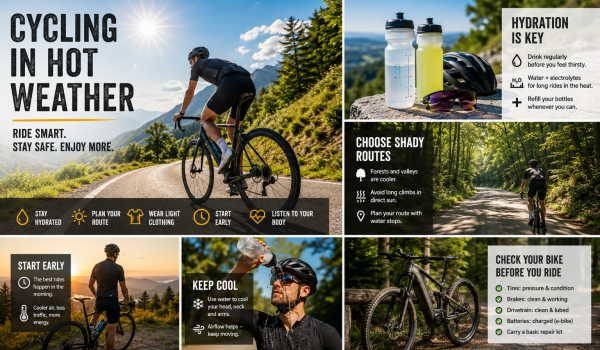
Cycling in Hot Weather: The Complete Guide to Safe and Enjoyable Summer Riding

Summertime cycling intro.

Long summer days, dry roads and warm evenings create excellent conditions for cycling. Whether you are exploring Austria on an e-bike, riding a gravel route through Lower Austria, training on a road bike or following shaded mountain bike trails in the Vienna Woods, summer can be one of the most enjoyable times of the year to ride.

However, cycling in hot weather places additional stress on the body. A route that feels comfortable at 18°C may become considerably harder at 30°C or more. Heart rate rises, sweating increases, dehydration develops faster and the body must devote more resources to controlling its internal temperature.

Heat does not automatically mean that you should leave the bicycle at home. It means that your ride should be approached differently.

The safest and most enjoyable summer cyclists are not necessarily those who tolerate the most discomfort. They are the riders who choose the right time of day, adjust their pace, carry enough fluids, recognise warning signs and are willing to change their plans when conditions become unsafe.

This guide explains how heat affects cycling performance, how much you may need to drink, when electrolytes become useful, what clothing works best, how to plan a hot-weather route and when you should stop riding.

Important: This article provides general information and is not a substitute for individual medical advice. People with cardiovascular, kidney, metabolic or other medical conditions, and those taking medication that may affect hydration or temperature regulation, should seek appropriate professional advice.


Quick answer: Is it safe to cycle in hot weather?

Cycling in hot weather can be safe when the rider is healthy, adequately prepared and able to adapt the duration and intensity of the ride to the conditions.

The risk increases when several factors occur together:

  • high air temperature;
  • strong direct sunlight;
  • high humidity;
  • little wind;
  • long or steep climbs;
  • high exercise intensity;
  • inadequate hydration;
  • lack of heat acclimatisation;
  • illness, fatigue or poor recovery;
  • limited access to water or shade.

There is no single temperature at which cycling suddenly becomes unsafe for every person. A trained and heat-acclimatised cyclist riding early in the morning may cope well with conditions that would be unsuitable for an unacclimatised rider starting a difficult climb in the afternoon.

Instead of looking only at the number on a thermometer, consider the entire situation: temperature, humidity, sun exposure, wind, route profile, duration, personal health and access to water.


Why cycling feels harder in the heat

The human body converts chemical energy from food into movement, but it is not perfectly efficient. Only part of the energy used by working muscles becomes mechanical power at the pedals. Much of the remaining energy is released as heat.

The harder you ride, the more heat your body produces.

To prevent an excessive rise in core temperature, the body transfers heat toward the skin and attempts to release it into the environment. During exercise, this happens through several mechanisms:

  • radiation;
  • convection;
  • conduction;
  • evaporation of sweat.

When the air is cool, the temperature difference between the skin and the environment helps the body release heat. As the air becomes warmer, that difference becomes smaller, and some cooling mechanisms become less effective.

At high temperatures, the evaporation of sweat becomes especially important.

Sweat on the skin does not necessarily mean effective cooling. Cooling occurs when the sweat evaporates. Sweat that simply runs off the body removes fluid and salt but provides less cooling benefit.

This is one reason why humidity matters so much.


Dry heat versus humid heat

A hot, dry day and a hot, humid day can create very different cycling conditions.

In dry air, sweat generally evaporates more easily. This can make the rider feel comparatively comfortable, although fluid loss may be substantial and easy to underestimate.

In humid air, evaporation becomes less efficient because the surrounding air already contains a high concentration of water vapour. The cyclist may sweat heavily while receiving less cooling from that sweat.

As a result, 29°C with high humidity can sometimes feel more stressful than a higher temperature in dry air.

Humidity can be especially challenging on:

  • slow climbs;
  • technical mountain bike sections;
  • sheltered forest roads with little airflow;
  • urban routes surrounded by heat-retaining buildings;
  • rides after summer rain;
  • low-speed e-bike tours with frequent stops.

Always consider the forecast for humidity and the apparent or “feels like” temperature, not only the official air temperature.


The cooling advantage of a bicycle

Cycling has one useful advantage over many other forms of outdoor exercise: speed creates airflow.

As the bicycle moves, air passes across the rider’s skin and clothing. This can support convective cooling and improve sweat evaporation.

A rider travelling at 25–30 km/h on a flat road may therefore feel more comfortable than a person walking in the same weather.

However, this advantage can be misleading.

The cooling effect decreases rapidly when speed falls. On a long climb, the rider may produce very high metabolic heat while moving at only 7–12 km/h. At the same time, the surrounding terrain may block natural wind.

This combination explains why steep climbs can become the most dangerous part of a hot-weather ride:

  • power output is high;
  • body heat production increases;
  • speed and airflow decrease;
  • direct sun exposure may be strong;
  • stopping points may be limited.

The temperature may feel manageable on the flat road before the climb, but the same weather can become overwhelming after 20 minutes of continuous uphill riding.


How heat affects heart rate and cycling performance

During a ride, working muscles require blood to supply oxygen and nutrients. In hot conditions, the skin also requires increased blood flow to support heat dissipation.

The cardiovascular system must therefore serve two competing demands:

  1. deliver blood to the working muscles;
  2. move warm blood toward the skin.

Sweating also gradually reduces fluid volume. As plasma volume falls, the heart may need to beat faster to maintain cardiac output.

This can lead to a progressive rise in heart rate even when power output remains stable. Cyclists often call this cardiovascular drift.

For example, a rider may normally produce 180 watts at a heart rate of 135 beats per minute. During a long hot ride, the same 180 watts may eventually require 145 or 150 beats per minute.

Perceived effort may also rise.

The rider may feel that:

  • the legs are unusually heavy;
  • a normal endurance pace feels like tempo riding;
  • breathing is harder than expected;
  • familiar climbs feel significantly steeper;
  • recovery after short efforts takes longer.

This does not necessarily mean that fitness has suddenly declined. Heat changes the physiological cost of the effort.

Should you follow power or heart rate in the heat?

Power remains useful because it measures external work. However, blindly maintaining normal cool-weather power targets can be a mistake.

On very hot days, combine several signals:

  • power;
  • heart rate;
  • breathing;
  • perceived effort;
  • thermal discomfort;
  • ability to concentrate;
  • signs of dehydration.

If heart rate and perceived effort continue to rise at a steady power, reducing intensity is usually more sensible than forcing the original target.

For recreational cycling, it is often better to finish a slightly slower ride feeling well than to complete the planned numbers while becoming dangerously overheated.


What temperature is too hot for cycling?

There is no universal maximum cycling temperature.

Risk depends on the interaction between environmental conditions, exercise intensity and individual factors. Important considerations include:

  • air temperature;
  • relative humidity;
  • direct solar radiation;
  • wind speed;
  • route surface;
  • climbing intensity;
  • ride duration;
  • age and health;
  • heat acclimatisation;
  • access to shade and water.

A short, easy ride at 32°C on a shaded route may be manageable for an experienced rider. A four-hour ride at the same temperature, with several exposed climbs and no reliable water sources, presents a very different risk.

Be particularly cautious when:

  • official heat warnings are active;
  • the apparent temperature is extremely high;
  • the night has remained hot and recovery was poor;
  • the route is exposed and remote;
  • you are not accustomed to the heat;
  • you recently had a fever, stomach illness or infection;
  • you already feel weak before starting;
  • you cannot carry or refill enough water.

When conditions are extreme, postponing the ride is a valid and often intelligent decision.


The best time of day for summer cycling

Changing the start time is one of the simplest and most effective heat-management strategies.

During a heatwave, early morning is usually the best time for demanding cycling.

Depending on sunrise, route and local weather, a start between approximately 05:30 and 08:00 can offer:

  • lower air temperatures;
  • weaker solar radiation;
  • cooler road surfaces;
  • less traffic;
  • more comfortable climbing;
  • lower hydration requirements;
  • a greater safety margin.

For a long route, try to complete the most demanding climbs before the hottest period of the day.

A rider planning a five-hour tour should think carefully before starting at 11:00 when temperatures above 30°C are forecast. Starting at 06:00 may allow most of the route to be completed before peak heat develops.

Evening rides are another option, but they have limitations. Roads, walls and buildings may continue radiating stored heat for hours after the highest daytime temperature. In urban areas, evenings can remain uncomfortably warm.

Avoid the hottest hours

As a general heat-safety principle, strenuous activity should be reduced or avoided during the hottest part of the day.

The precise period varies by location, but the strongest heat often occurs from early afternoon into late afternoon rather than exactly at noon.

Check an hourly forecast instead of relying on a single daily maximum.


How much should you drink while cycling in hot weather?

There is no perfect universal drinking rate.

Fluid needs vary substantially between cyclists and may depend on:

  • body size;
  • sweat rate;
  • fitness;
  • heat acclimatisation;
  • riding intensity;
  • temperature;
  • humidity;
  • clothing;
  • duration;
  • individual physiology.

One cyclist may lose less than 500 ml of sweat per hour. Another may lose more than one litre per hour under the same conditions.

Therefore, fixed instructions such as “everyone must drink exactly one litre per hour” are too simplistic.

A practical hydration strategy should aim to:

  • begin the ride normally hydrated;
  • drink regularly during prolonged riding;
  • prevent excessive dehydration;
  • avoid drinking far beyond actual needs;
  • include sodium and other nutrients when appropriate.

Thirst is useful, but on long, hot or high-intensity rides it should not be your only planning tool. You should know where water is available before you start.


How to estimate your personal sweat rate

A basic sweat-rate test can help you plan future rides.

Step 1: Weigh yourself before the ride

Use minimal clothing and record your weight.

Example:

Pre-ride body weight: 80.0 kg

Step 2: Record everything you drink

Suppose you drink one litre during the ride.

Step 3: Weigh yourself after the ride

Dry excess sweat from the skin and use similar clothing conditions.

Example:

Post-ride body weight: 79.2 kg

Step 4: Estimate fluid loss

The body-weight decrease is approximately 0.8 kg, which is roughly equivalent to 0.8 litres of water.

Add the one litre consumed during the ride:

Estimated sweat loss: approximately 1.8 litres

If the ride lasted two hours:

Estimated sweat rate: approximately 0.9 litres per hour

Urination during the ride should be subtracted from the calculation, although this is uncommon during many shorter training rides.

This method is not laboratory-perfect, but it provides useful individual information.

Repeat the test in different conditions:

  • mild weather;
  • hot and dry weather;
  • hot and humid weather;
  • easy endurance riding;
  • harder climbing sessions.

Over time, you will develop a much better understanding of how much fluid you typically lose.


Can a cyclist drink too much water?

Yes.

The message “stay hydrated” is important, but it should not be interpreted as “drink as much as physically possible.”

Excessive fluid intake, especially during very long events, can dilute sodium in the blood. This condition is known as exercise-associated hyponatraemia.

It is uncommon in normal short rides, but the risk can increase when a person repeatedly drinks large amounts of low-sodium fluid beyond what is being lost.

The goal is not to replace every drop of sweat at any cost.

The goal is to maintain a reasonable fluid balance while avoiding both severe dehydration and overdrinking.

Practical principles include:

  • do not force extreme amounts of fluid;
  • use your estimated sweat rate as guidance;
  • consider electrolytes during long, sweaty rides;
  • avoid gaining substantial body weight during an endurance event;
  • adapt intake to changing conditions and intensity.

Water or sports drink?

For many short and easy rides, water is sufficient.

A sports drink becomes more useful when the ride is:

  • long;
  • intense;
  • very hot;
  • associated with heavy sweating;
  • completed without regular food;
  • part of a long training or touring day.

A well-designed sports drink can provide:

  • water;
  • sodium and other electrolytes;
  • carbohydrates;
  • flavour that may encourage drinking.

A practical approach for a summer ride is to carry two bottles:

Bottle one: plain water.
Bottle two: a diluted electrolyte or carbohydrate drink.

This provides flexibility. Water can be used for drinking or limited external cooling, while the second bottle supports energy and sodium intake.

Very concentrated drinks can become unpleasant in extreme heat and may contribute to gastrointestinal discomfort. Some riders prefer a more diluted drink while taking carbohydrates separately through food, gels or chews.


Electrolytes for cycling in the heat

Sweat contains water and dissolved electrolytes, particularly sodium and chloride.

Sweat sodium concentration differs widely between individuals. Some cyclists lose relatively little salt, while others develop visible white salt marks on their helmet straps, jersey, shorts or skin.

Electrolytes are unlikely to be essential for every short recreational ride. They become more relevant when:

  • riding for several hours;
  • sweating heavily;
  • riding on consecutive hot days;
  • participating in a long-distance event;
  • consuming large amounts of plain water;
  • visible salt deposits appear on clothing;
  • the rider has previously experienced problems related to heavy sweating.

Electrolyte tablets can be convenient, but they are not magic performance products. They should be part of an overall plan that includes fluid, carbohydrate, pacing and recovery.

Taking excessive salt does not make a rider immune to heat illness.


What should you eat during a hot-weather ride?

Heat often reduces appetite, but energy expenditure continues.

A cyclist who rides for three to five hours may still require regular carbohydrate intake even when solid food feels less appealing.

Potential options include:

  • bananas;
  • energy gels;
  • soft energy bars;
  • rice cakes;
  • fruit purée;
  • small sandwiches;
  • dried fruit;
  • carbohydrate drink;
  • easy-to-chew sweets or sports chews.

Choose foods that remain edible when warm.

Chocolate-heavy bars may melt, while very dry or dense food can become difficult to swallow when the mouth is dry.

For long rides, small and regular portions are usually easier to tolerate than one large meal.

A useful principle is to begin eating before energy levels collapse. Waiting until you feel completely empty often makes recovery during the ride more difficult.


Pre-ride hydration and preparation

A successful hot-weather ride begins before the first pedal stroke.

The day before

Drink normally throughout the day. There is usually no need for extreme water loading.

Eat regular meals containing:

  • carbohydrates;
  • protein;
  • vegetables or fruit;
  • normal dietary salt.

Avoid excessive alcohol, which can impair sleep, judgement and recovery.

Before departure

Check:

  • hourly temperature;
  • humidity;
  • wind;
  • UV index;
  • weather warnings;
  • possibility of thunderstorms;
  • water refill points;
  • public transport alternatives;
  • mobile phone battery.

Begin the ride normally hydrated rather than trying to correct a large fluid deficit after starting.

Urine colour can provide a rough indication, although it is not a perfect scientific measure. Very dark urine before a hot endurance ride may suggest that more attention to hydration is needed.


Pre-cooling before cycling

Pre-cooling means lowering body temperature or increasing heat-storage capacity before exercise.

Competitive athletes may use cooling vests, ice slurries or controlled cold-water techniques. Recreational cyclists can use simpler methods.

Before a hot ride:

  • remain indoors or in the shade while preparing;
  • avoid standing in direct sun for 30 minutes before departure;
  • drink a cool beverage;
  • take a cool shower if comfortable;
  • chill your bottles;
  • use insulated bottles where practical;
  • freeze part of a bottle so it gradually melts;
  • avoid beginning the ride immediately after sitting in a very hot car.

Pre-cooling does not eliminate heat risk, but it may improve comfort during the first part of the ride.


Cooling yourself during the ride

Water can also be used externally to support cooling.

Cyclists often apply water to:

  • the neck;
  • head;
  • face;
  • forearms;
  • upper back.

The benefit depends on evaporation and airflow. It may be less effective in very humid conditions, but the immediate sensation can still be helpful.

Do not pour away essential drinking water when your next refill opportunity is uncertain.

A better time for external cooling is often:

  • at a public fountain;
  • during a café stop;
  • at an organised feed station;
  • near a reliable water source;
  • after refilling both bottles.

Avoid applying unknown or non-potable water near the mouth or into bottles.


Choosing cycling clothing for hot weather

Good summer cycling clothing should support evaporation while protecting the skin from sunlight.

Look for:

  • lightweight materials;
  • breathable fabrics;
  • effective moisture transport;
  • a close but non-restrictive fit;
  • well-ventilated panels;
  • suitable UV protection.

A completely open jersey is not always the coolest or safest option. Exposed skin receives direct solar radiation and can burn.

Light arm sleeves designed for summer use may provide UV protection and, when damp, can sometimes support evaporative cooling.

Dark clothing can absorb more solar energy, although fabric design, ventilation and fit also matter.

The best clothing is not simply the lightest item. It should balance:

  • ventilation;
  • comfort;
  • sun protection;
  • chafing prevention;
  • pocket capacity;
  • visibility in traffic.

Sunscreen for cyclists

Cyclists can remain exposed to ultraviolet radiation for several hours.

Commonly missed areas include:

  • the back of the neck;
  • ears;
  • nose;
  • cheeks;
  • lower arms;
  • the gap between jersey and shorts;
  • thighs above the leg gripper;
  • backs of the hands;
  • exposed scalp.

Use a broad-spectrum, water-resistant sunscreen with a suitable protection factor. Apply it before dressing so that jersey edges and straps do not leave unprotected gaps.

For long rides, reapplication may be necessary, especially after heavy sweating.

Do not assume that airflow makes the sun less intense. The rider may feel cool while still receiving substantial UV exposure.


Is a cycling helmet too hot in summer?

A modern cycling helmet is designed with ventilation channels that allow air to pass through while riding.

Ventilation works best at higher speeds and becomes less effective during slow climbing. Nevertheless, the safety benefit of a helmet remains important.

Choose a helmet that:

  • fits correctly;
  • has effective ventilation;
  • is not blocked by thick fabric underneath;
  • allows sweat to be managed without obstructing vision.

A thin cycling cap or sweatband may help prevent sweat from running into the eyes, but heavy headwear can reduce airflow.

Never compromise helmet fit by placing bulky cooling products underneath it.


Pacing a ride in extreme heat

The most common pacing mistake is starting at a normal cool-weather intensity and waiting until the heat becomes unbearable.

By then, core temperature, heart rate and dehydration may already be rising.

A better strategy is to reduce intensity from the beginning.

Practical pacing adjustments

  • Use easier gears on climbs.
  • Keep breathing controlled.
  • Avoid repeated maximum efforts.
  • Reduce average power expectations.
  • Take short breaks in shade.
  • Stop before symptoms become severe.
  • Treat heart-rate drift as useful information.
  • Allow more recovery after hard sections.

If you use a cycling computer, do not let a target speed or average power override obvious physical warning signs.

Hot-weather riding is not the right time to chase every personal record.


Why long climbs are especially difficult in hot weather

Long climbs combine high heat production with reduced cooling.

Compared with fast riding on flat terrain:

  • speed is lower;
  • airflow is weaker;
  • muscular work is higher;
  • the rider may remain in direct sun for a long period;
  • road temperature may be high;
  • shade and water may be limited.

When planning a summer route, examine not only total elevation but also the location and duration of the climbs.

A 500-metre climb beginning at 07:00 may be reasonable. The same climb beginning at 14:00 on an exposed southern slope may be significantly more demanding.

On the climb:

  • start conservatively;
  • use a lower gear;
  • maintain a sustainable cadence;
  • drink before reaching the steepest section;
  • avoid racing other riders;
  • use shaded stopping points;
  • consider turning around if conditions deteriorate.

Road cycling versus mountain biking in the heat

Both disciplines offer advantages and disadvantages.

Road cycling

Advantages:

  • higher speed creates more airflow;
  • water and food may be easier to find;
  • routes can be shortened quickly;
  • public transport may be accessible.

Disadvantages:

  • exposed asphalt becomes extremely hot;
  • shade may be limited;
  • traffic adds stress;
  • open agricultural areas can provide little shelter;
  • road surfaces radiate heat.

Mountain biking

Advantages:

  • forest trails often provide shade;
  • natural surroundings may feel cooler;
  • streams and shaded valleys can reduce thermal stress;
  • speed targets are less important.

Disadvantages:

  • slow technical climbs generate substantial heat;
  • airflow may be limited;
  • remote routes can lack drinking water;
  • mechanical problems may leave the rider far from help;
  • some forests become humid and windless.

In Lower Austria and the Vienna Woods, a shaded mountain bike route can be an excellent summer choice, but it still requires sufficient water and realistic planning.


Gravel cycling in hot conditions

Gravel riding often combines long distances, exposed farm roads and limited access to shops or fountains.

The surface itself also affects effort. Loose gravel, dust and repeated short climbs may require more energy than a paved route of the same distance.

Before a summer gravel ride:

  • identify reliable refill points;
  • do not assume every village fountain provides drinking water;
  • carry more water than for an urban road ride;
  • consider a hydration pack;
  • bring a tubeless repair kit or spare tube;
  • check mobile coverage;
  • plan an emergency shortcut;
  • avoid the most exposed sectors at peak heat.

A remote gravel adventure should never depend on a single bottle.


E-bike riding in hot weather

E-bikes can make summer cycling more accessible because electric assistance reduces the rider’s required power output.

On a difficult climb, increasing assistance may:

  • reduce metabolic heat production;
  • lower cardiovascular strain;
  • help the rider maintain airflow;
  • make it easier to reach shade or water.

However, the battery also requires sensible treatment.

Modern e-bikes can normally be used in warm summer conditions, but prolonged exposure to extreme heat should be avoided.

Do not leave an e-bike battery:

  • inside a closed vehicle in direct sun;
  • on hot asphalt for hours;
  • beside a strong heat source;
  • charging in an unventilated, extremely hot space.

When stopping, park the bike in shade where possible.

Do not immediately assume that reduced range indicates battery damage. Hot-weather range can also be affected by route profile, assistance level, rider weight, tyre pressure and wind.

For visitors who want to explore Austria without bringing their own bicycle, AustriaTrails offers a selection of e-bikes, mountain bikes and gravel bikes for rental in the Vienna and Lower Austria region.

Suggested internal link:
Explore AustriaTrails bike rentals


Heat acclimatisation: Can your body adapt?

The body can partially adapt to repeated exercise in hot conditions.

This process is known as heat acclimatisation or heat acclimation, depending on whether adaptation occurs naturally outdoors or in controlled conditions.

Potential adaptations may include:

  • earlier onset of sweating;
  • increased sweat capacity;
  • improved skin blood flow;
  • expanded plasma volume;
  • lower heart rate at a given workload;
  • improved thermal comfort;
  • better ability to maintain performance.

These adaptations do not happen after one difficult ride.

A commonly used approach involves repeated heat exposure over approximately one to two weeks. The optimal protocol depends on the athlete, environment and objective.

For recreational cyclists, the important message is gradual progression.

During the first hot days of summer:

  • reduce duration;
  • reduce intensity;
  • choose familiar routes;
  • stay close to water;
  • allow more recovery;
  • avoid starting with an all-day mountain tour.

Heat acclimatisation improves tolerance, but it does not make a cyclist invulnerable.


Why the first heatwave can be especially dangerous

The first very hot period after a cool spring often creates more risk than similar temperatures later in the summer.

The body may not yet be adapted. Riders may also continue using the same pace, clothing and route plans that worked in mild weather.

During the first heatwave:

  • shorten the first few rides;
  • avoid peak afternoon conditions;
  • monitor heart rate more carefully;
  • increase access to fluids;
  • do not combine extreme heat with maximum training intensity;
  • allow several days for adaptation.

A cyclist who handled 33°C in August should not assume the same tolerance during an abrupt hot spell in May or June.


Warning signs of heat exhaustion

Heat exhaustion can develop when heat exposure, physical effort and fluid loss overwhelm the body’s ability to cope.

Possible warning signs include:

  • heavy sweating;
  • unusual fatigue;
  • weakness;
  • dizziness;
  • headache;
  • nausea;
  • muscle cramps;
  • rapid pulse;
  • reduced coordination;
  • feeling faint;
  • unusually poor performance.

If these symptoms appear:

  1. stop riding;
  2. move to shade or a cool indoor location;
  3. remove unnecessary layers;
  4. begin cooling;
  5. drink appropriate fluids if the person is conscious and able to swallow;
  6. seek medical assessment if symptoms are severe, persistent or worsening.

Do not attempt to “push through” significant heat symptoms to finish a planned route.


Heat stroke: A medical emergency

Heat stroke is much more serious than ordinary fatigue.

Potential signs include:

  • confusion;
  • disorientation;
  • abnormal behaviour;
  • inability to coordinate movement;
  • collapse;
  • seizure;
  • loss of consciousness;
  • very high body temperature.

A person experiencing heat stroke may still be sweating. The absence of dry skin does not rule it out.

Heat stroke requires urgent medical assistance and rapid cooling.

Call the local emergency number. In Austria and throughout the European Union, 112 can be used for emergencies. Austria’s ambulance number is 144.

While waiting for professional help:

  • move the person out of direct sun;
  • remove unnecessary outer clothing;
  • begin active cooling;
  • follow emergency-service instructions;
  • do not leave the person alone.

A confused cyclist should not be allowed to continue riding.


Heat cramps and severe muscle symptoms

Muscle cramps can occur during prolonged exercise, but they are not always caused by one simple factor.

Fatigue, pacing, training status, fluid balance and electrolyte losses may all contribute.

A mild cramp is not automatically a heat emergency. However, severe cramping combined with weakness, nausea, dizziness or altered behaviour should be taken seriously.

Extremely painful muscles, profound weakness or unusually dark urine after heavy exertion can indicate a more serious medical problem and require prompt assessment.


Who should be especially careful?

Some people are more vulnerable to heat-related problems.

Extra caution may be appropriate for:

  • older adults;
  • children and teenagers;
  • people with cardiovascular disease;
  • people with kidney disease;
  • people with diabetes;
  • individuals taking certain medications;
  • riders recovering from illness;
  • people who are not acclimatised;
  • riders with previous heat illness;
  • cyclists who slept poorly or consumed substantial alcohol;
  • people beginning exercise with an existing fluid deficit.

Medication can affect sweating, blood pressure, heart rate, kidney function or fluid balance. Do not stop prescribed medication without medical advice, but seek guidance on exercising safely in hot conditions.


Alcohol, caffeine and summer cycling

Alcohol

Alcohol before or during a ride is a poor heat-management strategy.

It can impair:

  • reaction time;
  • balance;
  • judgement;
  • sleep;
  • recovery;
  • hydration behaviour.

A cold beer after a ride may be culturally popular, but water, food and appropriate rehydration should come first after prolonged exercise in the heat.

Caffeine

Moderate caffeine intake does not automatically cause dangerous dehydration in habitual coffee drinkers.

However, coffee is not a substitute for a hydration plan.

A morning espresso may be compatible with a summer ride, but the rider still needs sufficient water and, where appropriate, electrolytes.

High caffeine intake may also increase feelings of nervousness or make an already elevated heart rate feel uncomfortable.


Is cold water bad during exercise?

Healthy cyclists generally do not need to avoid cold drinks during hot-weather riding.

Cool fluids may:

  • improve comfort;
  • encourage drinking;
  • support thermal management;
  • feel refreshing during long rides.

Some people experience stomach discomfort when consuming a large amount of very cold fluid quickly.

The practical solution is not necessarily warm water. It is often to drink smaller amounts regularly.

Choose a temperature that you tolerate well.


How to plan a three-hour ride in hot weather

Assume that the forecast predicts:

  • 31–33°C;
  • strong sun;
  • moderate humidity;
  • a three-hour route;
  • several short climbs.

A sensible plan could look like this.

The evening before

  • Eat a normal balanced meal.
  • Drink normally.
  • Avoid excessive alcohol.
  • Charge the phone and cycling computer.
  • Check the route for water.
  • Prepare two or more bottles.

Before the ride

  • Start early.
  • Eat a familiar breakfast.
  • Apply sunscreen.
  • Fill bottles with cool fluid.
  • Carry an electrolyte option.
  • Inform someone of the route if riding remotely.

During the first hour

  • Ride more conservatively than usual.
  • Begin drinking early.
  • Avoid chasing a fast average speed.
  • Monitor heart rate and perceived effort.

During the second hour

  • Refill bottles if possible.
  • Eat before hunger becomes severe.
  • Use shade for stops.
  • Evaluate whether conditions are developing as forecast.

During the final hour

  • Reduce intensity if heart rate continues rising.
  • Take a shortcut if fluid is running low.
  • Do not turn a safe training ride into a survival exercise.

After the ride

  • Move into shade or a cooler environment.
  • Continue drinking according to thirst and losses.
  • Eat a meal containing carbohydrate, protein and normal dietary salt.
  • Change out of wet clothing.
  • Monitor for persistent headache, nausea, weakness or confusion.

Route planning for cycling in Austria during summer

Austria offers exceptional summer cycling, but route selection should reflect the weather.

A comfortable route is not defined only by distance and elevation.

Also consider:

  • percentage of shade;
  • direction of sun exposure;
  • length of continuous climbs;
  • drinking-water availability;
  • distance between villages;
  • railway connections;
  • mobile coverage;
  • places to buy food;
  • possible escape routes;
  • thunderstorm risk.

Vienna and Lower Austria

Summer routes around Vienna, Mödling, Baden and the Vienna Woods can vary greatly in thermal exposure.

Open sections through vineyards and agricultural land may become extremely hot under direct sun. Forest routes around the Wienerwald may provide more shade, although slow climbing and humidity can remain challenging.

Routes near towns have an additional advantage: easier access to cafés, supermarkets, railway stations and public transport.

For visitors, a professionally maintained rental bicycle can make route planning easier. AustriaTrails provides mountain bikes, gravel bikes, road-oriented options and e-bikes for exploring Vienna, Lower Austria and other Austrian regions.

Suggested internal link:
How to rent a bike from AustriaTrails


Mountain biking in the Vienna Woods during hot weather

The Vienna Woods are often an attractive alternative to exposed summer roads.

Forested sections can offer:

  • shade;
  • reduced direct radiation;
  • cooler-feeling surroundings;
  • protection from strong sun;
  • more opportunities for rest.

However, riders should not underestimate:

  • steep forest climbs;
  • limited airflow;
  • humidity;
  • remote trail sections;
  • reduced access to drinking water;
  • changing trail conditions after storms.

Carry sufficient fluid and use only legal, officially permitted cycling routes.

Weather conditions can change quickly in summer, and thunderstorms may create falling branches, slippery surfaces and flash flooding in low areas.


Summer thunderstorms and cycling safety

Heat is not the only summer hazard.

Warm and humid days can produce intense thunderstorms, sometimes with little practical warning.

Before leaving:

  • check an hourly forecast;
  • review rain radar;
  • note storm warnings;
  • avoid exposed ridges if storms are possible;
  • know where buildings or safe transport connections are located.

If thunder is audible, lightning is close enough to present a risk.

Do not shelter:

  • beneath an isolated tall tree;
  • on an exposed summit;
  • beside metal fencing;
  • in an open field;
  • near water.

A simple open shelter may protect from rain but not necessarily from lightning.

When severe storms are forecast, changing the route or cancelling the ride is safer than depending on luck.


Hot-weather bike maintenance

Heat and dry summer conditions can also affect the bicycle.

Before a long ride, check:

  • tyre pressure;
  • tyre condition;
  • brake function;
  • chain lubrication;
  • shifting;
  • wheel security;
  • e-bike battery charge;
  • hydration-pack condition;
  • bottle-cage bolts.

Dry and dusty trails can contaminate the drivetrain. A chain may become noisy sooner, especially after repeated off-road rides.

Do not overinflate tyres simply because the road is dry. Tyre pressure naturally rises as temperature increases, and excessive pressure can reduce comfort and grip.

After a dusty ride:

  • wipe the chain;
  • clean the drivetrain appropriately;
  • inspect brake pads;
  • check tyres for cuts;
  • remove sweat residue from the bicycle;
  • avoid spraying high-pressure water directly into bearings.

Sweat contains salt and can contribute to corrosion, particularly around:

  • handlebar bolts;
  • headset components;
  • brake levers;
  • indoor trainer areas;
  • frame hardware.

For inspection, adjustment or a complete service, AustriaTrails offers professional bicycle servicing with collection and return options in the local service area.

Suggested internal link:
Professional bicycle service by AustriaTrails


What to carry on a long summer ride

A hot-weather ride may require more equipment than a short ride in mild conditions.

Consider carrying:

  • two large bottles or a hydration pack;
  • electrolyte tablets or drink powder;
  • sufficient carbohydrate food;
  • sunscreen;
  • mobile phone;
  • power bank for long routes;
  • payment card or cash;
  • identification;
  • compact first-aid supplies;
  • spare tube or tubeless repair kit;
  • tyre levers;
  • pump or CO₂ inflator;
  • multitool;
  • lightweight emergency layer;
  • route map available offline.

Water is the most important additional planning factor.

Two 750 ml bottles may be adequate for part of a ride but not necessarily for an entire four- or five-hour tour in extreme heat.

Plan refills rather than hoping to find them.


Ten essential rules for cycling in hot weather

  1. Start early. Complete demanding sections before peak heat.
  2. Check more than temperature. Consider humidity, sun, wind and weather warnings.
  3. Begin hydrated. Do not start a long ride with a significant fluid deficit.
  4. Carry enough water. Know exactly where bottles can be refilled.
  5. Use electrolytes when appropriate. They may be useful during long and sweaty rides.
  6. Reduce intensity. Normal cool-weather targets may be unrealistic.
  7. Choose shaded routes. Forest roads and valleys may be preferable to exposed asphalt.
  8. Protect your skin. Use sunscreen and suitable cycling clothing.
  9. Recognise warning signs. Weakness, dizziness, nausea and confusion must not be ignored.
  10. Be willing to stop. Shortening a ride is better than creating a medical emergency.

Common mistakes cyclists make in hot weather

Starting too late

A midday start can place the most difficult section of the route directly in peak heat.

Carrying only one bottle

This may be sufficient for a short urban ride, but not for a long rural or mountain route.

Riding at normal power

Maintaining cool-weather training targets can cause unnecessary cardiovascular and thermal stress.

Waiting until severe thirst

A long hot ride should have a planned hydration strategy.

Drinking only plain water for many hours

For prolonged heavy sweating, electrolytes and food may become important.

Pouring away all drinking water

External cooling is helpful only when enough fluid remains for drinking.

Ignoring humidity

A moderate temperature with high humidity can create severe thermal stress.

Assuming forest means safe

Shade helps, but steep climbs, humidity and remoteness still matter.

Refusing to shorten the route

A planned distance is never more important than health.

Leaving an e-bike in a hot car

The temperature inside a parked vehicle can become far higher than the outdoor temperature.


Frequently asked questions about cycling in hot weather

Is cycling in 30°C weather safe?

It can be safe for a healthy and prepared cyclist, particularly during a short, low-intensity ride with access to water. Risk increases with humidity, direct sun, long climbs, high intensity and lack of acclimatisation.

Is 35°C too hot for cycling?

For many riders, 35°C represents a substantial heat load. A short early-morning ride may be possible in some conditions, but long or intense riding in direct afternoon sun may be inappropriate. Consider official warnings, humidity, route exposure and your own health.

How much water should I drink per hour while cycling?

There is no universal amount. Needs vary according to sweat rate, temperature, humidity, body size and intensity. Estimate your personal sweat losses and avoid both severe dehydration and excessive drinking.

Should cyclists use electrolytes in hot weather?

Electrolytes can be useful during long rides, heavy sweating or repeated hot-weather training. They are usually less important during a short, easy ride when normal food and water are sufficient.

Is water enough for a two-hour bike ride?

For an easy ride in moderate conditions, it may be. During high heat or intense exercise, a drink containing electrolytes and possibly carbohydrates may be more useful.

What are the first signs of heat exhaustion?

Possible signs include unusual weakness, heavy sweating, dizziness, headache, nausea, cramps, rapid pulse and feeling faint. Stop riding and move to a cool place.

Can I ride an e-bike in hot weather?

Yes, within the manufacturer’s operating guidance. Use greater assistance to reduce physical strain when necessary and avoid leaving the battery in a closed hot vehicle or direct sun for prolonged periods.

What should I wear for cycling in summer?

Choose lightweight, breathable cycling clothing with effective moisture management and suitable sun protection. Use sunscreen on exposed areas and wear a well-ventilated helmet.

Is morning or evening better for summer cycling?

Morning is often cooler because roads and buildings have not yet stored a full day of heat. Evening can also work, but urban and paved areas may remain hot after sunset.

Should I stop if my heart rate is unusually high?

An unusually high or steadily rising heart rate at normal power can indicate increasing heat strain or dehydration. Reduce intensity, cool down and reassess the ride. Stop if you feel weak, dizzy, confused or unwell.

Does pouring water over the head help?

It can provide cooling, particularly when airflow allows evaporation. Do not use essential drinking water for cooling when refill opportunities are uncertain.

Can heat cause lower cycling power?

Yes. Heat increases cardiovascular strain and perceived effort, and the body may reduce sustainable power to protect itself from excessive thermal stress.


Cycling in Austria with AustriaTrails

Summer is an excellent season for exploring Austria by bicycle, provided that the route, equipment and timing are appropriate for the weather.

AustriaTrails supports cyclists and visitors with:

  • mountain bike rental;
  • e-bike rental;
  • gravel bike rental;
  • professionally prepared bicycles;
  • cycling tours and local route experience;
  • flexible bike-rental solutions;
  • professional bicycle servicing;
  • collection and return services within the local workshop area.

Whether you want to discover the Vienna Woods, ride through Lower Austria, plan a multi-day cycling journey or simply rent a reliable bicycle near Vienna, choosing suitable equipment can make the experience safer and more enjoyable.

Useful AustriaTrails pages:


Conclusion: Smart cyclists respect the heat

Cycling in hot weather can be safe, memorable and enjoyable. Summer provides long daylight hours, beautiful landscapes and excellent opportunities to explore Austria on two wheels.

However, heat changes the physical demands of every ride.

The body must provide energy to the muscles while simultaneously sending blood toward the skin and producing sweat. As the ride continues, dehydration, rising core temperature and cardiovascular drift may make a familiar pace increasingly difficult.

The key strategies are simple:

  • start early;
  • plan reliable water stops;
  • reduce intensity;
  • use electrolytes when appropriate;
  • choose shaded routes;
  • protect yourself from the sun;
  • monitor your physical condition;
  • stop when warning signs appear.

Do not expect the same speed, power or distance at 35°C that you achieve at 20°C.

A slower ride is not a failed ride. A shortened route is not a failure. Taking a train home, calling for assistance or postponing a tour can be the most responsible decision.

The goal is not to defeat the heat.

The goal is to understand it, adapt to it and return safely—with enough energy to enjoy the next ride.


Editorial references

This article was prepared using general heat-health and exercise-safety guidance from organisations including:

  • World Health Organization;
  • WHO Regional Office for Europe;
  • Centers for Disease Control and Prevention;
  • National Institute for Occupational Safety and Health;
  • American College of Sports Medicine.

Medical recommendations may change as new evidence becomes available. Readers should follow current local weather warnings and seek individual medical advice where necessary.

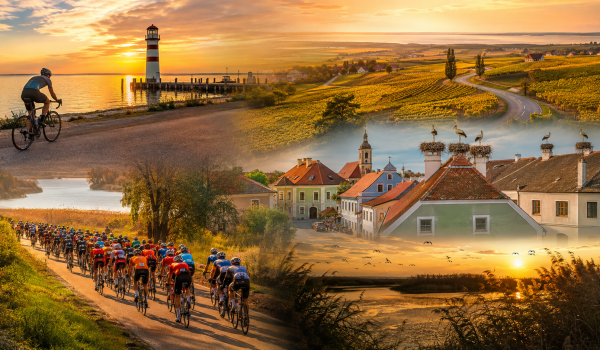
Bikeservice in Wien – Notfall Fahrradservice außerhalb der Öffnungszeiten

Schneller Fahrradservice in Wien, Guntramsdorf und Umgebung – auch nachts

Ein kaputtes Fahrrad kommt immer im falschen Moment: kurz vor dem Urlaub, am Abend vor einem wichtigen Rennen oder genau dann, wenn alle Werkstätten bereits geschlossen haben. Genau hier kommt unser Notfall-Veloservice in Wien und Guntramsdorf ins Spiel.

Wir bieten Ihnen einen professionellen Fahrradservice außerhalb der Öffnungszeiten – schnell, flexibel und zuverlässig. Unser mobiler Service ist für Sie da, wenn andere Werkstätten nicht mehr erreichbar sind.


🚴‍♂️ Notfall Fahrradservice – wenn jede Minute zählt

Stellen Sie sich vor:
Sie planen eine mehrtägige Radtour, einen Wettkampf oder einen spontanen Ausflug – und plötzlich funktioniert Ihr Fahrrad nicht mehr.

  • Schaltung springt nicht richtig
  • Bremse greift schlecht oder gar nicht
  • Reifen verliert Luft
  • E-Bike zeigt Fehler an

Warten bis zum nächsten Tag? Oft keine Option.

👉 Unser Express Fahrradservice in Wien und Umgebung hilft genau in solchen Situationen – auch spät abends oder nachts.


🕒 Fahrradreparatur außerhalb der Öffnungszeiten (20:00 – 03:00)

Unser Notfallservice ist täglich verfügbar:

⏰ 20:00 – 03:00 Uhr

Wir bieten Ihnen einen schnellen und professionellen Fahrradservice, wenn alle anderen geschlossen haben.

💰 Preis: 120 € pro Stunde
✔ transparente Abrechnung
✔ keine versteckten Kosten
✔ schnelle Problemlösung vor Ort oder in der Werkstatt


🔧 Alle Arten von Fahrradreparaturen und Service

Unser Veloservice deckt alle Arten von Arbeiten ab – von kleinen Reparaturen bis hin zu komplexen Problemen:

✔ Wartung & Inspektion

  • Komplettcheck vor Touren oder Rennen
  • Einstellung von Bremsen und Schaltung
  • Sicherheitsprüfung

✔ Reparaturen

  • Schaltung einstellen oder reparieren
  • Bremsenservice (Scheiben- & Felgenbremsen)
  • Austausch von Verschleißteilen

✔ Reifen & Pannenhilfe

  • Schlauchwechsel
  • Tubeless Reparatur
  • Notfall-Reifenservice

✔ E-Bike Service

  • Diagnose von Elektronikproblemen
  • Motor- und Systemcheck
  • Fehleranalyse

✔ Spezialarbeiten

  • Laufradzentrierung
  • Lager-Service
  • individuelle Lösungen für jedes Problem

👉 Egal ob Rennrad, Gravelbike, MTB, Trekkingrad oder E-Bike – wir bringen Ihr Fahrrad wieder in Top-Zustand.


📍 Einsatzgebiet – Wien & Umgebung

Unser mobiler Fahrradservice ist in folgenden Regionen für Sie im Einsatz:

  • Guntramsdorf
  • Mödling
  • Baden
  • Wiener Neudorf
  • Perchtoldsdorf
  • Brunn am Gebirge
  • Vösendorf
  • und ganz Wien

👉 Wir kommen direkt zu Ihnen – nach Hause, ins Hotel oder zum Startpunkt Ihrer Tour.


⚠️ Wann benötigen Sie einen Notfall-Veloservice?

Es gibt viele Situationen, in denen ein Abend- oder Nachtservice für Fahrräder notwendig wird:

🚨 Typische Notfälle:

  • Sie fahren morgen in den Urlaub und Ihr Fahrrad ist nicht fahrbereit
  • Ein wichtiges Rennen oder Event steht bevor
  • Plötzlicher Defekt am Abend
  • Alle Werkstätten sind bereits geschlossen
  • Bremsprobleme kurz vor einer Tour
  • Schaltung funktioniert nicht mehr richtig
  • Platter Reifen kurz vor Abfahrt
  • E-Bike zeigt Fehlermeldung
  • Sie haben tagsüber keine Zeit für eine Werkstatt
  • Sie möchten keine Tage oder Wochen auf einen Termin warten

👉 In all diesen Fällen ist ein schneller Fahrradservice außerhalb der Öffnungszeiten die beste Lösung.


💡 Warum unser Veloservice?

Wir wissen, wie wichtig ein funktionierendes Fahrrad ist – besonders wenn es schnell gehen muss.

Ihre Vorteile:

✔ Schnelle Hilfe auch nachts
✔ Keine langen Wartezeiten
✔ Mobiler Service vor Ort
✔ Professionelle Werkzeuge & Erfahrung
✔ Flexible Terminvereinbarung
✔ Service für alle Fahrradtypen


🚀 Ihr Fahrrad sofort wieder einsatzbereit

Mit unserem Notfall Fahrradservice in Wien und Guntramsdorf müssen Sie keine Kompromisse eingehen.

Egal ob:

  • Vorbereitung für einen Wettkampf
  • letzte Checks vor dem Urlaub
  • spontane Reparatur am Abend

👉 Wir sorgen dafür, dass Sie so schnell wie möglich wieder fahren können.


📞 Jetzt Termin sichern – auch nachts

Wenn Ihr Fahrrad Probleme macht und Sie nicht bis morgen warten können, kontaktieren Sie uns:

  • 📩 per Nachricht
  • 📧 per E-Mail – au***************@***il.com
  • 📱 per WhatsApp Nachricht – +4368864899667

👉 Wir sind für Sie da – auch wenn andere schlafen.

Premium Bike Rental in Europe: Everything You Need to Know Before You Book

Rent High-End Road, Gravel & MTB Bikes with Confidence

Planning to rent a high-performance road bike, gravel bike, or mountain bike in Europe? Whether you’re riding in the Alps, exploring Austria, or cycling through Tuscany, choosing the right rental service makes all the difference.

This guide will help you:

  • Avoid costly mistakes
  • Understand rental contracts and insurance
  • Protect yourself from hidden risks
  • Rent with confidence from a professional provider

Why Choose a Professional Bike Rental Service?

When you rent from a premium bike rental company, you get:

✔ High-end carbon bikes (road, gravel, MTB)
✔ Perfect sizing and bike fitting
✔ Expert maintenance and safety checks
✔ Flexible rental options
✔ Support in case of issues

👉 Book with confidence: Our bikes are maintained to professional standards and ready for real performance.


What to Check Before Renting a Bike

1. Inspect the Bike Carefully

Before you start riding:

  • Check frame, wheels, brakes, drivetrain
  • Take photos or a short video
  • Report any scratches or damage immediately

👉 Pro tip: This protects you from being charged for pre-existing damage.


2. Make Sure the Bike Fits You

A proper fit is essential:

  • Correct frame size
  • Saddle height adjusted
  • Right pedals (SPD, Look, flat, etc.)

👉 Riding the wrong size can lead to injury or accidents.


3. Know What’s Included

Ask what comes with your rental:

  • Helmet
  • Lock (very important)
  • Repair kit
  • GPS mount

👉 Missing items may be charged if not returned.


Understanding Bike Rental Contracts (Very Important)

Before booking, always review the rental agreement.

Key Elements You Should See:

  • Rental period (strict timing)
  • Bike model and value
  • Deposit amount
  • Liability terms
  • Insurance conditions

⚠️ Critical Rule: You Are Responsible for the Bike

In most European rentals:

You are fully responsible for the bike during your rental.

This includes:

  • Damage
  • Theft
  • Loss

👉 Even with a deposit, you may still be charged the full replacement value.


Bike Rental Insurance Explained (What Most People Miss)

What Is Usually Covered

  • Accidental damage (with deductible)
  • Mechanical issues (sometimes)

What Is Often NOT Covered

  • Theft
  • Negligence
  • Riding under alcohol
  • Improper use (e.g. off-road with road bike)

👉 Important: Insurance does NOT mean full protection.


The Truth About Theft Protection

Even if theft is covered:

  • You must use a proper lock
  • The bike must be secured to a fixed object
  • A police report is required

👉 Otherwise, you pay 100% of the bike cost.


Hidden Pitfalls You Should Avoid

❌ Assuming insurance covers everything

❌ Not checking the bike condition

❌ Ignoring contract details

❌ Leaving the bike unlocked

❌ Returning the bike late

👉 These mistakes can cost hundreds or even thousands of euros.


How Professional Rentals Protect Their Bikes

Top rental companies use:

Financial Protection

  • High deposits
  • Credit card guarantees

Legal Protection

  • Detailed contracts
  • Strict liability rules

Technical Protection

  • GPS tracking (premium bikes)
  • Frame identification

Anti-Theft Measures

  • Mandatory locks
  • Security guidelines

What You Should Do to Stay Safe

✔ Take photos before riding
✔ Always lock your bike
✔ Follow usage rules
✔ Understand your insurance
✔ Ride responsibly

👉 Treat the bike like your own €5,000+ investment.


What to Do If Something Goes Wrong

Mechanical Issue

  • Contact the rental immediately
  • Do not repair without approval

Accident

  • Take photos
  • Collect details
  • Inform the rental company

Theft

  • Go to the police immediately
  • Report to rental
  • Provide documentation

Damage

  • Be honest and report it
  • Document everything

Why Rent Premium Bike Rental in Europe From Us?

We make premium bike rental simple, safe, and transparent:

✔ Top-tier road, gravel & MTB bikes
✔ Clear contracts — no hidden surprises
✔ Fair insurance options
✔ Local support and quick assistance
✔ Perfect bikes for Austria and beyond

👉 Ready to ride? Book your bike now and explore Europe the right way.


Final Thoughts about Premium Bike Rental in Europe

Renting a high-end bike in Europe is an incredible experience—but only if you do it right.

Remember:

  • You are responsible for the bike
  • Insurance has limits
  • Small mistakes can be expensive

👉 Choose a professional rental partner and ride with confidence.


🚴 Book Your Premium Bike Today

Don’t risk outdated equipment or unclear conditions.

Reserve your road, gravel, or mountain bike now and start your ride stress-free.

E-Bike Chip-Tuning: Der komplette Profi-Leitfaden 2026

SpeedBox, Bikespeed, Legalität, Technik und Risiken im Detail

E-Bike Chip-Tuning gehört zu den meistgesuchten Themen im Bereich Elektrofahrräder. Immer mehr Fahrer möchten die gesetzliche 25-km/h-Begrenzung von Pedelecs entfernen, um schneller fahren zu können oder sportlichere Leistungen zu erreichen.

Suchanfragen wie:

  • E-Bike schneller machen
  • SpeedBox Erfahrung
  • Bikespeed Tuning
  • 25 km/h Begrenzung entfernen
  • E-Bike Tuning legal Österreich
  • Bosch E-Bike Tuning Chip

zeigen deutlich, wie groß das Interesse ist.

Doch kaum ein Thema ist gleichzeitig so:

  • technisch komplex
  • rechtlich sensibel
  • missverstanden
  • risikobehaftet

Dieser professionelle Leitfaden erklärt vollständig:

  • Wie E-Bike Tuningchips funktionieren
  • Welche Hersteller führend sind
  • Wie schwierig der Einbau ist
  • Welche Schäden entstehen können
  • Welche Gesetze in Europa gelten
  • Ob Werkstätten Chips einbauen dürfen
  • Welche Risiken wirklich bestehen

Diese Analyse basiert auf technischen Daten, Herstellerangaben und Werkstattpraxis.


Was ist E-Bike Chip-Tuning?

Ein E-Bike Tuningchip ist ein elektronisches Modul, das die Motorsteuerung manipuliert und die Geschwindigkeitsbegrenzung von 25 km/h aufhebt oder verschiebt.

Standard-Pedelecs in Europa:

ParameterWert
Motorleistung250 W
Unterstützungbis 25 km/h
KategorieFahrrad

Nach Chip-Tuning:

ParameterWert
Unterstützungbis 40–60 km/h
KategorieKraftfahrzeug
Zulassung nötigJa

Damit verliert das Fahrrad seinen rechtlichen Status als Fahrrad.


Warum wollen Fahrer ihre E-Bikes tunen?

Typische Gründe:

1 – Pendeln

Viele Fahrer nutzen E-Bikes zum Pendeln.

Bei 25 km/h dauert eine Strecke:

20 km = fast 50 Minuten.

Mit Tuning:

20 km = ca. 30 Minuten.

Zeitersparnis ist ein Hauptmotiv.


2 – Sportliches Fahren

Mountainbike-Fahrer wollen:

  • höhere Geschwindigkeit
  • mehr Flow
  • bessere Beschleunigung

3 – Flache Strecken

Auf flachen Strecken ist die Begrenzung besonders störend.

Viele Fahrer können problemlos:

30–35 km/h treten.

Ohne Motorunterstützung wird das jedoch anstrengend.


4 – Technisches Interesse

Viele Nutzer interessieren sich einfach für Technik.

E-Bike Tuning ist für manche ein Hobby.


Wie funktioniert ein E-Bike Tuningchip technisch?

Grundprinzip der Motorsteuerung

Ein E-Bike-Motor arbeitet mit mehreren Sensoren:

  • Geschwindigkeitssensor
  • Trittfrequenzsensor
  • Drehmomentsensor
  • Controller

Der wichtigste Parameter für die Begrenzung ist:

Geschwindigkeitssignal


Signalmanipulation

Der Chip manipuliert das Signal des Geschwindigkeitssensors.

Beispiel:

RealitätGemeldet
30 km/h15 km/h
40 km/h20 km/h

Der Motor glaubt:

Geschwindigkeit < 25 km/h

→ Unterstützung bleibt aktiv.


Technisches Funktionsschema

Originalsystem

Speed Sensor → Motor Controller → Motor
                    |
                Limit 25 km/h


Mit Tuningchip

Speed Sensor → Tuning Chip → Controller → Motor
                   |
          Manipuliertes Signal

Arten von E-Bike Tuning

Interne Tuningchips

Die häufigste Lösung.

Installation im Motorbereich.

Eigenschaften:

  • unsichtbar
  • stabil
  • zuverlässig
  • professionell

Typische Hersteller:


Sensor-Tuning

Installation am Geschwindigkeitssensor.

Eigenschaften:

  • billig
  • einfach
  • sichtbar
  • weniger präzise

Dongles

Abnehmbare Geräte.

Eigenschaften:

  • mobil
  • leicht zu entfernen

Nachteil:

  • auffällig

Software-Tuning

Firmware-Modifikation.

Selten.

Risiken:

  • Motor kann blockieren
  • irreversibel

Marktführer für E-Bike Tuningchips

SpeedBox

SpeedBox ist einer der größten Hersteller weltweit.

Typische kompatible Systeme:

  • Bosch
  • Shimano
  • Yamaha
  • Brose
  • Bafang

Eigenschaften

  • Plug-and-Play
  • Originalstecker
  • Aktivierung über Display
  • teilweise App-Steuerung

Typische Funktionen

  • Limit komplett entfernen
  • Limit einstellen
  • Aktivierung per WALK-Taste

Vorteile SpeedBox

  • einfache Installation
  • große Auswahl
  • hohe Verfügbarkeit

Nachteile SpeedBox

  • Firmwareprobleme möglich
  • Anzeige falscher Geschwindigkeit
  • Garantieverlust

Bikespeed

Bikespeed ist ein deutscher Hersteller.

Bekannt für:

  • hochwertige Elektronik
  • präzise Signalverarbeitung

Eigenschaften Bikespeed

  • automatische Kalibrierung
  • unsichtbare Installation
  • stabile Software

Vorteile Bikespeed

  • sehr stabil
  • präzise
  • langlebig

Nachteile Bikespeed

  • teuer
  • Installation komplexer

SpeedBox vs Bikespeed – Profi Vergleich

EigenschaftSpeedBoxBikespeed
PreisMittelHoch
InstallationEinfachMittel
StabilitätGutSehr gut
KompatibilitätSehr hochHoch
AppJaTeilweise
AktivierungDisplayTasten
KalibrierungManuellAutomatisch
UnsichtbarkeitHochSehr hoch

Installation eines E-Bike Tuningchips

Ist der Einbau schwierig?

Viele Shops behaupten:

“10 Minuten Installation”

Realität:

oft deutlich komplexer.


Typischer Ablauf

1 Fahrrad vorbereiten

  • Montageständer
  • Akku entfernen
  • Display entfernen

2 Motorabdeckung entfernen

Probleme:

  • versteckte Schrauben
  • Spezialwerkzeug
  • Kunststoffclips

3 Kabel lokalisieren

Typische Stecker:

  • Geschwindigkeitssensor
  • Display
  • Stromversorgung

4 Chip installieren

Probleme:

  • enge Räume
  • empfindliche Stecker
  • Kabelbruch möglich

5 Kabel verlegen

Sehr wichtig:

  • keine Spannung
  • keine Knicke
  • keine Quetschung

6 Zusammenbau

Oft schwierig:

  • Kabel klemmen
  • Deckel schließt nicht

Zeitaufwand

ErfahrungZeit
Anfänger2–4 Stunden
Werkstatt40–90 Minuten

Typische Probleme beim Einbau

Beschädigte Stecker

Sehr häufig.

Stecker sind empfindlich.


Kabelbruch

Besonders bei:

  • Bosch Motoren
  • Shimano Motoren

Fehlermeldungen

Typisch:

  • Motor startet nicht
  • Unterstützung fällt aus
  • Error Code

Firmwareprobleme

Nach Updates:

  • Chip funktioniert nicht
  • Motor erkennt Manipulation

Motorverschleiß durch Tuning

Belastung steigt stark

Motor wurde entwickelt für:

25 km/h.

Mit Tuning:

  • höhere Drehzahl
  • höhere Temperatur
  • höhere Last

Typische Schäden

Getriebeverschleiß

Häufig nach:

3000–8000 km.


Lagerprobleme

Typisch:

  • Geräusche
  • Spiel

Überhitzung

Besonders:

  • im Sommer
  • bergauf

Akkubelastung

Höhere Geschwindigkeit = höherer Verbrauch.

Typisch:

GeschwindigkeitReichweite
25 km/h100%
35 km/h70–80%
45 km/h50–60%

Garantieverlust

Fast alle Hersteller verbieten Tuning.

Typisch:

  • Garantieverlust
  • Service verweigert

Auch rückgebautes Tuning kann erkannt werden.


Gesetzliche Lage in Europa

Grundregel EU

Ein Pedelec ist nur ein Fahrrad wenn:

  • max 250 W
  • max 25 km/h

Mit Tuning:

kein Fahrrad mehr.


Österreich

Nach Tuning:

→ Kraftfahrzeug.

Erforderlich:

  • Zulassung
  • Versicherung
  • Kennzeichen

Ohne:

Verwaltungsstrafe möglich.


Deutschland

Getuntes E-Bike:

Kleinkraftrad.

Erforderlich:

  • Versicherung
  • Betriebserlaubnis

Sonst:

Strafverfahren möglich.


Schweiz

Sehr streng.

Tuning ohne Zulassung illegal.


Frankreich

Sehr hohe Strafen möglich.

Mehrere tausend Euro möglich.


Niederlande

Kontrollen nehmen zu.

Tuning wird stärker verfolgt.


Darf eine Werkstatt Tuningchips einbauen?

Rechtliche Situation

Besitz:

legal.

Installation:

meist legal.

Nutzung auf öffentlichen Straßen:

illegal.


Werkstatt-Risiken

Werkstätten müssen Kunden informieren.

Sonst Risiko:

  • Haftung
  • Schadenersatz

Warum viele Werkstätten ablehnen

Hauptgründe:

  • Haftungsrisiko
  • Garantieprobleme
  • Image

Versicherung und Haftung

Unfall mit getuntem E-Bike

Problem:

Versicherung kann Zahlung verweigern.

Folgen:

  • persönliches Risiko
  • sehr teuer

Sicherheitsrisiken

Bremsen

Viele Fahrräder sind nicht gebaut für:

45 km/h.


Rahmenbelastung

Mehr Geschwindigkeit:

  • höhere Kräfte
  • Materialstress

Reifen

Risiken:

  • Blowouts
  • Überhitzung

Erkennung von Tuning

Neue Motoren erkennen Manipulation.

Typisch:

  • Bosch Smart System
  • neue Shimano Systeme

Wie Hersteller Tuning erkennen

  • Logdaten
  • Geschwindigkeit
  • Fehlercodes

Wann ist Tuning sinnvoll?

Legale Nutzung:

  • Privatgelände
  • Rennstrecken
  • Landwirtschaft

Wann sollte man Tuning vermeiden?

Nicht sinnvoll:

  • Pendeln auf Straßen
  • Versicherungspflicht vermeiden
  • Garantie wichtig

Kosten von E-Bike Tuning

PositionPreis
Chip150–400 €
Einbau80–200 €
Diagnose40–80 €

Alternativen zu E-Bike Tuning

S-Pedelec

Legal bis:

45 km/h.

Nachteil:

  • Versicherung
  • Helm
  • Kennzeichen

Sportliches Fahren ohne Motor

Oft sinnvoll.


Fazit – Lohnt sich E-Bike Tuning?

Vorteile:

  • höhere Geschwindigkeit
  • mehr Fahrspaß
  • bessere Beschleunigung

Nachteile:

  • illegal im Straßenverkehr
  • Garantieverlust
  • Motorschäden möglich
  • Versicherung problematisch

Für öffentliche Straßen ist E-Bike-Tuning in Europa praktisch nie legal.


FAQ – E-Bike Tuning Chips

Ist E-Bike Tuning legal?

Nein, im öffentlichen Straßenverkehr praktisch überall in Europa illegal.


Kann man SpeedBox wieder entfernen?

Ja.

Die meisten Chips sind rückbaubar.


Erkennt der Hersteller Tuning?

Oft ja.

Besonders neue Motoren.


Darf eine Werkstatt Tuning einbauen?

Meist ja.

Aber Nutzung auf Straßen illegal.


Wie schnell fährt ein getuntes E-Bike?

Typisch:

35–50 km/h.


Ist Tuning schlecht für den Motor?

Ja, Verschleiß steigt deutlich.


Wie lange dauert der Einbau?

Typisch:

1–3 Stunden.


SEO Keywords (High Density)

  • E-Bike Tuning Chip
  • SpeedBox Tuning
  • Bikespeed Chip
  • E-Bike schneller machen
  • 25 km/h Begrenzung entfernen
  • Bosch Tuning Chip
  • E-Bike Tuning legal Österreich
  • E-Bike Tuning Einbau
  • SpeedBox Erfahrung
  • Bikespeed Erfahrung

Bike-Friendly Hotels in Austria for EuroVelo 9 & EuroVelo 16 Cyclists

Best Cycling Accommodation in Vienna and Lower Austria

Austria is one of the most bicycle-friendly countries in Europe, and routes like EuroVelo 9 and EuroVelo 16 (Danube Cycle Path) attract thousands of cycling tourists every year. The section through Vienna and Lower Austria (Niederösterreich) is especially popular thanks to safe bike infrastructure, cultural highlights, and excellent accommodation options.

The Austrian section of EuroVelo 9 passes through the Weinviertel region and Vienna toward the Alps, offering scenic vineyards and historic towns along the way.

For multi-day bike tours, choosing bike-friendly hotels makes a huge difference. Specialized cycling accommodation provides services that make bicycle travel easier, safer, and more comfortable.

This guide explains:

  • What makes a hotel bike-friendly
  • Benefits for cycling tourists
  • Best bike hotels on EuroVelo 9 & 16
  • Practical tips for booking

What Is a Bike-Friendly Hotel?

Bike-friendly hotels (often certified under Bett+Bike) provide services specifically designed for cyclists.

Typical services include:

Essential Bike Services

  • Secure bicycle storage
  • Basic repair tools and pumps
  • Bike washing facilities
  • Route maps and local cycling information
  • Charging stations for e-bikes

Many cycling accommodations also offer packed lunches, luggage transport, and overnight stays without minimum nights.

Certified bike-friendly accommodations typically provide:

  • Lockable bike garages
  • Repair kits
  • Cycling maps
  • Energy-rich breakfasts

Why Choose Bike-Friendly Accommodation?

1. Secure Bicycle Storage

For touring cyclists with expensive bikes, safe storage is essential.

Bike-friendly hotels usually offer:

  • Indoor locked storage
  • Video-monitored bike rooms
  • Charging stations for E-bikes

This is especially important in cities like Vienna.


2. Better Recovery After Long Rides

Cycling hotels often provide:

  • Early breakfast
  • High-energy meals
  • Laundry or drying rooms
  • Showers available after checkout

These small details make long-distance touring much easier.


3. Local Cycling Knowledge

Many cycling hotels are run by cycling enthusiasts who can recommend:

  • Scenic routes
  • Gravel alternatives
  • Repair shops
  • Weather advice

Bike-Friendly Accommodation on EuroVelo 9

EuroVelo 9 runs through Lower Austria and Vienna, offering vineyard landscapes and historic villages.

The Vienna Alps region includes several certified cycling hotels located directly along EuroVelo 9.

Examples include:

  • Grandhotel Niederösterreichischer Hof
  • Gasthof Pichler
  • Vitalzeit Hotel Weber

These hotels offer bike tools, maps, and cyclist-oriented services.


Bike-Friendly Hotels in Austria on EuroVelo 16 (Danube Cycle Path)

EuroVelo 16 (Danube Cycle Path) is one of Europe’s most famous cycling routes, running from Passau to Vienna and beyond.

The Vienna–Lower Austria section is ideal for:

  • Beginner cyclists
  • Families
  • E-bike travelers

Cyclists can easily find bike-friendly hotels along the Danube.


Top 10 Bike-Friendly Hotels for EuroVelo Cyclists

Vienna & Lower Austria

HotelRegionRouteBike ServicesWhy Stay Here
Hotel Le Parc (Wiener Neustadt)Lower AustriaEV9Bike garage, e-bike chargingDirectly on EuroVelo 9
Grandhotel Niederösterreichischer HofLanzenkirchenEV9Bett+Bike certifiedClassic cycling hotel
Gasthof PichlerPetersbaumgartenEV9Cyclist servicesLocated on EV9
Vitalzeit Hotel WeberBad SchönauEV9E-bike friendlyQuiet countryside
KrumbacherhofBucklige WeltEV9Cycling hostLocal cycling expertise
Hotel PostBucklige WeltEV9Charging stationsBike-focused hospitality
Hotel StefanieViennaEV9/EV16Bike storageCentral Vienna
Motel One Wien-StaatsoperViennaEV9/EV16Bike storage possibleBudget-friendly
Donau Lodge YbbsLower AustriaEV16Riverfront cycling hotelDanube views
Wachau Hotel MelkLower AustriaEV16Bike-friendly regionNear Danube route

How to Choose the Right Bike Hotel

Location Matters

Look for hotels:

  • Within 1–2 km of the route
  • Near grocery stores
  • Near bike shops

Must-Have Services

Essential features:

✔ Secure bike storage
✔ Pump and repair tools
✔ Charging station (for e-bikes)
✔ Early breakfast
✔ One-night stays


Useful Extras

Recommended features:

✔ Laundry service
✔ Bike washing station
✔ Packed lunches
✔ Route advice


Tips for EuroVelo Cyclists in Austria

Book in Advance

Especially between:

  • May – September

Cycling hotels fill quickly.


Ask About Bike Storage

Always confirm:

  • Indoor storage availability
  • Charging options
  • Access hours

Consider Distance Between Hotels

Ideal daily distance:

  • 50–90 km touring
  • 70–120 km road cycling

Budget Expectations

Typical prices:

TypePrice per Night
Guesthouse€60–90
Bike Hotel€80–140
City Hotel Vienna€100–180

Conclusion

Vienna and Lower Austria offer some of the best cycling accommodation in Europe. Whether riding EuroVelo 9 through vineyards or EuroVelo 16 along the Danube, Bike-Friendly Hotels in Austria make cycling tours safer and more comfortable.

Choosing a certified cycling hotel ensures:

  • Safe bike storage
  • Reliable services
  • Better recovery
  • Stress-free travel

For serious bicycle travelers, bike-friendly accommodation is not a luxury — it’s an essential part of a successful cycling tour.

Wild Camping in Austria: Rules, Risks & Practical Tips for Bicycle Tourists

Wild camping in Austria is a dream for many bicycle tourists and bikepackers. Waking up in the mountains, near alpine lakes or in quiet forests feels like true freedom. However, wild camping in Austria is highly regulated and often illegal, and cyclists who ignore the rules can face fines, safety risks, and uncomfortable situations.

This guide explains where wild camping is allowed in Austria, where it is forbidden, what problems cyclists may face when sleeping in a tent, and what legal alternatives exist.


Is Wild Camping Legal in Austria?

In most parts of Austria, wild camping (camping outside official campsites) is not allowed. The rules depend on the federal state (Bundesland) and local municipalities, but the general principle is:

❌ Camping with a tent in forests, mountains, nature reserves and outside designated campsites is usually illegal.
❌ Sleeping overnight in protected areas and national parks is strictly forbidden.

Some regions are more restrictive than others, especially popular alpine and tourist areas.


Where Is Wild Camping Forbidden in Austria?

Cyclists should avoid setting up tents in the following places:

  • 🌲 Forests (often explicitly forbidden by forestry laws)
  • 🏔️ Mountains and alpine meadows
  • 🌿 Nature reserves & national parks
  • 🏞️ Protected landscapes
  • 🚫 Private land without owner permission
  • 🚧 Near roads, ski resorts, tourist infrastructure

Even discreet “stealth camping” can result in fines if discovered by landowners, forestry officials, or police.


Where Is Wild Camping Sometimes Tolerated?

There is no nationwide legal right to wild camp in Austria, but in some remote areas:

  • 🏕️ A bivouac without a tent (sleeping bag only, no fire, no impact)
  • 🚴 One-night emergency stays
  • 🤝 Camping with explicit permission from the landowner

…may be tolerated, depending on local rules. However, this is never guaranteed and should not be relied upon.


Common Problems for Bicycle Tourists Sleeping in Tents

1. Legal Problems & Fines

Wild camping fines vary by region and can range from small penalties to several hundred euros. Being woken up by authorities at night is stressful and unpleasant.

Solution:
✔ Use official campsites
✔ Ask locals or farmers for permission
✔ Use legal alternatives like “micro camps” or bike-friendly hostels


2. Private Property Conflicts

Much of Austria’s countryside is privately owned. Landowners may ask you to leave immediately or call authorities.

Solution:
✔ Always ask before setting up a tent
✔ Use platforms that connect travelers with private landowners
✔ Be respectful and polite – Austrians value privacy


3. Wildlife Encounters

Wild animals such as deer, boar, foxes, and even cows can wander near tents at night. Food smells may attract animals.

Solution:
✔ Store food sealed and away from your sleeping area
✔ Avoid camping near animal trails or water sources
✔ Keep your bike and gear organized and quiet


4. Weather Risks

Austria’s alpine weather can change suddenly:

  • ⛈️ Heavy rain
  • ❄️ Cold nights, even in summer
  • 🌬️ Strong mountain winds

Solution:
✔ Use a high-quality waterproof tent
✔ Check local weather forecasts
✔ Avoid valleys prone to flooding
✔ Carry warm layers even in summer


5. No Access to Water, Toilets or Charging

Wild camping means:

  • 🚱 No drinking water
  • 🚽 No toilets
  • 🔋 No phone charging

Solution:
✔ Plan water stops in villages
✔ Use power banks or dynamo hubs
✔ Choose campsites occasionally to recharge both yourself and your equipment


6. Safety & Theft Risks

Camping in isolated places increases the risk of:

  • Theft of bike or gear
  • Unwanted encounters
  • Feeling unsafe at night

Solution:
✔ Use a bike lock even at night
✔ Camp away from roads and public paths
✔ Choose visible but quiet locations when permitted


Legal Alternatives to Wild Camping for Cyclists

🚴 Bike-friendly campsites
Austria has excellent cycling infrastructure and many campsites welcome cyclists with low-cost tent spots.

🏡 Farm stays & guesthouses
Small family-run accommodations are widespread and affordable.

Micro-camping & private camping platforms
Some platforms connect travelers with landowners offering legal overnight spots.

🚴 Cyclist shelters & alpine huts (seasonal)
In some regions, shelters or mountain huts offer simple overnight stays.


Responsible Camping: Do No Harm

If you ever camp legally or with permission:

  • Leave no trace
  • Do not light fires
  • Take all rubbish with you
  • Respect nature, wildlife, and private property
  • Be quiet and respectful toward locals

Conclusion: Is Wild Camping in Austria Worth the Risk?

While wild camping in Austria sounds romantic, the legal risks, fines, and safety concerns often outweigh the benefits, especially for bicycle tourists who rely on rest, safety, and predictable logistics.

With Austria’s excellent network of campsites, bike-friendly accommodations, and hospitality, legal options are easy to find – often for just a few euros more than wild camping, but with far greater comfort and peace of mind.

👉 For a stress-free cycling adventure in Austria, choose legal camping options and enjoy the journey without worrying about fines, weather, or midnight wake-up calls.

Beschädigtes Gewinde am Fahrradkurbelarm – Ursachen, Folgen und professionelle Reparatur

Ein beschädigtes Pedalgewinde am Kurbelarm ist ein häufiges, aber oft unterschätztes Problem. Viele Radfahrer merken es erst, wenn sich das Pedal während der Fahrt löst oder sich gar nicht mehr richtig einschrauben lässt. In diesem Artikel erklären wir, warum das passiert, welche Reparaturmöglichkeiten es gibt und warum eine professionelle Reparatur langfristig die günstigere Lösung ist.

Häufige Ursachen für beschädigte Gewinde an Kurbeln

1. Falsch eingeschraubte Pedale
Eine der häufigsten Ursachen ist das „Verkannten“ der Pedale beim Einschrauben. Pedale haben unterschiedliche Gewinde (rechts und links), und wenn sie schief oder mit Gewalt angesetzt werden, wird das feine Aluminiumgewinde der Kurbel schnell zerstört.

2. Fahren mit nicht richtig festgezogenen Pedalen
Wenn Pedale nicht mit dem korrekten Drehmoment montiert sind, beginnen sie sich während der Fahrt minimal zu bewegen. Diese Mikrobewegungen wirken wie eine Feile auf das Gewinde und führen mit der Zeit zu starkem Verschleiß oder vollständigem Ausreißen der Gewindegänge.

3. Mehrmaliges Montieren und Demontieren ohne Schmierung
Häufiges Ein- und Ausschrauben der Pedale ohne Fett oder Montagepaste erhöht die Reibung und kann das Gewinde beschädigen. Besonders bei Aluminiumkurbeln ist das Risiko hoch.

4. Korrosion und Schmutz
Feuchtigkeit, Schmutz und Korrosion können das Gewinde schwächen. Beim späteren Lösen oder Festziehen reißt das Material dann leichter aus.

5. Verwendung von minderwertigen oder beschädigten Pedalen
Abgenutzte oder beschädigte Pedalgewinde können auch das Kurbelgewinde zerstören – selbst wenn man alles „richtig“ macht.


Mögliche Reparaturlösungen

1. Gewindereparatur mit Reparatureinsatz (z. B. Helicoil / Gewindeeinsatz)
Dabei wird das beschädigte Gewinde professionell nachgeschnitten und ein neuer, hochfester Gewindeeinsatz eingesetzt.
➡️ Das ist die gängigste und zuverlässigste Lösung.

2. Verwendung von Oversize-Gewinden
In manchen Fällen kann ein größeres Reparaturgewinde geschnitten werden. Das ist technisch möglich, aber nicht bei allen Kurbeln sinnvoll.

3. Austausch des Kurbelarms
Wenn das Gewinde komplett zerstört oder die Kurbel strukturell geschädigt ist, bleibt oft nur der Austausch.
➡️ Das ist meist die teuerste Variante, besonders bei hochwertigen Kurbeln.


Warum „Do it yourself“ oft teurer wird

Im Internet gibt es zahlreiche Anleitungen und günstige Reparatursets. Was auf den ersten Blick nach einer günstigen Lösung aussieht, endet in der Praxis oft mit:

  • schief geschnittenem Gewinde
  • nicht zentriertem Reparatureinsatz
  • weiter beschädigter Kurbel
  • im schlimmsten Fall: Totalschaden der Kurbel

Ohne das richtige Werkzeug, Erfahrung und präzise Ausrichtung ist die Gefahr groß, dass die Reparatur misslingt. Am Ende muss die Kurbel ersetzt werden – und das wird deutlich teurer als eine fachgerechte Reparatur von Anfang an.


Professionelle Reparatur mit Unior Crank Saver

Wir reparieren beschädigte Pedalgewinde fachgerecht mit professionellem Spezialwerkzeug, unter anderem mit dem Unior Crank Saver. Dieses System ermöglicht eine präzise, haltbare und sichere Gewindereparatur direkt am Kurbelarm – ohne Kompromisse bei Stabilität und Sicherheit.

✔ Präzise Ausrichtung
✔ Dauerhafte Reparaturlösung
✔ Geeignet für Aluminiumkurbeln
✔ Sicher für Alltag, Touren und sportliche Nutzung


Kosten der Reparatur

Die Kosten für eine professionelle Reparatur des Kurbelgewindes beginnen bei ab 50 Euro.
Der genaue Preis hängt vom Schaden, vom Kurbeltyp und vom Arbeitsaufwand ab.

Im Vergleich dazu kostet ein neuer Kurbelarm oder eine komplette Kurbelgarnitur oft ein Vielfaches – ganz zu schweigen vom Zeitverlust und möglichen Folgeschäden durch unsachgemäße Eigenreparaturen.

Für eine professionelle Reparatur von Fahrradkurbelgewinden kontaktieren Sie uns bitte.


Fazit

Ein beschädigtes Gewinde am Kurbelarm ist kein Grund, das Fahrrad sofort aufzugeben oder teure Teile zu ersetzen. Mit der richtigen Technik und professionellem Werkzeug lässt sich das Problem dauerhaft beheben. Wer hier am falschen Ende spart und selbst experimentiert, zahlt am Ende oft doppelt.

👉 Sparen Sie Zeit, Geld und Nerven – lassen Sie die Reparatur gleich professionell durchführen.

Fahrrad online gekauft: Selbst montieren oder lieber in die Werkstatt bringen?

Der Online-Kauf von Fahrrädern wird immer beliebter: große Auswahl, attraktive Preise und Lieferung direkt nach Hause. Doch nach dem Öffnen des Kartons stehen viele Kund:innen vor der gleichen Frage: Soll ich das Fahrrad selbst montieren oder es von einer professionellen Fahrradwerkstatt in der Region Wien aufbauen lassen?
Was auf den ersten Blick einfach wirkt, entpuppt sich in der Praxis oft als zeitaufwendig, technisch anspruchsvoll und mit Risiken verbunden.

Welche Probleme treten bei der Selbstmontage eines Fahrrads aus dem Karton auf?

Ein Fahrrad wird vom Hersteller oder Händler in der Regel nur vormontiert geliefert. Das bedeutet: wichtige sicherheitsrelevante Komponenten müssen korrekt montiert, eingestellt und überprüft werden. Typische Problemfelder sind:

1. Falsche Montage von Lenker, Vorbau und Steuersatz

Der Lenker muss exakt ausgerichtet und mit dem richtigen Drehmoment angezogen werden.
Zu fest angezogen → Beschädigung von Lenker oder Vorbau (besonders bei Alu oder Carbon).
Zu locker → Spiel im Steuersatz, instabiles Fahrverhalten, Unfallgefahr.

2. Unsachgemäße Montage der Pedale

Pedale haben unterschiedliche Gewinde (rechts/links).
Häufige Fehler:

  • falsche Seite eingeschraubt
  • Gewinde beschädigt
  • nicht gefettet → spätere Demontage kaum möglich

3. Bremsen nicht korrekt eingestellt

Scheibenbremsen müssen exakt zentriert werden.
Typische Probleme:

  • schleifende Bremsscheiben
  • ungleichmäßige Bremskraft
  • schlecht eingestellte Bremshebel
    Im schlimmsten Fall: deutlich verlängerte Bremswege und Sicherheitsrisiken.

4. Schaltung schlecht eingestellt

Die Schaltung ist bei Versand oft nur grob voreingestellt.
Ohne Erfahrung entstehen:

  • Kettenabsprünge
  • Geräusche beim Schalten
  • schlechter Gangwechsel unter Last
    Dies führt zu schnellerem Verschleiß von Kette und Kassette.

5. Laufräder nicht korrekt montiert

Schnellspanner oder Steckachsen müssen mit dem richtigen Druck befestigt werden.
Zu locker → Rad kann sich während der Fahrt lösen.
Zu fest → Beschädigung von Achse oder Ausfallenden.

6. Fehlende Endkontrolle

Viele wichtige Punkte werden von Laien übersehen:

  • Drehmomente an sicherheitsrelevanten Schrauben
  • Kontrolle aller Schraubverbindungen
  • Reifendruck
  • Sitzposition und Ergonomie

Auch „vormontierte“ Fahrräder aus großen Fachhändlern oder Online-Shops wie Statera oder Fahrrad XXL sind in der Regel nicht vollständig fahrfertig im technischen Sinne. Die Vormontage dient vor allem dem sicheren Transport und der schnellen Übergabe, ersetzt jedoch keine professionelle Endkontrolle. In der Praxis bedeutet das: Schaltung und Bremsen sind oft nur grob eingestellt, der Steuersatz kann Spiel haben, Schraubverbindungen sind nicht immer mit dem korrekten Drehmoment angezogen, und Laufräder können leicht dezentriert sein. Besonders bei neuen Fahrrädern setzen sich Züge, Speichen und Lager in den ersten Kilometern, was ohne Nachjustierung zu schlechter Schaltperformance, schleifenden Bremsen oder vorzeitigem Verschleiß führen kann. Eine fachgerechte Durchsicht und Feinjustierung in der Werkstatt sorgt dafür, dass auch ein vormontiertes Fahrrad wirklich sicher, leise und langlebig fährt – genau so, wie es vom Hersteller gedacht ist.

Welche Werkzeuge werden für eine korrekte Selbstmontage benötigt?

Um ein Fahrrad fachgerecht zu montieren und einzustellen, reichen einfache Inbusschlüssel meist nicht aus. In der Praxis benötigt man:

  • Drehmomentschlüssel (für Vorbau, Sattelstütze, Bremsen)
  • Inbus- und Torx-Satz in mehreren Größen
  • Pedalschlüssel
  • Schraubendreher
  • Kettenöl / Montagefett
  • ggf. Zentrierhilfe für Scheibenbremsen
  • Luftpumpe mit Manometer
  • Montageständer (sehr hilfreich)

Diese Werkzeuge kosten schnell 100–250 € oder mehr, wenn man sie in vernünftiger Qualität kauft – für viele Kund:innen eine unnötige Investition für eine einmalige Montage.

Wie viel Zeit kostet die Selbstmontage wirklich?

Viele rechnen mit „30 Minuten“. Realistisch sieht es so aus:

  • Auspacken & Sortieren: 15–30 Minuten
  • Montage der Komponenten: 45–90 Minuten
  • Einstellen von Schaltung & Bremsen: 60–120 Minuten
  • Probefahrt & Nachjustieren: 30–60 Minuten

➡️ Gesamtzeit: 2 bis 4 Stunden – ohne Garantie, dass danach alles perfekt funktioniert.
Für unerfahrene Personen kann es deutlich länger dauern, inklusive Frust und Unsicherheit.

Warum die professionelle Fahrradmontage Werkstatt Wien die bessere Lösung ist

Eine professionelle Fahrradwerkstatt in der Region Wien bietet:

✔ Fachgerechte Endmontage nach Herstellervorgaben
✔ Einstellung von Schaltung und Bremsen auf Prüfstand
✔ Kontrolle aller sicherheitsrelevanten Schrauben mit Drehmoment
✔ Funktionsprüfung und Probefahrt
✔ Individuelle Anpassung von Sattel, Lenker und Sitzposition
✔ Sofort einsatzbereites, sicheres Fahrrad

Der Kunde erhält ein fertig montiertes, geprüftes und fahrbereites Fahrrad, ohne Stress, Zeitverlust oder Risiko.

Fazit: Sicherheit, Zeitersparnis und langfristige Kostenersparnis

Was zunächst nach einer einfachen Aufgabe aussieht, ist in Wirklichkeit ein komplexer technischer Prozess. Fehler bei der Selbstmontage können zu Sicherheitsrisiken, schnellerem Verschleiß oder sogar teuren Folgereparaturen führen.

👉 Wer sein Fahrrad direkt nach dem Online-Kauf in eine professionelle Fahrradmontage Werkstatt Wien bringt, spart Zeit, Nerven und sorgt für maximale Sicherheit.
Statt stundenlangem Schrauben erhält man ein perfekt eingestelltes Bike – bereit für die erste Fahrt.

Unser Service:
Wir übernehmen die komplette Endmontage deines online gekauften Fahrrads – schnell, professionell und nach höchsten Sicherheitsstandards. So kannst du dein neues Bike von Anfang an sorgenfrei genießen. 🚴‍♂️

EuroVelo 14 – Waters of Central Europe

Introduction: Discovering EuroVelo 14

EuroVelo 14, also known as Waters of Central Europe, is one of the most picturesque and culturally rich long-distance cycling routes in Europe. Stretching across Austria and extending into Hungary, this iconic EuroVelo route connects alpine landscapes, river valleys, historic towns, UNESCO World Heritage cities, vineyards, thermal spa regions, and charming rural villages.

The route is designed for cycle tourists who want to experience the authentic heart of Central Europe at a slow, immersive pace. Unlike high-alpine adventure trails, EuroVelo 14 follows rivers and gentle valleys, making it accessible to a wide range of cyclists, from beginners to experienced touring riders. The combination of natural beauty, cultural depth, well-developed cycling infrastructure, and excellent hospitality makes EuroVelo 14 one of the most underrated long-distance cycling routes in the European cycle tourism network.

SEO keywords: EuroVelo 14, Waters of Central Europe, cycling route Austria Hungary, EuroVelo bike tour, EuroVelo 14 guide, long-distance cycling Europe, best bikes for EuroVelo 14, EuroVelo attractions, cycling holidays Austria


What Is EuroVelo 14? – Overview of the Route

EuroVelo 14 is part of the official EuroVelo network developed by the European Cyclists’ Federation. The route focuses on the theme of water, following rivers, floodplains, lakes and cultural landscapes shaped by waterways. The Austrian section alone covers approximately 430 kilometers, connecting several well-known cycle paths into one continuous long-distance cycling experience.

EuroVelo 14 integrates multiple famous cycling routes:

  • Tauern Cycle Path (Tauernradweg)
  • Enns Cycle Path (Ennsradweg)
  • Mur Cycle Path (Murradweg)
  • Raab Valley Cycle Path (Raabtalradweg)

The route is mostly flat to gently rolling, with some moderate climbs in alpine foothills. Surfaces are predominantly asphalt with occasional compact gravel sections along rivers and rural areas. The signage in Austria is generally excellent, making navigation easy even without digital tools.


Route Highlights and Main Stages

Zell am See – The Alpine Gateway

The traditional starting point of EuroVelo 14 is Zell am See, a famous alpine resort town surrounded by mountain peaks and a crystal-clear lake. The region is known for its dramatic scenery, glacier views, and outdoor sports culture. Cycling out of Zell am See, riders follow the Tauern Cycle Path along river valleys with postcard-perfect mountain panoramas.

This section is ideal for cyclists who want to combine lake views, mountain air, and smooth cycle paths. The infrastructure is excellent, with bike-friendly hotels, cafés, and frequent rest points along the route.


Along the Enns Valley – Traditional Alpine Towns

Following the Enns Cycle Path, the route passes through historic alpine towns such as St. Johann im Pongau, Radstadt, and Schladming. These towns combine medieval architecture, alpine traditions, and modern tourism infrastructure. Riders can explore local markets, traditional Austrian cuisine, and small museums dedicated to regional history.

The Enns Valley section is one of the most relaxing parts of EuroVelo 14, with wide riverbanks, green meadows, and quiet cycling paths separated from car traffic. This makes it particularly suitable for families and less experienced cyclists.


Graz – UNESCO World Heritage City

One of the cultural highlights of EuroVelo 14 is Graz, the capital of Styria and Austria’s second-largest city. Graz Old Town is a UNESCO World Heritage Site, famous for its preserved medieval streets, Renaissance courtyards, and the iconic Schlossberg hill overlooking the city.
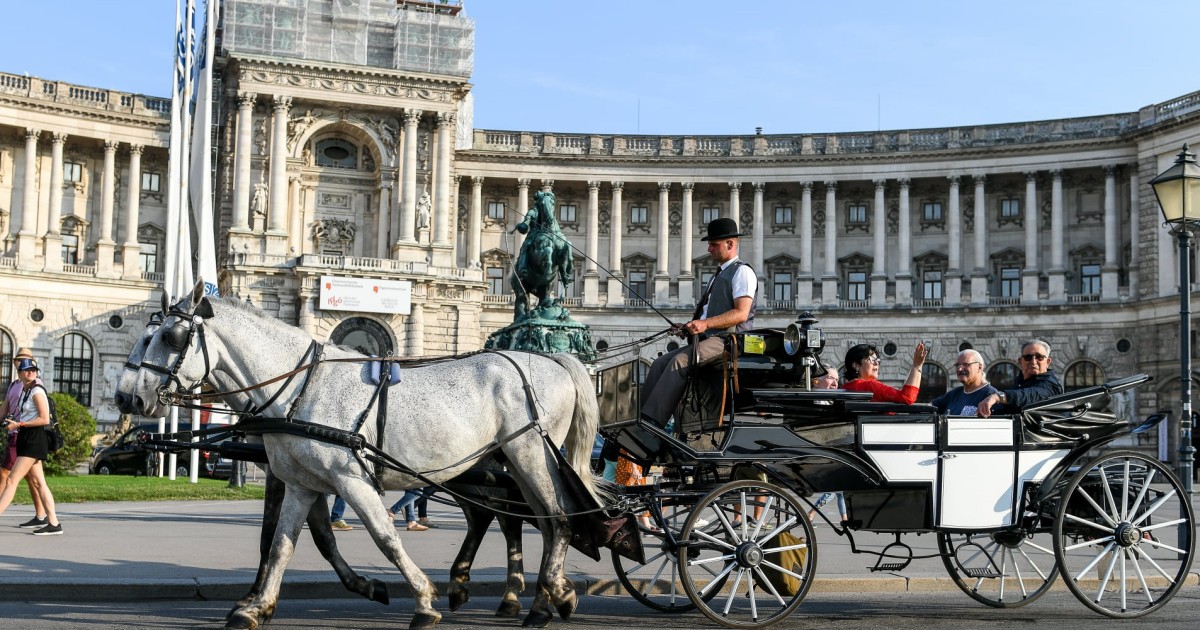
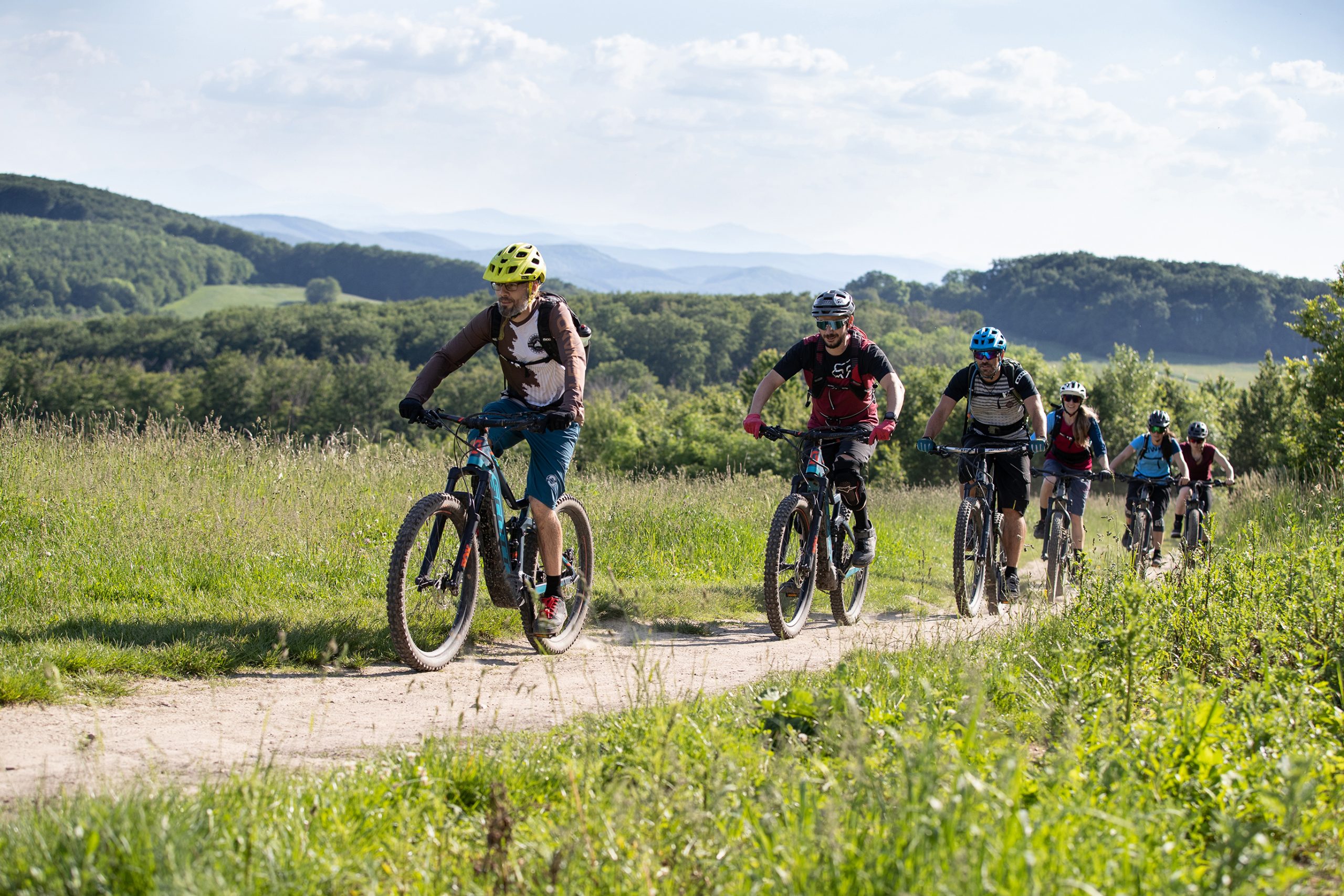
Cyclists can park their bikes and explore:

  • Schlossberg and the Clock Tower
  • Kunsthaus Graz (modern art museum)
  • Murinsel (floating island on the Mur River)
  • Traditional Styrian restaurants and wine taverns

Graz is an excellent place for a rest day, offering bike shops, repair services, and a wide choice of accommodations.


Eastern Styria – Vineyards, Thermal Baths and Rural Landscapes

After Graz, the route continues through Eastern Styria, a region known for rolling hills, vineyards, apple orchards, pumpkin seed oil production, and thermal spa resorts. This part of EuroVelo 14 offers a completely different atmosphere compared to the alpine sections: warmer climate, Mediterranean-influenced landscapes, and gentle countryside scenery.

Cyclists can combine riding with wellness tourism by visiting thermal spas, tasting local wines, and enjoying farm-to-table cuisine. This region is ideal for slower travel, culinary experiences, and relaxed cycling holidays.


Crossing into Hungary – New Cultural Horizons

Near the Austrian-Hungarian border, EuroVelo 14 continues into Hungary, opening up opportunities to extend the journey towards Lake Balaton or Budapest. The landscape becomes flatter, with open fields, wetlands, and small villages. The Hungarian section offers a more rural and traditional atmosphere, perfect for cyclists seeking less touristy environments.

This cross-border dimension makes EuroVelo 14 particularly attractive for international cycling tours and multi-country bikepacking adventures.


Interesting Facts About EuroVelo 14

EuroVelo 14 is themed around water, following major rivers that historically shaped trade routes, settlements, and cultural development in Central Europe. Many towns along the route developed around river crossings and trading posts, which today form the historic centers visited by cyclists.

The route is part of a broader European strategy to promote sustainable tourism, eco-friendly travel, and cross-border cultural exchange. It connects natural landscapes with urban heritage, creating a unique blend of nature and culture rarely found on a single cycling route.


Practical Information for Cyclists

Best Time to Cycle EuroVelo 14

The best period to cycle EuroVelo 14 is from late April to early October. Spring offers blooming landscapes and mild temperatures, while summer provides long daylight hours and vibrant outdoor culture. Autumn is ideal for wine lovers, as vineyards are active during harvest season.

Accommodation and Services

Along the route, cyclists will find:

  • Bike-friendly hotels and guesthouses
  • Campsites in rural areas
  • Pension-style accommodations in small towns
  • Restaurants offering regional cuisine
  • Repair stations and bike shops in major towns

Navigation and Route Planning

Although the route is well signposted in Austria, it is recommended to use GPX tracks with navigation apps such as Komoot, Ride with GPS, or Garmin devices. This ensures accurate routing, especially in rural areas and cross-border sections.


What Bikes Are Best for EuroVelo 14? – Detailed Analysis

Choosing the right bicycle is crucial for comfort and efficiency on EuroVelo 14. The route combines asphalt cycle paths, rural roads, and occasional gravel sections. Below is a detailed analysis of suitable bike types:

Touring Bikes – Best Overall Choice

Touring bikes are the most versatile option for EuroVelo 14. They are designed for long-distance travel with luggage, offering stable geometry, strong frames, wide gear ranges for climbs, and compatibility with racks and panniers. Touring bikes perform well on both asphalt and light gravel, making them ideal for multi-day journeys.

Gravel Bikes – Modern and Flexible

Gravel bikes offer a sporty yet comfortable riding position and wider tires compared to road bikes. They are suitable for riders who want speed on paved sections and confidence on gravel paths. Gravel bikes are an excellent choice for lightweight bikepacking setups on EuroVelo 14.

E-Bikes – Comfort and Accessibility

E-bikes are becoming increasingly popular on long-distance cycle routes. They make longer daily distances accessible to a broader audience and reduce fatigue on moderate climbs. For EuroVelo 14, e-bikes with long-range batteries are recommended, especially for riders planning 80–100 km per day.

Road Bikes – Limited Suitability

Road bikes can be used on EuroVelo 14, but they are less practical due to narrow tires and limited comfort on gravel sections. They are best suited for riders who travel light and stick strictly to paved parts of the route.


Top Attractions and Experiences Along EuroVelo 14

EuroVelo 14 offers a rare combination of:

  • Alpine mountain scenery
  • River landscapes and floodplains
  • UNESCO-listed historic cities
  • Wine regions and culinary tourism
  • Thermal spa towns
  • Rural villages and traditional culture

This diversity makes the route suitable not only for cycling enthusiasts but also for couples, families, senior travelers, and cultural tourists.


Conclusion – Why EuroVelo 14 Is One of Europe’s Best Cycling Routes

EuroVelo 14 is an exceptional long-distance cycling route that combines nature, culture, wellness, and gastronomy into a single coherent journey. From alpine lakes to vineyards and historic cities, the route showcases the diversity of Central Europe in a way that is only possible by bicycle. Whether you are planning a multi-week cycling holiday or a shorter section tour, EuroVelo 14 offers a rewarding, well-organized, and unforgettable cycling experience.

Bicycle Chain Wax vs Oil: What’s Better? A Complete 2026 Analysis

Bicycle Chain Wax vs Oil: Why Chain Lubrication Matters More Than You Think

The bicycle chain is the heart of your drivetrain. Every watt you produce, every climb, every acceleration depends on how efficiently your chain transfers power. Proper chain lubrication directly affects:

  • Drivetrain efficiency (watts lost to friction)
  • Chain, cassette, and chainring lifespan
  • Noise levels and ride feel
  • Maintenance time and long-term costs

In recent years, cyclists have increasingly questioned traditional oil-based chain lubricants. Paraffin-based wax chain lubes — once reserved for pro teams — are now mainstream. But which system is truly better?

This in-depth, SEO-optimized analysis compares traditional oil lubrication vs modern wax lubrication, with a special focus on Smoove Chain Lube and Dynamic Wax products.


How Bicycle Chain Lubrication Works

A bicycle chain consists of pins, rollers, and plates under constant load. Lubrication must penetrate inside the rollers, where most friction occurs, while also protecting the chain from contaminants.

There are three main lubrication categories:

  1. Oil-based wet lubes – thick, sticky, water-resistant
  2. Oil-based dry lubes – thinner oils with additives
  3. Wax-based lubricants – paraffin or wax emulsions

The key difference is what happens after application.

  • Oil remains wet, attracting dirt and grit
  • Wax dries into a solid, friction-reducing layer that repels contaminants

Traditional Oil Chain Lubes: Strengths and Weaknesses

Oil-based lubes have been the standard for decades — and for good reason.

Advantages of Oil Lubes

  • Excellent water resistance
  • Immediate usability after application
  • Easy to find and inexpensive
  • Works well in wet and muddy environments

Disadvantages of Oil Lubes

  • Attract dirt and dust
  • Form abrasive paste inside the chain
  • Increase drivetrain wear over time
  • Require frequent deep cleaning

In real-world riding, oil-lubed chains often appear lubricated but internally suffer accelerated wear due to contamination.


Wax Chain Lubrication: The Modern Alternative

Wax lubrication uses paraffin wax to coat chain components. Once cured, wax creates a dry boundary layer that:

  • Reduces friction
  • Repels dirt and dust
  • Minimizes metal-to-metal contact

Independent laboratory testing consistently shows lower drivetrain friction with wax compared to oil, especially in dry and dusty conditions.

Types of Wax Lubes

  • Hot-melt wax (chain immersion)
  • Drip-on wax emulsions (no melting required)

Modern drip-on waxes deliver most of the performance benefits of hot waxing with far less effort.


In-Depth Analysis: Smoove Chain Lube

What Is Smoove Chain Lube?

Smoove Chain Lube is a high-performance wax-based emulsion lubricant. It uses microscopic paraffin wax particles suspended in a liquid carrier that evaporates after application.

Once cured, Smoove leaves a dry, durable wax coating inside and outside the chain.

Technical Characteristics

  • Lubrication type: Paraffin wax emulsion
  • Application: Drip-on
  • Final state: Dry wax film
  • Dirt attraction: Very low
  • Noise reduction: Excellent

Performance & Efficiency

Independent testing and long-term rider data show that Smoove:

  • Produces lower friction than most oil-based lubes
  • Approaches hot-wax efficiency in dry conditions
  • Keeps drivetrains noticeably quieter
  • Reduces chain elongation over high mileage

Measured efficiency gains typically range from 1–3 watts compared to quality oil lubes — a meaningful difference for endurance and performance riders.

Chain Wear & Longevity Bicycle Chain Wax vs Oil

Because Smoove does not attract abrasive contaminants, chains lubricated with it often last 30–50% longer than oil-lubed chains under similar conditions.

This significantly reduces:

  • Chain replacement frequency
  • Cassette and chainring wear
  • Long-term maintenance costs

Wet-Weather Performance

Smoove performs well in dry conditions, dusty gravel, and light rain. In prolonged heavy rain, reapplication is required sooner than with wet oil lubes. However, unlike oil, Smoove does not turn into a grinding paste when wet dirt is present. If you dont want to waste your time ( professional chain waxing process is lasts approx, 1 hour – feel free to use our bike service for that )


Dynamic Wax Chain Lubes: Overview

Dynamic Wax products are classic paraffin-based drip wax lubricants designed for clean, efficient drivetrains.

Key Characteristics

  • Paraffin-based wax formula
  • Drip-on application
  • Clean, dry chain finish
  • Slightly firmer wax feel than Smoove

Dynamic Wax performs exceptionally well in dry conditions and is popular among road and gravel riders who prioritize cleanliness and simplicity.


Comparison Table: Smoove vs Dynamic Wax vs Oil

FeatureSmoove Chain LubeDynamic WaxTraditional Oil Lube
Lubrication typeWax emulsionParaffin waxOil-based
Friction efficiencyVery highHighMedium
Dirt attractionVery lowVery lowHigh
Chain cleanlinessExcellentExcellentPoor
Wet weather durabilityMediumMedium-lowHigh
Ease of applicationEasyEasyVery easy
Maintenance frequencyLowLowHigh
Drivetrain lifespanLongLongShorter
Best use caseAll-round performanceDry / gravel ridingWet commuting

Which Chain Lubrication Should You Choose?

Choose Wax (Smoove or Dynamic) If You:

  • Ride in dry or mixed conditions
  • Want a clean, quiet drivetrain
  • Care about efficiency and component longevity
  • Prefer less frequent deep cleaning

Choose Oil If You:

  • Ride daily in heavy rain or mud
  • Need immediate water resistance
  • Prefer minimal preparation

Final Verdict: Wax vs Oil

Wax lubrication is no longer a niche solution. Modern products like Smoove Chain Lube and Dynamic Wax deliver measurably lower friction, cleaner drivetrains, longer component life, and reduced maintenance over time.

Traditional oil lubes still make sense for wet commuting and extreme conditions, but for most road, gravel, MTB, and touring cyclists, wax-based lubrication is the superior long-term choice.

For riders seeking the best balance between performance, cleanliness, and ease of use, Smoove Chain Lube stands out as one of the most complete chain lubrication solutions available today.

What to Do in Vienna in 2026 – Top 10 Unusual Activities

Experience Vienna Beyond the Ordinary

Vienna is timeless — music, palaces, imperial cafés — but 2026 is the year to explore the city in unexpected ways. From bold architecture and quirky museums to thrill rides and immersive tours, this guide will take you well beyond the typical city break. Discover Vienna like a local, an adventurer, and a culture-vulture at the same time!


1. Explore the Newly Restored Villa Beer – Modernist Gem

https://www.iconichouses.org/foto/at-risk/villa-beer/04_villa_beer_josef_frank_full.jpg
https://cdn.mos.cms.futurecdn.net/v2/t%3A129%2Cl%3A0%2Ccw%3A2480%2Cch%3A1395%2Cq%3A80%2Cw%3A2480/37AiiuJtF5bdyqXYerc3LD.jpg
https://cdn.mos.cms.futurecdn.net/37AiiuJtF5bdyqXYerc3LD.jpg

4

Vienna’s architectural scene will get a boost in 2026 with the public opening of Villa Beer — a rare modernist house by Josef Frank. This previously private residence has been meticulously restored and will offer tours, cultural events, and even overnight stays. It’s a must-visit for design lovers and anyone who wants a deeper glimpse into 20th-century Austrian style.

Best For: design lovers, architecture buffs


2. Vienna’s Roller Coaster Revolution – Ride Wiener Looping

https://prater.at/app/uploads/2025/06/A-Wiener-Looping-Monsieur-Sky_MG_1713-1024x683.jpg
https://prater.at/app/uploads/2021/02/A-Praterturm-2-WT4B9943-hr.jpg
https://justgoplacesdotme1.files.wordpress.com/2015/06/img_73561.jpg

4

Visit the Wurstelprater amusement park, but instead of just seeing the iconic Ferris wheel, ride the new Wiener Looping steel coaster — exhilarating inversions, steep drops, and views you won’t forget. Built by Mack Rides and operational since 2025, this attraction gives Vienna a theme-park thrill that few expect from the cultural capital.

🎢 Best For: thrill seekers, families


3. The Third Man Museum – A Cinematic Time Capsule

https://www.3mpc.net/englsamml_htm_files/1558%402x.jpg
https://www.wien.info/resource/image/417674/1x1/1000/1000/614734b14c06557c881cdff81581868f/F8A213EB96A1265E92183343EE8584B0/50987-dritte-mann-museum.webp
https://www.wien.info/resource/image/296340/3x2/894/596/f117566ac27371b7d4edfa6c888e8c99/AD224E0C3C8824F350CBA634EE226CE7/der-dritte-mann-film-standbild.webp

4

Dive into the surreal world of Vienna through The Third Man — the classic post-war noir film. The Third Man Museum is a treasure trove of memorabilia, original posters, and artifacts that whisk visitors into 1940s Vienna — as seen on screen. Film lovers will find its immersive displays oddly captivating.

🎬 Best For: film buffs, history fans


4. Vienna Transport Museum “Remise” – Wheels Through Time

https://upload.wikimedia.org/wikipedia/commons/1/19/Wien-Landstra%C3%9Fe%2C_Verkehrsmuseum_Remise%2C_Bus_und_Stra%C3%9Fenbahn.JPG
https://www.viennapass.de/fileadmin/user_upload/viennapass/sehenswuerdigkeiten/remise/Verkehrsmuseum-Remise-Header-_c_-Verkehrsmuseum-Wien.jpg
https://automuseums.info/sites/default/files/koller_oldtimermuseum_ausst_05.jpg

4

Ever wondered how the city moved through time? At the Vienna Transport Museum Remise, you can wander through huge depots of historic trams, buses, and rail cars dating back to the 19th century — an unexpectedly fascinating look at Vienna’s urban evolution.

🚋 Best For: transport lovers, families, museum explorers


5. Free Outdoor Culture – Festivals, Cinemas & Winter Markets

Vienna’s cultural calendar in 2026 is full of free open-air experiences. From Rathausplatz Film Festival outdoor cinema to Christmas markets set against palace backdrops, these events offer a rich dose of seasonal charm without spending a cent. Expect concerts, ballet screenings, and winter food stalls with a local flair.

🎟️ Best For: budget travelers, culture lovers


6. Quirky Museums You’d Never Guess

Go slightly “off-beat” with experiences like:

  • Globe Museum – the only museum in the world dedicated to globes.
  • Vienna Funeral Museum – explore Viennese funeral traditions, bizarre yet enlightening.
  • Time Travel Vienna – a 5D storytelling adventure through Vienna’s past.

🧠 Best For: anyone who loves strange, wonderful places


7. Take a Nighttime Fiaker Ride Through Vienna

https://cdn.prod.website-files.com/61d343b66fffa118275870bc/68d1474933c27bbd405317aa_Punsch_RD-small-05707.jpg
https://www.wien.info/resource/image/298030/Hero-Header/1890/700/4cdd03c2708d944e1af4c3d1e751b3f1/8F1CB25E73F5131BEFE68024AA3C9844/fiaker-altstadt-michaelerplatz.webp
https://cdn.getyourguide.com/img/tour/63da49f46673b.jpeg/148.jpg

4

For a romantic or whimsical evening, take a horse-drawn carriage (Fiaker) ride through Vienna’s historic streets after dark. Glittering lights, cobblestones, and old-world charm make it a unique way to explore the city.

🐴 Best For: couples, romantics


8. Vintage Shopping & Hidden Art Markets

Looking for quirky souvenirs? Vienna’s vintage and flea market scene is booming, with underground markets, record shops, and boutique finds across neighborhoods like the 7th and 15th districts. You’ll discover items you simply won’t find in standard souvenir shops.

🛍️ Best For: collectors, fashion lovers


9. Vienna E-Bike Adventure – Personalized MTB Tour with Austriatrails.com

https://www.wienerwald.info/data/_wienerwald/mediadb/cms_pictures/%7Bbd887261-a823-9d96-6c35-0cceb1c6ef96%7D.jpg

One of the most unique experiences in 2026 is a personalized mountain-biking adventure through the rolling landscapes around Vienna, Mödling, and Baden. The E-Bike All Inclusive Personalized MTB Tour by AustriaTrails takes you on an electrifying 4-hour journey tailored to your pace. Expect:

  • Personal bike guide & professional transfer
  • High-end mountain e-bike & safety gear
  • Epic climbs, thrilling descents & stunning views
  • Lunch, local beer, photos, and short videos included

Whether you’re an experienced rider or keen to try MTB for the first time, this adventure blends active exploration with Austrian flair — making it one of the most unforgettable activities in the region.

🚴 Best For: adventurers, cyclists, outdoor lovers

👉 Book before visiting to secure your slot — it’s popular and personalized!


10. Vienna’s Coffeehouse Renaissance & Hidden Café Culture

https://upload.wikimedia.org/wikipedia/commons/c/c6/Cafe-schwarzenberg-innen-viennaphoto-at.jpg
https://www.wien.info/resource/image/295186/3x2/894/595/ea61094df0656fe75858ed9207ed70e0/0C362E96149A295578F102667BB9912C/40566-cafe-central.webp
https://www.wien.info/resource/image/894280/Hero-Header/1890/700/7186308e1dc71d4105664ffd3d985240/14FF9DD20BC86328CAC29F3712455F29/vves-c26-07-05-2025.webp

4

Vienna’s coffee culture is as iconic as its music. In 2026, discover historic cafés and modern reinterpretations — from marble-top Classic Viennese houses to hip hybrid cafés pairing coffee with local music and art. Indulge in Viennese pastries that rival art masterpieces.

Best For: foodies, culture seekers


Bonus Tips for 2026

  • Design & Art Tours: Vienna’s creative scene is evolving with pop-up galleries and contemporary exhibitions.
  • Seasonal Events: Oktoberfest-style Vienna WiesnFest returns with beer tents and Alpine cheer.
  • Nature Escapes: Ride e-bikes along the Danube Island or hike local vineyards.

Final Thoughts

Vienna in 2026 is so much more than palaces and orchestras. It’s a city of hidden gems, rugged adventures, quirky museums, and unforgettable local experiences. Whether you’re seeking romance, adrenaline, culture, or just a good cup of coffee in a storied café — Vienna delivers.

Plan ahead, explore widely, and make your trip truly exceptional!

Vienna to Salzburg by Bike

3 Best Cycling Routes – From Beginners to Professionals

Cycling from Vienna to Salzburg is one of the most iconic multi-day bike adventures in Austria. It combines world-class scenery, charming old towns, alpine foothills, crystal-clear lakes, and perfectly maintained cycling infrastructure.

Whether you’re a first-time bike tourist, a confident recreational rider, or a hardcore gravel enthusiast, there is a route that fits your level, fitness, and sense of adventure.

In this guide, we present three carefully designed Vienna–Salzburg routes optimized for gravel bikes and e-bikes:

  • 🟢 Beginner Route – the most popular and easiest classic
  • 🟡 Intermediate Route – more variety, hills, and alpine lakes
  • 🔴 Advanced Route – technical gravel, mountains, and epic climbs

Each route includes:
✔ daily stages
✔ distances
✔ elevation gain
✔ highlights
✔ difficulty profile
✔ who it’s perfect for

So you can confidently choose your tour – and the right bike rental – before you start.


🟢 ROUTE 1: Beginner Level

Danube Cycle Path + Salzkammergut Lakes (Classic & Most Popular)

Vienna → Linz → Salzburg

Why this route?
This is Austria’s most famous long-distance cycle route. It follows the Danube Cycle Path and later transitions into the rolling lake region of Salzkammergut. It is extremely well signposted, mostly flat, traffic-free, and full of cafés, hotels, and bike services.

Perfect for:

  • First-time bike tourers
  • Families
  • E-bike beginners
  • Riders who prefer comfort over challenge

Surface: 85% asphalt, 15% compact gravel
Technical difficulty: Very low
Navigation: Easy, fully signposted
Total distance: ~330 km
Total elevation: ~2,100 m
Recommended duration: 5–6 days


Day 1: Vienna → Krems

Distance: 78 km
Elevation: +250 m
Highlights: Wachau Valley, vineyards, Danube river views

You leave Vienna on a dedicated riverside cycle path and enter the UNESCO-listed Wachau Valley. Castles, monasteries, and wine villages line the riverbanks.


Day 2: Krems → Linz

Distance: 95 km
Elevation: +300 m
Highlights: Schlögen Loop, baroque town of Linz

A relaxed riverside ride through Upper Austria. The famous Schlögen Loop is one of the most photogenic spots on the entire Danube.


Day 3: Linz → Gmunden

Distance: 75 km
Elevation: +500 m
Highlights: Traun River, Traunsee Lake

You leave the Danube and follow the Traun River into the Salzkammergut lake district. The turquoise waters of Traunsee feel like a reward after two flat days.


Day 4: Gmunden → St. Wolfgang

Distance: 42 km
Elevation: +450 m
Highlights: Wolfgangsee Lake, alpine scenery

Short and scenic. You ride along lakes, forests, and traditional villages.


Day 5: St. Wolfgang → Salzburg

Distance: 40 km
Elevation: +600 m
Highlights: Mondsee, Salzburg Old Town

A gentle alpine crossing followed by a smooth descent into Salzburg.


Who should choose Route 1?

If you want a stress-free cycling holiday with maximum sightseeing and minimal physical strain, this is your route. It’s also the best choice for e-bikes and casual riders.


🟡 ROUTE 2: Intermediate Level

Vienna Woods + Alpine Foothills + Lakes

Vienna → Mariazell → Bad Ischl → Salzburg

Why this route?
This route leaves the flat Danube and heads into the Vienna Woods and Alpine foothills. It adds rolling climbs, forest gravel roads, and more solitude while still offering comfortable daily distances.

Perfect for:

  • Recreational cyclists
  • Gravel beginners
  • E-bike riders wanting more challenge
  • Riders seeking variety beyond the Danube

Surface: 60% asphalt, 40% gravel
Technical difficulty: Low–medium
Total distance: ~350 km
Total elevation: ~5,400 m
Recommended duration: 6–7 days


Day 1: Vienna → St. Pölten

Distance: 65 km
Elevation: +600 m
Highlights: Vienna Woods, forest climbs

You leave the city through the Wienerwald with gentle gravel climbs and panoramic views.


Day 2: St. Pölten → Mariazell

Distance: 75 km
Elevation: +1,400 m
Highlights: Alpine passes, Mariazell Basilica

A challenging but beautiful day. Mariazell is Austria’s most famous pilgrimage town.


Day 3: Mariazell → Göstling an der Ybbs

Distance: 55 km
Elevation: +900 m
Highlights: Alpine valleys, waterfalls

Forest roads and mountain scenery dominate this stage.


Day 4: Göstling → Bad Ischl

Distance: 70 km
Elevation: +1,100 m
Highlights: Salzkammergut lakes, spa town

Rolling terrain and postcard-worthy alpine views.


Day 5: Bad Ischl → St. Gilgen

Distance: 40 km
Elevation: +700 m
Highlights: Wolfgangsee Lake

Short but hilly, perfect for relaxed exploration.


Day 6: St. Gilgen → Salzburg

Distance: 45 km
Elevation: +700 m
Highlights: Alpine descent into Salzburg

A scenic finale with long downhill sections.


Who should choose Route 2?

If you want real mountain scenery without extreme difficulty, this route offers the perfect balance of challenge, comfort, and sightseeing.


🔴 ROUTE 3: Advanced Level

Alpine Gravel Epic

Vienna → Hochschwab → Dachstein → Salzburg

Why this route?
This is a true gravel adventure through Austria’s wildest regions. Expect long climbs, technical gravel descents, remote valleys, and jaw-dropping mountain passes.

Perfect for:

  • Experienced gravel riders
  • Bikepackers
  • High-fitness e-bike users
  • Riders seeking a physical and technical challenge

Surface: 70% gravel, 30% asphalt
Technical difficulty: Medium–high
Total distance: ~420 km
Total elevation: ~9,500 m
Recommended duration: 7–9 days


Day 1: Vienna → Semmering

Distance: 85 km
Elevation: +1,400 m
Highlights: Semmering Pass, mountain railway views

A tough start with a legendary alpine crossing.


Day 2: Semmering → Wildalpen

Distance: 70 km
Elevation: +1,600 m
Highlights: Hochschwab Massif, wilderness gravel

Remote forest roads and alpine solitude.


Day 3: Wildalpen → Eisenerz

Distance: 60 km
Elevation: +1,300 m
Highlights: Erzberg mine, alpine gravel climbs

Technical gravel sections and steep gradients.


Day 4: Eisenerz → Hallstatt

Distance: 65 km
Elevation: +1,500 m
Highlights: Hallstatt UNESCO town, Dachstein Alps

One of the most scenic days in all of Austria.


Day 5: Hallstatt → Ramsau am Dachstein

Distance: 45 km
Elevation: +1,100 m
Highlights: Dachstein Glacier views

High-alpine plateau riding.


Day 6: Ramsau → Bad Gastein

Distance: 75 km
Elevation: +1,700 m
Highlights: Alpine passes, thermal spa town

Long mountain stage with epic descents.


Day 7: Bad Gastein → Salzburg

Distance: 55 km
Elevation: +1,000 m
Highlights: National park valleys, alpine finale

A dramatic final day into Salzburg.


Who should choose Route 3?

This route is for riders who want a once-in-a-lifetime alpine gravel expedition. It requires good fitness, confident bike handling, and proper equipment.


🚲 Which Bike Should You Rent?

RouteRecommended BikeWhy
BeginnerRent a E-Bike or Comfort GravelFlat stages, relaxed pace
IntermediateGravel Bike or E-BikeMixed terrain, moderate climbs
AdvancedHigh-End Gravel or E-BikeTechnical gravel, steep climbs

🏁 Final Thoughts: Which Route Is Right for You?

Your ProfileBest Route
First-time bike tourist🟢 Route 1
Recreational rider🟡 Route 2
Experienced gravel rider🔴 Route 3
E-bike beginner🟢 Route 1
Adventure seeker🔴 Route 3

Hydraulische Fahrradbremsen – selber reparieren oder in die Werkstatt geben?

Hydraulische Scheibenbremsen gelten als High-End-Bremsen, die hervorragende Bremskraft, feinfühlige Modulation und Zuverlässigkeit selbst bei schlechten Bedingungen bieten. Doch wenn sie einmal Probleme machen – zum Beispiel Luft im System, verschlissene Beläge oder Ölwechsel – stellt sich vielen Radfahrer:innen die Frage: Soll ich das selbst machen oder zum Profi geben?


1. Warum hydraulische Bremsen besonders sind

Hydraulische Bremsen nutzen Flüssigkeit (Mineralöl oder DOT), um Kraft von den Hebeln zu den Bremskolben zu übertragen. Das System ist druckdicht, fein dosierbar und wartungsintensiv, wenn man Perfektion und Sicherheit will. Ein unsauber entlüftetes System kann zu toten, schwammigen oder gefährlichen Bremsen führen – was im Ernstfall ein Sicherheitsrisiko ist.


2. Kosten: Werkstatt vs. DIY – direkter Preisvergleich

Werkstattpreise (Wien, Mödling, Baden)

Viele Fahrradwerkstätten in und um Wien bieten konkrete Preise für hydraulische Bremsen an. Hier einige Beispiele:

LeistungPreis (pro Bremse)Quelle
Bremsen entlüften + Bremsflüssigkeit inkl.ab €19Austriatrails.com
Hydraulische Bremsanlage Service€30 pro BremseRadLiebe.at
Bremsen + Einstellungen (Bremsbeläge)€24 pro BremseBikehanic Preisliste
Allgemeiner großer Fahrradservice (inkl. Bremsen)bis €145Velo Wien
Mobiler Service Kontrolle/klein~€26–€40 (Basis)Fahrradpannendienst Wien
Bründl Sports Bremsenserviceab €30–€35Bründl Sports

➡️ Fazit: Für eine gründliche Entlüftung inkl. Öl, Reinigung und Kontrolle zahlt man in einer Werkstatt oft €30–€60 pro Bremse. Komplettes Brems-Service oder Kombi-Service kann mehr kosten, aber umfasst mehr.


DIY-Kosten (Werkzeug + Material)

Wer es selbst machen möchte, braucht mindestens:

PositionEinmalkostenAnmerkung
Entlüftungskit (Bleed Kit)€30–€90Abhängig von Marke/Komplettset
Bremsflüssigkeit (Mineralöl/DOT)€10–€30Pro Bike/Bremse
Adapter/Schläuche/Einmalartikel€5–€15Kleinmaterial
Bremsbeläge (falls nötig)€15–€40Pro Bremse
Montageständer (optional)€30–€60Für komfortableres Arbeiten

➡️ Minimale DIY-Investition: ca. €60–€150+, wenn man alles neu kauft.
➡️ Realistische DIY-Investition: €150–€300+, wenn mehrere Werkzeuge oder höherwertige Kits erforderlich sind.


Zeitaufwand: Werkstatt vs. DIY

AufgabeWerkstattDIY
Bremsen entlüften~30–60 min~60–120+ min (Erstmalig)
Beläge wechseln + reinigen~15–30 min30–60 min
Werkzeug vorbereiten/sauber machen15–30 min
Fehlerkorrektur/erneute Entlüftung30–90 min

Fazit: Ein erfahrener Profi braucht oft deutlich weniger Zeit und macht es gleich beim ersten Mal sauber. Ohne Erfahrung verbringt man oft mehr Zeit mit Anleitung, Vorbereitung und Fehlerkorrekturen.


3. Risiken und versteckte Kosten beim DIY

Qualität der Arbeit

Ein unsauber entlüftetes System kann Luftblasen behalten, was zu:

  • verminderter Bremsleistung
  • unkontrollierbarem Bremsverhalten
  • Sicherheitsrisiken

führt. Die Werkstatt gewährleistet in der Regel professionelle Qualität, Prüfung und oft Garantie auf die Arbeit.


Werkzeugverschleiß und Wiederbeschaffung

Viele DIY-Leute unterschätzen:

  • Verschleiß an Werkzeugen
  • zweitmaligen Einkauf, wenn etwas falsch gekauft wurde
  • hohe Kosten, wenn spezielles Werkzeug fehlt

Wenn ein bestimmtes Spezialwerkzeug fehlt, kann man schnell €50–€100 extra ausgeben – und das nur für einen einzigen Service. Hydraulische Fahrradbremsen reparieren oder Werkstatt.


4. Vergleichstabelle: DIY vs. Werkstatt

KriteriumWerkstattDIY zuhause
Direkte Kosten€30–€60 pro Bremse€60–€300+ (aller Aufwand)
Zeit~30–90 min60–240+ min
Werkzeug nötigKeine eigenen InvestitionenHoch (Bleed Kit, Ständer etc.)
Risiko FehlerSehr geringMittel–hoch
SicherheitHochAbhängig von Erfahrung
GarantieOft inkludiertKeine

5. Lokaler Kontext: Wien, Mödling, Baden

In Wien und Umgebung gibt es viele Fahrradwerkstätten – z. B. SG Velo in 1230 Wien, FaduBike, Velo Wien, Austriatrails.com oder mobile Fahrradservices, die oft günstige Fixpreise ohne große Vorabkalkulation anbieten.

Insbesondere in Mödling und Baden Umgebung bieten mobile Werkstätten oder lokale Shops ebenfalls vergleichbare Preise (z. B. €30–€50 für Hydraulik-Service). Viele Werkstätten bieten bei mehreren Arbeiten vergünstigte Paketpreise an.


6. Schlussfolgerung – lohnt sich DIY wirklich?

Auf den ersten Blick kann DIY günstiger erscheinen – vor allem, wenn man nur Teile und kein Personal bezahlt. Doch realistische Anfangsinvestitionen für Werkzeuge, Zeitaufwand, mögliche Fehler und Sicherheitsrisiken machen DIY oft teurer und riskanter. Besonders bei sicherheitskritischen Komponenten wie Bremsen lohnt es sich, Profi-Mechaniker zu beauftragen. Hier bekommt man:

✔ fundiertes Fachwissen
✔ professionelle Werkzeuge
✔ saubere Arbeiten ohne Lernkurven
✔ meist kurze Wartezeiten und Garantie

Kurz gesagt: Für hydraulische Bremsen ist der Gang zur Werkstatt in den meisten Fällen sinnvoller und am Ende günstiger, wenn man alle Kostenfaktoren berücksichtigt – besonders in einem Ballungsraum wie Wien, Mödling oder Baden.

Service für Federgabel & Dämpfer: Selbst machen oder in die Fahrradwerkstatt geben?

Einleitung

In Österreich – besonders in Regionen wie Wien, Mödling, Wienerwald und Baden – werden Mountainbikes und E-MTBs intensiv genutzt. Ob Wienerwald Trails, Anninger, Helenental oder Stadtfahrten: Federgabel und Dämpfer arbeiten ständig. Damit sie zuverlässig funktionieren, brauchen sie regelmäßigen Service.

Doch was ist sinnvoller?
👉 Service selbst durchführen
oder
👉 zu einer professionellen Fahrradwerkstatt in Wien / Mödling / Baden bringen?

Diese Analyse erklärt:

  • warum Suspension-Service notwendig ist
  • welche Arbeiten ausgeführt werden
  • welche Kosten in Österreich realistisch sind
  • wie viel Zeit DIY vs. Werkstatt beansprucht
  • welche Risiken bestehen
  • warum für die meisten Fahrer in Österreich die Werkstatt die bessere Entscheidung ist

Warum ist regelmäßiger Service in Österreich besonders wichtig?

In Niederösterreich und Wien herrschen:

  • Staub im Sommer
  • Feuchtigkeit & Schlamm im Herbst
  • Salzreste im Winter
  • häufige Temperaturwechsel

Das beschleunigt Verschleiß an:

  • Dichtungen
  • Schmieröl
  • Luftkammern
  • Standrohren

Folgen ohne Service

  • schlechtere Leistung
  • weniger Komfort
  • höheres Unfallrisiko
  • teure Reparaturen
  • oft Totalschaden von Gabel oder Dämpfer

Empfohlene Serviceintervalle

Nutzung in ÖsterreichIntervall
Freizeit / Stadt Wien1× pro Jahr
Wienerwald Trails / Mödling / Badenalle 100 Stunden
E-MTB (z. B. Wienerwald / Helenental)eher 50–80 Stunden
Bikeparkdeutlich häufiger

Servicearten

1️⃣ Kleiner Service (Lower Leg / Air Can)

  • Ölwechsel Schmierbereiche
  • Reinigung
  • Dichtungen pflegen

2️⃣ Großer Service (200-Stunden-Service)

  • komplette Zerlegung
  • alle Dichtungen neu
  • neues Öl
  • volle Funktionsprüfung

Kostenvergleich – Österreich realistisch (Wien / Mödling / Baden)

ServiceartFahrradwerkstatt (AT Preise)DIY Kosten
Kleiner Gabelservice80 – 140 €40 – 90 €
Großer Gabelservice150 – 260 €120 – 250 €
Dämpferservice110 – 190 €80 – 160 €
Fehler durch DIY0 €bis 700 €+ möglich

⏱️ Zeitaufwand – ganz wichtig für Vergleich

In Österreich arbeiten viele Menschen, viele haben Familie und nur wenig Freizeit – deshalb bedeutet Zeit hier auch echte Kosten

Zeitaufwand in Realität

AufgabeSelbst machenFahrradwerkstatt Wien/Mödling/Baden
Vorbereitung lernen (Videos/Manuals)1–3 Stunden0
Werkzeuge organisieren1–2 Stunden0
Service durchführen2–5 Stunden0
Aufräumen & Korrekturen1–2 Stunden0
Gesamtaufwand privat4 – 10 Stunden5–10 Minuten Abgabezeit

Was braucht man für DIY-Service?

Werkzeug

  • Drehmomentschlüssel
  • Spezialschlüssel
  • Hochwertiges Öl
  • Suspension Fett
  • Dichtungssätze
  • saubere Arbeitsfläche

Fachwissen

  • exakte Ölmenge
  • richtige Viskosität
  • korrekter Luftdruck
  • Montage- & Sicherheitswissen

Risiken beim Selbermachen

Typische Fehler in Österreich häufig gesehen in Werkstätten:

  • falsches Öl
  • zu viel oder zu wenig Öl
  • beschädigte Dichtungen
  • Kratzer auf Standrohr → oft Totalschaden
  • fehlerhafte Montage
  • Garantieverlust

Viele Radwerkstätten rund um Wien, Baden und Mödling berichten, dass 30–40 % ihrer Reparaturen auf misslungene DIY-Versuche zurückgehen.


Warum Fahrradwerkstatt in Österreich die bessere Wahl ist

Vorteile professioneller Werkstatt in Wien / Mödling / Baden

✔ Spezialwerkzeug
✔ geschulte Techniker
✔ Originalteile
✔ Garantie auf Arbeit
✔ schnelle Durchführung
✔ keine Risiken
✔ Bike wird komplett überprüft

Viele Kunden sagen danach:
👉 „Fühlt sich wie ein neues Bike an!“


Leistungsunterschied nach Profi-Service

  • bessere Sensibilität
  • mehr Kontrolle
  • sichereres Fahrgefühl
  • längere Lebensdauer der Teile

Besonders relevant für:

  • Wienerwald Trails
  • Mödling Anninger
  • Helenental
  • MTB & E-MTB Fahrer

Vergleichstabelle – nüchtern & ehrlich

KriteriumSelbst machenWerkstatt Wien/Mödling/Baden
Kostenkurzzeitig günstigerfair & planbar
Risikohochsehr gering
Ergebnisungewissprofessionell
Zeitinvestsehr hochminimal
Stresshochkeiner
Garantiekeineoft vorhanden

Fazit

In Österreich – besonders im Raum Wien, Mödling und Baden – ist professioneller Suspension-Service in den meisten Fällen die deutlich bessere Entscheidung.

✔ mehr Sicherheit
✔ besseres Fahrgefühl
✔ weniger Stress
✔ langfristig günstiger

Wer sein Fahrrad liebt, sollte Federgabel & Dämpfer regelmäßig von Profis warten lassen. So bleibt das Bike zuverlässig, komfortabel und sicher – egal ob in Wien, am Anninger, im Wienerwald oder auf Touren durch Niederösterreich.

Battery Capacity of Electric Bicycles in Cold Weather: Deep Analysis, Real Behavior During Riding, and Practical Solutions

Introduction

Cold weather significantly affects the performance and usable capacity of electric bicycle batteries. Riders living in regions with winter climates quickly notice reduced range, weaker acceleration, voltage drop, and longer charging times. However, these effects are often misunderstood. This article provides a science-oriented, deeply analytical explanation of how low temperatures—especially below 0°C—affect lithium-ion e-bike batteries during riding, not only while the bike is parked. We will examine real behavior under dynamic load conditions, present comparative data, analyze electrochemical processes, and provide expert recommendations for safe and efficient winter operation.


1. Why Cold Temperatures Affect E-Bike Batteries

Most electric bicycles use Lithium-ion (Li-ion) or Lithium-polymer (LiPo) batteries. Their behavior is governed by electrochemical reactions occurring inside the battery cells. Temperature directly influences:

  • Ion mobility inside electrolyte
  • Internal resistance
  • Voltage stability
  • Discharge efficiency
  • Chemical degradation speed

Key Scientific Principles

  1. The colder the battery, the slower lithium ions move.
  2. Internal resistance increases in cold temperatures.
  3. Voltage dips occur faster under load.
  4. Battery management systems (BMS) restrict power to protect the battery.

This means that even if the battery is fully charged, it cannot deliver its rated capacity efficiently in sub-zero conditions.


2. Actual Capacity Loss During Riding in Winter

Cold weather does not just reduce stored capacity—it reduces usable capacity while riding.

Typical Capacity Loss by Temperature

Ambient TemperatureExpected Capacity LossBehavior During Riding
+20°C (optimal)0%Stable output, max range
+10°C5–10%Slight efficiency loss
0°C10–20%Noticeable range drop
−5°C20–35%Power reduction, voltage sag
−10°C30–50%Major losses, faster drain
−20°C50–70%Severe instability, possible shutdown

3. What Happens to the Battery During Riding in the Cold

Riding an e-bike in winter introduces dynamic stress factors:

  • Power bursts during acceleration
  • Uphill load demands
  • Regenerative braking (if equipped)
  • Constant cycling stress

Internal Effects During Riding

  1. Increased Internal Resistance
    Cold electrolyte thickens, slowing ion transfer. The battery has to “work harder,” causing:
  • Faster discharge perception
  • Lower available amperage
  • Heat buildup in some cells
  1. Voltage Sag Under Load
    When a rider accelerates or climbs hills, the battery voltage temporarily drops more than in warm weather. In deep cold:
  • Controller limits output
  • Assist levels weaken
  • Motor feels “lazy” or delayed
  1. BMS Protective Interventions
    Modern batteries have safety algorithms:
  • Reduce current flow
  • Prevent deep discharge
  • Shut down at critically low temperature

This can cause sudden power cutoffs even when battery still shows charge percentage.


4. Comparative Performance Analysis

Performance Comparison: Warm vs Cold Riding

Parameter+20°C0°C−10°C
Peak Power Output100%90%70–75%
Available Battery Capacity100%80–85%55–65%
Voltage StabilityExcellentModerate sagStrong sag
Assist ReliabilityVery stableMostly stableOccasional cutoffs
Battery Longevity ImpactNormal wearMild stressHigh stress

5. Charging Behavior in Cold Weather

Charging Risks

Lithium-ion batteries must not be charged below 0°C. Charging in freezing temperatures leads to:

  • Lithium plating
  • Permanent capacity damage
  • Increased risk of internal short circuits

Safe Charging Recommendations

TemperatureCharging Recommendation
+10°C to +25°CIdeal
0°C to +10°CAcceptable, slower
Below 0°CNot allowed

If you finish riding in −10°C, always bring the battery indoors and allow it to warm up before charging.


6. Long-Term Degradation Effects of Winter Riding

Even if short-term performance issues are acceptable, chronic winter exposure accelerates wear.

Effects include:

  • Permanent loss of capacity over seasons
  • Faster cycle degradation
  • Microstructural damage
  • BMS calibration drift

Estimated annual degradation increase:

Riding ConditionExpected Annual Battery Wear
Warm climate usage5–8%
Mixed seasonal usage8–12%
Frequent winter riding −10°C12–20%

7. Practical Tips for Using an Electric Bicycle in Sub-Zero Conditions

Based on scientific analysis and real-world testing, here are practical solutions.

7.1 Before Riding

  • Store the battery indoors at room temperature.
  • Keep it charged between 60%–80% before winter use.
  • Pre-warm the battery by keeping it inside a jacket or insulated case.

7.2 During Riding

  • Start in eco mode, allow battery to warm internally gradually.
  • Avoid full-throttle acceleration initially.
  • Maintain steady speed to reduce voltage sag.
  • Avoid pushing battery below 20% in freezing weather.

Use Thermal Protection

Battery insulation improves winter performance dramatically.

Options:

  • Neoprene battery covers
  • Thermal wraps
  • Built-in insulated housings

7.3 After Riding

  • Bring the battery indoors immediately.
  • Let it rest for 1–2 hours before charging.
  • Store between 40%–70% if not riding daily.
  • Avoid leaving the bike outside overnight.

8. Safety Considerations

Cold climate riding increases risks:

  • Sudden power cut on icy road
  • Reduced braking assistance (for hub motors with regen)
  • Unpredictable battery readings

Never ignore:

  • Warning lights
  • Power drop symptoms
  • Battery overheating after cold ride

9. Conclusion

Cold weather has a profound effect on electric bicycle battery capacity, not only when parked but especially during active riding under load. Lithium-ion chemistry suffers reduced ion mobility, increased internal resistance, voltage instability, and protective shutdown behavior in sub-zero environments. Riders may lose 30–60% usable range in temperatures of −10°C, experience weaker performance, and accelerate long-term battery degradation.

However, with proper care—indoor storage, temperature management, insulated battery protection, controlled charging, and mindful riding behavior—electric bicycles remain usable, reliable, and safe in winter climates.


Summary

Electric bicycle batteries lose significant efficiency in cold weather due to electrochemical limitations and BMS protection behavior. Below zero degrees, range reductions of up to 50% are common, with weaker power output and voltage drop during acceleration. Proper winter preparation, thermal insulation, indoor charging, and conservative riding can drastically improve battery life and performance. Understanding battery behavior in winter ensures safer, longer, and more efficient e-bike operation in cold climates.


🔍 Additional Analytical Tables and Graph Visualizations


10. Temperature vs Real-World Riding Range (Empirical Estimation)

This table models real rider conditions including stops, acceleration, uphill riding, and dynamic load.

TemperatureFlat Terrain Range LossMixed Terrain Range LossMountain Terrain Range Loss
+20°C0%0–3%5%
+5°C8–12%12–18%20–25%
0°C15–22%20–30%35–40%
−5°C25–35%35–45%50–60%
−10°C40–55%55–65%70%+

11. Graph: Battery Efficiency Loss vs Temperature

Battery Efficiency (%)

100 ┤■■■■■■■■■■■■■■■■■■■■■■■■■■■■■■
 90 ┤■■■■■■■■■■■■■■■■■■■■■■■■
 80 ┤■■■■■■■■■■■■■■■■■■■
 70 ┤■■■■■■■■■■■■■■
 60 ┤■■■■■■■■■■
 50 ┤■■■■■■■
 40 ┤■■■■
 30 ┤■
      +20  +10   0   -5   -10
          Temperature (°C)

Interpretation:
Efficiency declines progressively, but below −5°C the drop becomes sharply nonlinear, indicating severe electrochemical resistance increase.


12. Power Output Stability Under Load (During Riding)

Condition+20°C0°C−10°C
Acceleration StabilityExcellentMediumPoor
Hill Climbing PowerExcellentReducedStrongly reduced
Assist Delay ReactionNoneNoticeableSignificant
Sudden Cutoff RiskVery lowLowHigh

13. Graph: Voltage Sag During Riding at Different Temperatures

Voltage Stability Under Load

Stable ┤■■■■■■■■■■■■■■■■■■■■■■■■■■■■■ (+20°C)
Medium ┤■■■■■■■■■■■■■■■■■ (0°C)
Weak   ┤■■■■■■■■■ (-10°C)
Poor   ┤■■■ (-20°C)

Explanation:
As temperature decreases, internal resistance increases, leading to more severe voltage drops during active cycling stress.


14. Battery Chemistry Reaction Speed vs Temperature

TemperatureIon Mobility LevelInternal ResistanceChemical Stress Level
+20°COptimalLowMinimal
+10°CNormalSlightly ElevatedLow
0°CRestrictedMediumMedium
−5°CSlowHighIncreased
−10°CVery SlowVery HighHigh
−20°CCriticalExtremeVery High

15. Graph: Battery Heating Effect During Riding E-bike battery capacity

Even in cold weather, internal heat from cycling activity gradually warms the battery. However, this warming effect has limits.

Internal Battery Temperature Over Time (−10°C ambient)

40°C ┤
35°C ┤
30°C ┤
25°C ┤■■■■■■■■■■■■■■■■■
20°C ┤■■■■■■■■■■■
15°C ┤■■■■■■■
10°C ┤■■■■
 5°C ┤■
     0min 10min 20min 30min 45min

Meaning:

  • After 10–20 minutes, internal temperature rises enough to stabilize performance slightly.
  • But it does not fully compensate for extreme cold.

16. Battery Lifespan Impact Based on Winter Riding Frequency

Winter Usage FrequencyEstimated Lifespan Reduction
Rare winter rides2–4% extra annual wear
Regular winter commuting5–10% extra annual wear
Extreme cold frequent use12–20%+ extra annual wear

17. Charging Speed vs Temperature Table

TemperatureCharging Time IncreaseRisk Level
+20°CNormalSafe
+10°C10–15% longerSafe
0°C20–30% longerAcceptable with care
−5°CCharging not recommendedHigh risk
−10°CDangerousVery High

18. SEO Reinforcement Graph: Search Interest vs Winter Months

Useful for website SEO planners.

Search Interest for "E-Bike Battery Winter"

High ┤■■■■■■■■■■■■■■■■■■■■
Med  ┤■■■■■■■■
Low  ┤■
      Sep Oct Nov Dec Jan Feb Mar

Conclusion:
Interest spikes sharply in winter months — meaning this topic brings strong seasonal organic traffic.


19. Summary Comparative Matrix

FactorWarm WeatherMild ColdDeep Cold
RangeFullReducedSeverely Reduced
PowerStrongModerateWeak
Voltage StabilityExcellentAcceptablePoor
Battery SafetyHighManageableRisky
Rider ExperienceOptimalAcceptableChallenging

Support Vehicle for Multi-Day Cycling Tours in Europe – Safety, Comfort, and Full Assistance for Your Group

Planning a multi-day cycling tour in Europe is an unforgettable adventure. Beautiful landscapes, challenging climbs, scenic routes, and cultural discoveries make bicycle touring incredibly rewarding. However, long-distance cycling trips also require proper logistics, technical support, safety solutions, luggage transport, and medical backup. This is exactly where a Support Vehicle (Support Car) becomes essential.

We now offer a professional Support Car service for cycling tours, available in Austria and neighboring European countries.
Price: from €300 per day ( CONTACT US for more information )
Perfect for multi-day cycling tours (3+ days), group adventures, organized events, training camps, and private cycling holidays.


🚐 What Is a Support Vehicle for Cycling Tours?

A Support Vehicle (also called Support Car, Escort Vehicle or Tour Support Vehicle) is a dedicated service car that follows and assists a cycling group during the entire tour. It provides safety, logistics, technical support, emergency help, and comfort, allowing cyclists to enjoy the journey without stress.

Unlike simple luggage transfer services, a true Support Vehicle travels with the group, monitors riders’ condition, provides real-time help, and stays ready for any unexpected situation.


✅ What Is Included in the Support Car Service?

Our Support Vehicle service is designed to cover all needs of a modern cycling tour:


🔧 Technical Support & Bicycle Repairs

Cycling long distances in different road and weather conditions increases the risk of mechanical issues. The support vehicle ensures that no rider is left alone with a problem.

Service may include:

  • On-route technical assistance
  • Basic repairs and adjustments
  • Fixing punctures and tire replacement
  • Chain, brake, and gear tuning
  • Minor spare parts availability
  • Emergency breakdown help
  • Transport of damaged bikes

A broken derailleur, flat tire, or mechanical failure will not ruin your trip. The tour continues safely and smoothly.


🩺 Safety & First Aid Support

Safety is the number one priority during multi-day cycling tours. Our Support Vehicle offers:

  • First-aid medical kit
  • Help in case of exhaustion, heat stroke, dehydration or injury
  • Pickup and transport of tired riders
  • Quick evacuation from dangerous situation
  • Assistance in case of accidents
  • Coordination with local medical services if necessary

Cyclists can ride with peace of mind knowing that professional help is always nearby.


🧳 Luggage Transport & Logistics

Cycling is much more enjoyable when you don’t need to carry heavy bags.

Our Support Car provides:

  • Transportation of luggage between hotels
  • Secure storage of personal belongings
  • Transport of extra clothing, spare shoes, rain jackets
  • Safe storage for electronics
  • Support for camera equipment and drone operators

Riders enjoy light cycling without weight stress.


🚴 Group Escort & Route Management

Managing a large cycling group is a serious logistical task. A support vehicle makes the tour organized, safe, and professional.

We help with:

  • Group coordination
  • Maintaining route discipline
  • Monitoring timing and schedule
  • Navigation support
  • Safety presence on roads
  • Support during border crossings
  • Communication support

Perfect for:

  • Cycling clubs
  • Corporate cycling tours
  • Tourist groups
  • Family cycling trips
  • Cycling holidays for tourists in Europe

🥤 Food, Water & Comfort Support

Long cycling days require energy and hydration. The Support Vehicle can carry:

  • Water supply
  • Energy drinks
  • Snacks & fruit
  • Lunch packages
  • Extra clothing
  • Rain protection
  • Sunscreen
  • Charging devices & power banks

This makes long rides much easier and enjoyable.


🚐 Transport & Backup for Riders

Not every rider feels great every day. Sometimes someone gets tired, sick, or simply needs a break.

Our support car offers:

  • Passenger seats for resting cyclists
  • Transport to finish point
  • Option to skip a stage
  • Comfortable ride without stress

Nobody is left behind. Everyone completes the tour happily.


🌍 Service Region – Austria & Neighboring European Countries

Our Support Vehicle service is available in:

  • Austria
  • Germany
  • Czech Republic
  • Slovakia
  • Slovenia
  • Hungary
  • Italy
  • Switzerland (depending on request)

Ideal for Alpine tours, Danube cycling routes, national parks, wine regions, and scenic mountain roads.


🕒 Ideal for Multi-Day Cycling Tours (3+ Days)

This service is specially created for:

  • Multi-day cycling holidays
  • EuroVelo touring
  • Alps cycling adventures
  • Training camps
  • Cross-country cycling routes
  • Long-distance tourism cycling

The longer the tour, the more valuable Support Car assistance becomes.


👥 Why Large Cycling Groups Need a Support Vehicle

For small private rides, cyclists can often manage on their own. But larger groups, especially tourists, face much more serious challenges:

Problems without Support Vehicle:

  • Difficult logistics and planning
  • No immediate help in case of breakdowns
  • Higher risk in unfamiliar locations
  • Luggage handling stress
  • Delays when someone has problems
  • Increased danger in traffic situations
  • Much lower comfort & safety level

With a Support Vehicle:

  • Full organization and structure
  • Higher safety for every rider
  • Professional problem solving
  • Better group control
  • Less stress for guides
  • Higher quality and premium tour experience
  • Happy cyclists and positive emotions

For tour organizers, it means:
✔ Professional image
✔ Fewer risks
✔ Better customer satisfaction


💶 Price

Support Vehicle Service – from €300 per day
Price depends on:

  • Distance
  • Duration
  • Country
  • Size of group
  • Additional services required

Perfect for premium cycling tours and serious groups who value safety and comfort.


⭐ Who Is This Service Perfect For?

  • Cycling tourism companies
  • Private cycling tour organizers
  • Corporate cycling events
  • Cycling clubs
  • Travel agencies
  • VIP cycling holidays
  • Long-distance cycling adventurers

🏁 Final Conclusion – Why You Need a Support Vehicle

A Support Car transforms a cycling tour from “just a ride” into a professional, safe, well-organized, premium adventure.
It protects riders, supports guides, solves problems, and ensures every participant finishes the tour happy.

If you are planning a cycling tour in Austria or neighboring European countries — a Support Vehicle is the smartest investment in safety, comfort, and quality.

For any additional information, support vehicle service calculation and anything else please CONTACT US

The Most Dangerous and Safest Countries for Bike Tourists: A Deep Analysis

Cycling tourism — whether exploring Europe’s famed long-distance routes or off-road trails around the globe — is one of the most exhilarating ways to travel. Yet, safety varies dramatically by region, country, and even riding style. In this analytical guide, we explore which countries are safest, which are most dangerous, and why, as well as the key factors that impact cyclist safety around the world.


🚴‍♂️ Global and European Cycling Safety: Big Picture Trends

📊 Worldwide Cyclist Safety

According to the World Health Organization, road traffic crashes claim around 1.2–1.3 million lives each year, and cyclists account for a significant portion of those fatalities as vulnerable road users. Road injuries are also the leading cause of death for people aged 5–29 globally — a stark reminder that cycling safety matters everywhere.

Cycling safety is influenced by infrastructure quality, driver behavior, traffic laws, modal share, and cultural attitudes towards cycling.


🇪🇺 Europe’s Safest Countries for Cyclists

Safety across Europe varies widely — and you often see the same countries consistently ranked at the top in cycling safety analyses.

🥇 Sweden: Europe’s Safest Cycling Nation

  • Sweden is often cited as the safest country for cycling in Europe, with low cyclist accident rates and strong public health and infrastructure policies.
  • It has a relatively low number of cyclist fatalities per population compared with many European nations.

Even though Sweden’s cycling route density isn’t as high as some cyclists may wish, its road safety culture and national cycling strategy help protect riders.

🥈 Luxembourg and the Netherlands

  • Luxembourg ranks near the top with both excellent route density and especially low annual cyclist deaths per million people, reflecting both infrastructure and safety policy strengths.
  • The Netherlands, meanwhile, is renowned for its comprehensive cycling infrastructure and exceptionally high modal share — about 27% of all trips are by bicycle, far higher than in most countries worldwide, which correlates strongly with safety.

Dutch cities like Amsterdam and Utrecht are known globally for cycle-centric planning, dedicated lanes, and seamless integration with everyday travel, increasing both safety and convenience.

🥉 Other European Leaders

Countries like Denmark, Germany, Belgium, Austria, Norway, and Spain also regularly appear in safety rankings due to wide route networks, public transport integration, and driver awareness programs.


🚧 Countries with Higher Risk for Bike Tourists

Safety isn’t uniform across Europe or the world. Some countries — particularly where cycling is less established or infrastructure is lacking — pose greater risks.

⚠ Eastern Europe — Romania & Bulgaria

According to the latest EU road safety statistics, countries like Romania and Bulgaria have some of the highest road fatality rates per million inhabitants, often due to less developed road safety enforcement and infrastructure challenges.

In places with higher overall road risks, bike tourists must be especially vigilant — and should plan routes that avoid fast motor traffic or poorly maintained roads.

⚠ Perception and Reality — Italy

While Italy remains a popular cycling destination, data and sentiment indicate growing cyclist fatalities and perceived danger, especially due to impatient drivers and limited dedicated cycling infrastructure outside major urban cycling zones. Recent reports showed a notable increase in cyclist deaths in Italy, underscoring the need for caution.

Other countries where cyclists frequently report feeling unsafe (based on surveys about cycling danger perception) include parts of France, Spain, and the UK — though these countries often have stronger infrastructure than the perception suggests.


🔍 What Makes a Country Safe or Dangerous for Bike Tourism?

Understanding why some countries are superior for bike touring safety requires looking beyond raw statistics.

🛣 Infrastructure Quality

Dedicated, separated bike lanes, protected intersections, and continuous routes significantly reduce conflict between cyclists and motor vehicles. Countries with developed bicycle infrastructure — like the Netherlands and Denmark — consistently show lower cyclist fatality rates and higher modal share.

🚗 Driver Behaviour and Laws

Strict enforcement of speed limits, required minimum passing distances, and public awareness campaigns greatly improve cyclist safety. Conversely, countries with lax enforcement or prevalent driver impatience often see more incidents.

🚴 Modal Share and Cycling Culture

High cycling participation correlates with improved safety through the “Safety in Numbers” effect — as cycling becomes more common, motorists become more accustomed to sharing the road, reducing conflict and fatalities. Evidence from Finland and London supports this phenomenon, showing dramatic decreases in accidents as bike use increases.

🧑‍⚕️ Demographics and Behaviour

Cyclist injury and fatality data show that certain groups — particularly male riders and riders in urban environments — tend to be over-represented in crash statistics, largely due to exposure and traffic interaction.


🚴‍♀️ Tourist-Specific Risks — What Bike Tourists Should Know

When bike touring rather than commuting, some unique hazards arise:

⛅ Seasonal Traffic & Weather

Summer months often see spikes in cyclist injuries due to higher volumes of both cyclists and tourists on the road. 🍂

🗺 Route Type

Tourists often ride rural roads with limited shoulder space, where fast traffic increases risk — especially in countries without dedicated touring infrastructure.

🚨 Urban vs Rural

Urban areas may have denser cycling infrastructure but also more intersections and mixed traffic. Rural roads might be scenic but lack safe shoulders or lighting.

🚚 Heavy Traffic and High Speeds

Routes alongside fast highways, roads without cycling safety design, or areas without bike lanes drastically increase danger — particularly in countries without strong cycling policy enforcement.


🧠 Practical Tips for Bike Tourists

Even in countries deemed “safe,” risks remain. Here’s how to mitigate them:

✔ Plan Routes on Protected Paths

Always prefer national or regional cycling routes, especially those with segregated lanes or low vehicle traffic.

✔ Be Visible

Use reflective gear, lights, and signalling devices — this matters in countries where drivers may not expect cyclists.

✔ Know Local Laws

Helmet requirements, required lights/reflectors, and traffic rules vary widely — having correct equipment and knowledge helps prevent fines and enhances safety.

✔ Adapt to Local Driving Culture

In some regions, drivers give generous passing space; in others, riders must anticipate close overtaking and adjust accordingly.


🏁 Final Takeaways

🛡 Safest Countries for Bike Tourism (Europe)

  • Sweden — low cyclist fatalities and strong safety policies.
  • Luxembourg & Netherlands — exceptional infrastructure and modal share.
  • Denmark, Germany, Austria — high cycling participation and supportive infrastructure.

Higher-Risk Contexts

  • Romania & Bulgaria — higher road fatality rates.
  • Parts of Italy — increasing cyclist fatalities reported.
  • Countries with low cycling prevalence — often fewer dedicated routes and less driver awareness. euronews.com

📈 Conclusion

There is no perfectly safe place to ride — but context, infrastructure, culture, and laws matter enormously. For bike tourists, Europe offers some of the safest long-distance touring options in the world, especially in countries with mature cycling networks. Still, understanding risks, planning carefully, and respecting local conditions are essential for a fulfilling and safe touring experience.

Which European Country Is Best for Bike Touring? Routes, Prices, and Key Facts

Europe is arguably the world’s most attractive continent for bike touring — with diverse landscapes, well-developed infrastructure, affordable travel options, and thousands of kilometers of scenic routes. But which country is truly the best destination for cycling holidays? In this comprehensive guide, we compare several leading European countries for bike tourism based on infrastructure, route variety, accommodation and bike rental costs, scenic diversity, and overall touring experience.


🇳🇱 The Netherlands — The Gold Standard for Cycling Infrastructure

🚲 Infrastructure

The Netherlands is frequently cited as the ultimate cycling destination due to its flat terrain and ultra-dense network of separated bike paths and cycle highways. Dutch cities and countryside alike prioritize bicycles over cars, creating an extremely safe and enjoyable environment for touring. The total bike path network in the country extends to tens of thousands of kilometers, with many high-quality routes connecting towns and natural landscapes

🛣️ Routes & Experience

The Netherlands is ideal for:

  • Beginners and family travelers
  • Riders who prefer flat, easy routes
  • Urban and rural combinations

Iconic routes include regional networks through Friesland, the IJsselmeer loop, and coastal routes along the North Sea.

💶 Costs (Accommodation & Rentals)

  • Bike rental: ~€8–€25/day for a city bike; €25–€50/day for e-bikes in many cities.
  • Accommodation ranges from budget hostels (~€30–€50/night) to mid-range hotels (€80–€120+).

⭐ Who It’s Best For

The Netherlands excels for riders who want a stress-free cycling experience, excellent infrastructure everywhere, and an easy transition from city touring to countryside exploration — ideal for first-time bike tourists.


🇩🇰 Denmark — Scandinavian Cycling Excellence

🚲 Infrastructure

Denmark, especially Copenhagen, boasts one of Europe’s most extensive and well-designed cycling networks. Copenhagen alone has hundreds of kilometers of protected bike lanes and a culture deeply rooted in cycling as everyday transport. Travel & Vacation

🛣️ Routes & Experience

  • Urban bicycle routes comfortably connect with nature trails
  • Longer coastal routes and island-hopping cycles are highly popular
  • Cyclists benefit from well-marked signage and integrated public transportation

Routes like the Thor’s Trail in Jutland offer a mix of beaches, forests, and tiny towns perfect for touring.

💶 Costs (Accommodation & Rentals)

Bike rentals and accommodation costs are comparable to the Netherlands, often slightly higher in Copenhagen but balanced by excellent services.

⭐ Who It’s Best For

Denmark is perfect for those who value culture, design, and world-class infrastructure — especially city-to-countryside cycling experiences.


🇦🇹 Austria — Scenic Alpine Valleys and Cultural Touring

🚲 Infrastructure

Austria combines solid cycling infrastructure with some of Europe’s most spectacular scenery. While not as flat as the Netherlands, its long-distance routes — like sections of EuroVelo 6 (the Danube cycle path) — are exceptionally well maintained and offer memorable experiences. Wikipedia

Vienna and Lower Austria region boast networks of dedicated bike paths, bike-friendly public transport, and easy access to stunning landscapes.

🛣️ Routes & Experience

Austria’s main strengths:

  • Danube river routes (gentle and scenic)
  • Wine region loops (e.g., Wachau Valley)
  • Mountain valley riding (for intermediate cyclists)

These make Austria a very accessible country even for beginners who want more varied scenery than purely flat terrain.

💶 Costs (Accommodation & Rentals)

  • Bike rentals: similar to other Western EU countries (~€20–€40/day for a standard touring bike, €40–€60+ for e-bikes)
  • Accommodation: ranging from budget guesthouses (~€40–€70) to mid-range hotels (€90–€140)

Austria tends to be slightly more expensive than Eastern Europe but cheaper than Scandinavia & major Dutch tourist hubs.

⭐ Who It’s Best For

Austria is ideal for travelers who want diverse scenery, cultural stops (wineries, historic towns), and organized services without extreme mountain riding.


🇫🇷 France — Diverse Landscapes & Iconic Touring Routes

🚲 Infrastructure

France has many cycling cities and a strong culture of bike touring, especially in regions like Brittany, Loire Valley, Provence, and Bordeaux. Recent infrastructure investments have improved routes, especially for e-bike tourism. Xbenbike

🛣️ Routes & Experience

France offers:

  • Long river routes (Loire à Vélo)
  • Wine region tours
  • Beautiful countryside and mountain passes in the Alps and Pyrenees

Cities such as Strasbourg, Grenoble, and Rennes are now ranked among France’s most bike-friendly urban centers. Le Monde.fr

💶 Costs (Accommodation & Rentals)

France varies widely:

  • Rural hostels and campgrounds can be very affordable (€20–€50)
  • Cities and premium areas like Bordeaux and Provence tend to run higher
  • Bike rentals are similar to other countries (~€20–€40/day)

⭐ Who It’s Best For

France serves cyclists who want scenic diversity from beaches to high mountains and a mix of rural and urban touring.


🇪🇸 Spain — Sun, Culture & Mediterranean Routes

🚲 Infrastructure

Spanish cities like Barcelona and Valencia have been expanding their bike networks over recent years, with many dedicated city lanes and bike-share services. Xbenbike

🛣️ Routes & Experience

Cycling in Spain offers:

  • Mediterranean coastal rides
  • Vineyard and olive-tree landscape tours
  • Historic pilgrimage routes like Camino de Santiago
  • Urban cycling in cultural cities

Spain’s warm climate and scenic variety make it a favorite for destination cyclists.

💶 Costs (Accommodation & Rentals)

Spain is often cheaper than Northern and Central Europe for accommodation, food, and rentals — making it very attractive for budget travellers.

⭐ Who It’s Best For

Spain is great for those seeking beautiful weather, cultural richness, and varied terrain — from flat coastal paths to gentle hills.


📊 Summary Comparison

CountryBest ForInfrastructureCost LevelRecommended Route Types
🇳🇱 NetherlandsInfrastructure lovers⭐⭐⭐⭐⭐💶💶💶Flat, easy, river & coast
🇩🇰 DenmarkUrban & scenic touring⭐⭐⭐⭐💶💶💶Islands, coastal, countryside
🇦🇹 AustriaScenic valleys & culture⭐⭐⭐⭐💶💶💶💶Rivers, wine regions, moderate hills
🇫🇷 FranceDiverse landscapes⭐⭐⭐⭐💶💶💶💶Rivers, vineyards, mountains
🇪🇸 SpainSun & culture⭐⭐⭐💶💶Coastal, historic routes

(Stars and cost levels are approximate estimates based on cycling tourism reviews and data)


💡 Key Takeaways for Bike Tourists

📍 Infrastructure vs Experience

  • Best infrastructure overall: The Netherlands & Denmark — safest and easiest for beginners. thewanders.eu
  • Best scenic variety: France and Spain — from coastlines to mountains.
  • Best balance of culture + scenery: Austria — ideal for mixed touring and cultural stops.

💰 Budget Considerations

  • Eastern routes and Spain tend to offer lower accommodation and food costs.
  • Western and Northern countries offer excellent services but at higher daily costs.

🚲 Bike Rental

  • Daily bike rentals typically range from €15–€50+ depending on bike type (standard vs e-bike).

🏁 Final Verdict: What’s Best?

There’s no one perfect country — it depends on what kind of experience you want:

  • Beginner & casual cycling: Netherlands or Denmark
  • Scenic touring with culture: Austria & France
  • Warm weather and cultural immersion: Spain

However, for many bike tourists seeking variety, quality infrastructure, and manageable costs, Austria sits near the top of the list, especially as a gateway country for multi-nation European tours. Its mix of gentle river paths, Alpine foothills, wine routes, and rich cultural stops make it an exceptionally compelling destination for cyclists of all levels.

How to Travel Europe by Bike: Tips for Beginners

Cycling across Europe is one of the most rewarding ways to travel. Well-developed bike infrastructure, breathtaking landscapes, cultural diversity, and cyclist-friendly services make Europe ideal for both beginners and experienced riders. If you are new to bike touring, starting in Austria — especially Vienna and Lower Austria (Niederösterreich) — is one of the smartest decisions you can make.

This comprehensive guide will walk you through everything you need to know about traveling Europe by bicycle, with practical tips, real-world advice, and a strong focus on Austria as a perfect gateway for your first cycling adventure.


Why Europe Is Perfect for Beginner Bike Travelers

Europe offers advantages that are hard to find elsewhere:

  • Thousands of kilometers of dedicated cycling paths
  • Clear signage and standardized route systems (EuroVelo)
  • Excellent public transport integration with bikes
  • High safety standards and cycling culture
  • Affordable accommodation options for cyclists

Countries like Austria, Germany, the Netherlands, and Slovenia consistently rank among the most bike-friendly in the world.


Why Start Your Cycling Journey in Austria

Austria is often overlooked by beginners, yet it is one of the best countries in Europe for first-time bike travelers.

Key Reasons:

  • Flat to gently rolling terrain in many regions
  • Famous long-distance routes like Danube Cycle Path (EuroVelo 6)
  • Excellent road quality and signage
  • Bike-friendly hotels (“Bett+Bike”)
  • Easy access to neighboring countries

Vienna & Lower Austria: Ideal Base

Vienna is not only a cultural capital but also a cycling hub. From here, you can reach:

  • Wachau Valley (UNESCO World Heritage)
  • Vienna Woods (Wienerwald)
  • Danube wetlands and vineyards
  • Cross-border routes to Slovakia, Hungary, and the Czech Republic

Lower Austria offers a perfect mix of nature, wine regions, historic towns, and quiet cycling paths, ideal for beginners who want variety without extreme difficulty.


Choosing the Right Bike for European Bike Travel

Selecting the right bicycle is crucial, especially for beginners.

Best Bike Types for Beginners:

🚴 Trekking Bike

  • Comfortable upright position
  • Suitable for paved and gravel paths
  • Ideal for Austria and Germany

🚴 Gravel Bike

  • Faster than trekking bikes
  • Great for mixed terrain
  • Popular for long-distance routes

🚴 E-Bike (Highly Recommended for Beginners)

  • Helps with hills and long distances
  • Perfect for alpine foothills and wine regions
  • Allows you to enjoy scenery without exhaustion

👉 Tip: Renting a bike locally in Austria is often cheaper and easier than transporting your own.


Planning Your Route: How Beginners Should Start

Use Established Routes

For your first trip, always choose official cycling routes:

  • EuroVelo network
  • National and regional cycling paths
  • River routes (Danube, Inn, Mur)

Beginner-Friendly Austrian Routes:

  • Danube Cycle Path (Passau – Vienna – Bratislava)
  • Wachau Cycle Path
  • Neusiedl Lake Loop
  • Vienna Woods leisure routes

These routes are flat, well-marked, and offer frequent services.


How Far Should You Ride Per Day?

A common beginner mistake is planning distances that are too long.

Recommended Daily Distances:

  • Beginners: 30–50 km per day
  • With E-bike: 50–80 km per day

In Austria, you’ll want time to:

  • Stop at wineries (Heuriger)
  • Visit historic towns
  • Swim in lakes or rivers
  • Enjoy cafés and viewpoints

Cycling is not a race — it’s a journey.


Accommodation: Where Cyclists Stay in Europe

Europe offers excellent accommodation options for cyclists:

  • Bike hotels (secure storage, repair tools)
  • Guesthouses and pensions
  • Farm stays (especially in Lower Austria)
  • Campsites along rivers

Austria-Specific Tip:

Look for “Radfreundlich” or “Bett+Bike” signs — they guarantee cyclist-friendly services.


Luggage: What to Pack for a Bike Tour

Essential Items:

  • Helmet
  • Padded cycling shorts
  • Lightweight rain jacket
  • Multi-tool & spare tube
  • Power bank & phone mount
  • Reusable water bottle

What NOT to Overpack:

  • Heavy clothes
  • Multiple shoes
  • Large backpacks (use panniers instead)

👉 Many Austrian rental services offer panniers, locks, helmets, and repair kits, so you don’t need to bring everything.


Safety Rules & Cycling Etiquette in Europe

European cycling rules are generally strict but logical:

  • Always use bike paths when available
  • Lights are mandatory at night
  • Helmets recommended (mandatory for kids in Austria)
  • Respect pedestrians and farm traffic

In Austria, cyclists are respected road users, especially on designated routes.


Navigation: How to Find Your Way

Best Tools:

  • Komoot
  • Google Maps (cycling mode)
  • Official regional cycling maps

Austria excels in physical signage — many routes are fully navigable without a phone.


Crossing Borders by Bike

One of Europe’s biggest advantages is borderless cycling.

From Austria, you can easily ride to:

  • Slovakia (Vienna–Bratislava in one day)
  • Hungary (Lake Neusiedl)
  • Czech Republic
  • Germany
  • Slovenia

No passport checks, no visa issues — just keep riding.


Best Time of Year for Cycling in Austria & Europe

Ideal Seasons:

  • April–June: Fresh nature, fewer tourists
  • September–October: Wine harvest, golden landscapes

Summer Tip:

Avoid midday heat — ride early mornings and evenings.


Common Beginner Mistakes (And How to Avoid Them)

❌ Overestimating fitness ❌ Overpacking luggage ❌ Ignoring weather forecasts ❌ Skipping rest days

✔ Choose shorter stages ✔ Rent the right bike ✔ Plan flexible routes ✔ Enjoy local culture


Why Renting a Bike Locally in Austria Makes Sense

For beginners, renting a bike in Austria offers:

  • Professionally maintained bikes
  • Correct bike size fitting
  • No transport damage risk
  • Optional delivery & pickup
  • Local advice and route tips

This is especially convenient when starting in Vienna or Lower Austria.


Final Thoughts: Europe by Bike Starts in Austria

Traveling Europe by bicycle is not just about distance — it’s about freedom, discovery, and connection.

Austria, with its perfect infrastructure, scenic routes, and central location, is one of the best places in Europe to begin your cycling journey. Whether you plan a relaxed Danube ride or a multi-country adventure, starting here sets you up for success.

If you’re a beginner dreaming of your first European bike tour, Vienna and Lower Austria are where your journey should begin.

What’s the Best E-Bike to Rent for a Danube Bike Route Adventure?

A Guide to Choosing the Perfect Electric Bicycle for Your Danube Journey

Whether you’re planning a scenic week-long ride from Germany to Austria, a weekend escape along the Danube’s gentle valleys, or a relaxed family cycling trip, choosing the right e-bike can make the difference between a great experience and a tiring one. The Danube Bike Route (Donauradweg) is one of Europe’s most famous and cyclist-friendly trails — mostly flat, often paved, with beautiful towns, vineyards, castles, and stunning river views. To truly enjoy it, picking a comfortable, reliable electric bicycle is key.

This article explores why e-bikes are ideal for the Danube, compares popular models on the market, and highlights why the Hercules NOS SUV 2.3 — offered by Austria Trails Bike Adventures — is one of the best choices for riders of all levels.


⚡ Why Choose an E-Bike for the Danube Route?

Even though much of the Danube Bike Route is relatively flat, there are several reasons electric bikes are becoming the top choice for cyclists:

🪶 Less Strain, More Freedom

  • The motor helps with wind and long distances.
  • You arrive less tired, ready to explore towns and cafes.

⏱ Faster and More Flexible

  • E-bikes let you cover more ground in less time — perfect if you want to see more without rushing.

👨‍👩‍👧‍👦 Suitable for Everyone

  • Whether you’re a beginner, casual rider, or senior traveler, e-assistance levels the playing field.

🎒 Easier with Luggage

  • If you’re carrying panniers or touring gear, motor assistance makes climbing gentle bridges and inclines much easier.

Electric bikes extend comfort, enjoyment, and accessibility — making them a superior choice on long touring routes like the Danube.


🚲 Key Features to Look for in a Danube E-Bike

Before diving into models, here’s what matters for this route:

🔋 Battery & Range

  • A battery that reliably reaches 70–120+ km per charge is ideal — many daily stages are 40–70 km.

⚙️ Trekking Geometry

  • Comfortable upright position for hours in the saddle.

🛞 Strong Drivetrain & Gears

  • Shimano or Bosch systems are common and reliable for touring.

🚩 Good Brakes & Tire Clearance

  • Hydraulic disc brakes and tires that handle mixed surfaces are great for varied conditions.

⭐ Popular E-Bike Models for Touring the Danube

Below are several highly rated e-bikes chosen by tourers, rental companies, and everyday cyclists.


🥇 Hercules NOS SUV 2.3 — Best All-Around Touring E-Bike

Offered by Austria Trails Bike Adventures, the Hercules NOS SUV 2.3 strikes a fantastic balance:

  • Comfortable trekking frame — stable and comfortable for long days in the saddle.
  • Reliable electric assistance — smooth pedal support for long distances.
  • Versatile for gravel and paved sections — perfect for the diverse surface conditions along the Danube.
  • Sizes 41, 44, 48 available — ideal for riders of various heights.
  • Great for riders who want power, comfort, and reliability without paying premium prices.

This model is especially suited for long touring days with luggage, mixed terrain, and riders who prioritize comfort and confidence.


🥈 Gazelle Arroyo C8 HMB Elite

A Dutch classic for touring:

  • Smooth Bosch motor system — reliable and intuitive.
  • Comfortable ergonomics and upright posture — excellent for scenic rides.
  • Well-balanced geometry with pannier support.

Ideal for riders who want a traditional trekking tour feel with premium assistance.


🥉 Cube Touring Hybrid Pro

  • Powerful Bosch Performance Line motor — great for more active riders.
  • Strong battery range and excellent gear system.
  • Robust construction makes it suitable for extra luggage.

A good choice if you enjoy a sportier ride with higher power.


🚴‍♀️ Trek Allant+ 7

  • Excellent balance between comfort and performance.
  • Smooth motor and strong build quality.
  • Stylish and high-end components.

Perfect for riders who want a premium feel and high component quality.


🧭 Comparing These E-Bikes for the Danube Ride

FeatureHercules NOS SUV 2.3Gazelle Arroyo C8Cube Touring HybridTrek Allant+ 7
Comfort⭐⭐⭐⭐⭐⭐⭐⭐⭐⭐⭐⭐⭐⭐⭐
Battery Range⭐⭐⭐⭐⭐⭐⭐⭐⭐⭐⭐⭐⭐⭐⭐⭐
Motor Power⭐⭐⭐⭐⭐⭐⭐⭐⭐⭐⭐⭐⭐⭐⭐
Tourism Suitability⭐⭐⭐⭐⭐⭐⭐⭐⭐⭐⭐⭐⭐⭐⭐
Value for Money⭐⭐⭐⭐⭐⭐⭐⭐⭐⭐⭐⭐

🔹 Best value overall: Hercules NOS SUV 2.3
🔹 Best traditional touring e-bike: Gazelle Arroyo C8
🔹 Most powerful: Cube Touring Hybrid Pro
🔹 Premium feel: Trek Allant+ 7


📍 Why the Danube Route Works Perfectly with E-Bikes

The Danube Bike Trail is designed for cyclists — flat gradients, excellent signage, and supported communities. However, even small climbs, wind, or luggage can add difficulty. E-bikes smooth out these challenges, making the route pleasant for travelers of all ages.

Many e-bikers enjoy:

  • Day rides from Vienna to Bratislava or beyond
  • Exploring local vineyards
  • Visiting riverside cafes and historic towns
  • Riding multiple stages without fatigue

🧳 Practical Tips for Renting E-Bikes for the Danube

📅 Book Early

High season (spring–summer) means bikes go fast.

🔌 Ask About Spare Batteries

Extra batteries are great for longer or multi-day rides.

🛠 Maintenance Support

Check if your rental offers service support en route — invaluable if something goes wrong.

📏 Get the Right Bike Size

Frame size (41, 44, 48, etc.) ensures comfort and better control.


🏁 Conclusion

For those planning a Danube bike adventure, e-bikes are the smart choice — they enhance comfort, extend your range, and make the journey more enjoyable.

Among many great models, the Hercules NOS SUV 2.3 stands out as a top choice for its balance of comfort, reliability, touring performance, and excellent value — making it perfect for riders of all levels and ideal for rental fleets.

Ready to ride your Danube dream with confidence and joy? Choose the right e-bike, pack a light bag, and let the river guide you!

E-Bike Touring in Austria: The Ultimate Guide for Adventure-Seeking Travelers

Electric bikes (e-bikes) have revolutionized cycling tourism across Europe — and Austria is no exception. Whether you’re exploring Vienna’s scenic bike paths, cruising along the Danube, or discovering breathtaking alpine landscapes, touring e-bikes offer a perfect blend of comfort, power, and freedom. This guide will help you understand why e-bike touring is the ideal way to see Austria, how much it costs, what routes to consider, and practical tips to get the most from your cycling adventure.


Why Choose a Touring E-Bike in Austria?

E-bikes combine traditional pedal power with electric assistance, making them perfect for touring — especially for travelers who want to enjoy longer distances and varied terrain without excessive effort. Compared to regular bikes, e-bikes help you:

  • Cover longer distances with less fatigue
  • Tackle hills and alpine routes with ease
  • Enjoy sightseeing at your own pace
  • Carry luggage more comfortably with electric support

Modern touring e-bikes typically offer good battery range and are designed for comfort and stability, ideal for both city paths and scenic countryside routes. Xbenbike


Types of E-Bike Touring

When planning a cycling trip in Austria, you’ll find several types of e-bike experiences:

🚴‍♀️ Self-Guided E-Bike Rentals

Perfect for independent travelers who want flexibility. You choose your route, pace, and daily adventures. Most rental companies provide high-quality bikes with detailed maps, route suggestions, and basic safety gear. Xbenbike

🗺️ Organized E-Bike Tours

These include guided trips with planned itineraries, accommodation, luggage transfers, and local guides. These tours are great for first-time cycle tourists or travelers who want a hassle-free experience. Xbenbike

🧭 Hybrid Programs

A mix between self-guided and fully guided tours — routes are planned and accommodations arranged, but you ride independently each day. Xbenbike


Typical E-Bike Rental Prices in Austria

Prices can vary based on location, bike quality, and rental duration, but here’s what you can typically expect:

📍 Rental Rates

🔹 Daily Rental: about €20–€45 per day for quality touring e-bikes — perfect for short trips or city explorations around Vienna. Xbenbike
🔹 Weekly Rental: often €150–€280 per week with discounts for longer bookings. Xbenbike

In Austrian regions like Salzkammergut, weekly e-bike rentals can be around €170–€216 (for popular standard models). salzkammergut.co.at+1

🎒 Extra Costs to Consider:

  • Helmet rental: usually €3–€5/day
  • GPS navigation: €8–€12/day
  • Bags and panniers: €10–€15/day
  • Insurance: €5–€10/day (recommended) Xbenbike

💡 Tip: Rental prices typically include basic bike setup but check if accessories like a helmet or lock are included.


Best E-Bike Touring Routes in Austria

Austria’s cycling routes offer diversity from river valleys to lake circuits and gentle mountain trails. Here are some favorites:

🏞️ Vienna & Danube Bike Paths

Vienna’s urban and scenic cycling network makes it a great starting point for short e-bike tours — from city landmarks to countryside river paths. Explore historic sites, gardens, and paths along the Danube.

🚲 Danube Route (Passau to Vienna)

This world-famous cycling route is about 200–300 km long and perfect for e-bike touring. It combines flat terrain and mild hills, making it ideal for riders of all experience levels. Guided or self-guided options often include bike rental and luggage transfers. europe-bike-tours.eu

🌄 Salzkammergut Lakes Cycle Route

Explore the lakes and mountains of Salzkammergut by e-bike. Scenic paths between lakes like Mondsee, Attersee, and Traunsee provide unforgettable views and moderate terrain. Weekly e-bike rentals make this a superb choice for nature lovers. salzkammergut.co.at

📍 Tauern Cycle Trail

A longer and stunning option that stretches through Salzburg and beyond. With charging stations along the way and bike-friendly locations, this trail offers both convenience and beauty for touring e-bikers. SalzburgerLand.com


Planning Your E-Bike Adventure

Here are some practical tips to ensure a smooth journey:

🔋 Battery & Charging

Most touring e-bikes have battery ranges of 60–180 km depending on terrain and assist level. Plan your routes with charging stops every 80–100 km and look for accommodations with bike charging facilities. Xbenbike

🗺️ Route Planning

Austria has well-marked cycling networks with official signs. Use digital maps or guidebooks to choose daily distances that suit your energy levels and sightseeing plans.

🛡️ Travel Insurance

Consider insurance that covers theft, accidents, and liability — especially if you’re on a multi-day tour. Some organized tours include this, but check before booking.

🧰 Safety Equipment

Helmets are highly recommended and — for children — mandatory on many routes. Also consider gloves, reflective gear, and panniers for luggage.


Fun Facts About E-Bike Touring

🌍 Eco-Friendly Travel: E-bikes produce zero emissions, making them an environmentally friendly way to explore Austria’s natural beauty.

💪 Not Just for Fit Cyclists: E-bikes allow riders of different fitness levels to enjoy long distances and varied terrain without overheating.

📈 A Growing Trend: E-bike touring is increasingly popular among tourists from around the world, especially in bike-friendly destinations like Austria.


Why Tourists Love E-Bike Touring in Austria

Austria’s mixture of scenic landscapes, safe cycling infrastructure, and flexible touring options make it a top destination for e-bike travelers. Whether you’re cruising through Vienna’s cultural streets or exploring alpine lakes and valleys, a touring e-bike gives you the freedom, comfort, and power to explore at your pace. Ready to start your journey? Book your e-bike today and see Austria like never before!

Kostenlose Fahrradreparatur – Sonderaktion

Vom 08.01. bis 10.01. biete ich eine kostenlose Fahrradinspektion und Reparatur im Rahmen einer speziellen Promoaktion an.
Diese Aktion ist dem Umzug meines kleinen Fahrradverleihs ( www.austriatrails.com ) und meiner Fahrradwerkstatt in neue Räumlichkeiten gewidmet.

📍 Neue Adresse:
Steinfeldgasse 16, 2353 Guntramsdorf

🔧 Was ist enthalten?

  • Die Arbeitszeit für Reparaturen ist kostenlos
  • Ersatzteile sind separat zu bezahlen
  • Maximale kostenlose Servicezeit: bis zu 1 Stunde pro Kunde
  • Alles, was innerhalb dieser Zeit repariert werden kann, ist Teil der Aktion

💛 Freiwillige Spenden sind herzlich willkommen, aber nicht verpflichtend.

📅 Wichtige Information

Die Teilnahme ist nur mit vorheriger Online-Terminbuchung möglich.
Bitte wählen Sie einen verfügbaren Termin über den Buchungslink:

👉 Online-Termin buchen:
https://calendar.google.com/calendar/u/0/appointments/schedules/AcZssZ2eqsRYpp7N12DYcPNIEa-0PNdXwYG5T_Q8jDTog5OLl1qBcjGIFq5LKmWrhjULg5zvXeJ4hFbL

📌 Die Aktion gilt ausschließlich vom 08.01. bis 10.01.
Die Anzahl der Termine ist begrenzt.

📞 Kontakt & Fragen

Für weitere Fragen erreichen Sie mich gerne per
WhatsApp: +43 688 648 996 67 (Es ist besser, über WhatsApp oder per E-Mail zu schreiben, da ein Mobiltelefon nicht immer verfügbar ist.)
E-Mail: au***************@***il.com

Guide to Bike Workshops in Vienna & Lower Austria — Analysis, Ratings, Prices, and How to Choose the Best Service for Your Ride

If you live in Vienna or Lower Austria (Niederösterreich), or you’re visiting with a rented bike, knowing where to get fast, reliable, and fairly priced bike service can make or break your cycling plans. This long-form guide surveys the local workshop landscape, compares services and price ranges, explains what to expect from a reputable shop, ranks recommended shops by need (commuter, e-bike owner, gravel/MTB rider, family), and gives concrete tips to save money and keep your bike in excellent shape.

I researched local workshops, service menus, and published prices, and combined that with practical knowledge of bike maintenance to deliver an actionable resource that both locals and visiting cyclists can use. If you want the short version: you’ll find trusted shops with clear pricing (and loan bikes), mobile mechanics for quick fixes, and specialist e-bike service centers that follow manufacturer procedures. Read on for details, ratings, and an actionable plan.


Table of contents

  1. Why this guide matters (and who it’s for)
  2. How I selected and rated workshops (methodology)
  3. What bike services usually cost in Vienna / Lower Austria — realistic price ranges and examples
  4. Top recommended workshops by category (commuter, e-bike, performance, family-friendly, mobile services)
  5. Detailed shop profiles (services, strengths, pricing examples, contact tips)
  6. Practical advice: pick the right service, when to book, what to expect
  7. Preventive maintenance plans: how to save money and avoid breakdowns
  8. FAQs (warranty, e-bike diagnostics, loan bikes, turnaround times)
  9. Final checklist & call to action (bookings, rentals, tours)

1. Why this guide matters (and who it’s for)

Cycling in and around Vienna is joyful — but you’ll want a reliable workshop when:

  • your commuter needs a yearly tune-up,
  • an e-bike needs professional software and battery checks,
  • a gravel/MTB needs suspension and tubeless setup,
  • you’re visiting and don’t want to transport your own bike (rentals and repair service matter).

This guide is for:

  • Residents of Vienna & Lower Austria who want to find a workshop they can trust.
  • Tourists and cyclists renting through AustriaTrails who need quick service, spare parts, or a pre-ride safety check.
  • Gravel/MTB and e-bike owners who want specialist treatment.

2. How I selected and rated workshops (methodology)

To create a practical, actionable ranking I used a simple, transparent method:

  • Data sources: company service pages and published price lists; local cycling directories and tourism service pages; field knowledge of typical industry pricing. (Where available I cite published service prices below.)
  • Categories evaluated:
    • Service breadth (basic tune-up → full service → e-bike diagnostics)
    • Price transparency (menu and example prices present)
    • Turnaround time & convenience (loan bike, pickup/dropoff, mobile service)
    • Customer experience (clear descriptions, support for tourists, English availability)
    • Specialty skills (suspension, tubeless, Bosch/Polaris/other e-bike systems)
  • Rating scale: 5-star scale per category; aggregated to a final score.
  • Result: recommendations grouped by rider need (commuter, e-bike, performance, family).

Why this matters: a commuter needs fast, affordable service; an e-bike rider needs certified diagnostic tools; a gravel rider needs tubeless and wheel truing expertise. One shop won’t be perfect for all — this guide helps you pick the right one.


3. What bike services cost in Vienna & Lower Austria — realistic price ranges

Actual prices vary by workshop, bike type, and complexity. Below are typical market ranges with real examples pulled from local shops to give a realistic expectation.

Typical service price ranges (approximate)

  • Basic safety check / quick tune (brakes, gears, tire pressure): €15–€45
  • Standard tune-up (adjust brakes & gears, true wheels): €45–€120
  • Full service (strip, clean, replace consumables — excluding parts): €80–€250
  • E-bike basic check: €60–€140 (many shops list dedicated e-bike packages)
  • E-bike full service / diagnostic with battery check: €120–€300 (special tools & software required)
  • Suspension service (fork/ shock basic service): €50–€200 (depending on OEM parts & overhaul)
  • Wheel build (new spokes, re-lace): €80–€250 per wheel depending on rim and labor.

Real-world examples (published prices)

  • Bike Vienna (Bike Workshop in Vienna) publishes an e-bike service starting at €139 (E-BIKE Service) and a Gold service around €199 (materials excluded). This is a typical specialist e-bike shop pricing structure. bikevienna.at
  • Many well-established shops (especially those servicing e-bikes and high-end road bikes) offer tiered packages (Basic / Gold / Premium) that separate labor from parts, which helps you estimate final cost. bikevienna.at
  • Some workshops participate in regional repair subsidy programs where customers can claim part of repair costs (e.g., repair bonus vouchers) up to a cap — worth checking if you qualify, as it reduces out-of-pocket expense. Fahrradverleih Copa Beach | Wien

Bottom line: expect to pay €45–€200 depending on service depth. E-bikes and high-end bike work cost more because of diagnostics, battery handling, and specialist tools.


4. Top recommended workshops by rider need (quick list)

Below is a quick recommendation map. Detailed profiles follow in section 5.

  • Best for E-bikes & thorough, certified service: Bike Vienna — strong e-bike service packages and clear pricing. bikevienna.at
  • Friendly family bike service in Guntramsdorf: Austriatrails.com – flexible working hours, professional small bike rental and bike workshop (20 min away from Vienna)
  • Best for commuter quick-turn and loan bikes: Fahrradverleih / bicycle workshop (rental + workshop) — offers loan bikes and participates in repair bonus programs. Fahrradverleih Copa Beach | Wien
  • Best for friendly local service & Mödling area: Bonanza Rad and 2rad Chladek — solid local workshops with year-round service & easy drop-offs. BONANZA RAD+1
  • Best for specialist shops & custom fitting: Wienerwaldbiker — brands, custom projects, and fitting services. wienerwaldbiker.at
  • Best for mobile service / pickup & drop: Bike Basement — advertises a pick-up/drop-off service and local workshop convenience. Bike Basement – Fahrradservice Wien
  • Best for Lower Austria towns (St. Pölten area): Radschneiderei and Radsport Strobl — accessible local service and regional presence. radschneiderei.at+1

5. Detailed shop profiles — services, strengths, pricing, and tips

Below are deeper profiles to help you decide where to go. Each profile includes: what they do best, example prices (where published), and practical tips.


A. Bike Vienna (Vienna) — e-bike specialists, transparent service tiers

Why choose them: Bike Vienna lists specific e-bike service packages (e.g., E-BIKE service €139; Gold €199), which shows they have an established workflow and diagnostic capabilities. If you own an e-bike (Bosch, Yamaha, Shimano, Brose), a shop with e-bike packages and torque-check procedures is essential. bikevienna.at

Services:

  • E-bike check & software diagnostics
  • Standard tune-ups and full-service packages
  • Torque-checking for bolts, wheel and brake checks
  • Parts replacement (batteries handled per OEM rules)

Published Prices (examples):

  • E-BIKE Service: €139 (labour, excludes material)
  • Gold service: €199 (labour, excludes parts). bikevienna.at

Best for: e-bike owners who need certified checks, commuters with e-bikes, riders who want predictable packages.

Tip: Book in advance in high season; e-bike batteries sometimes require LG/Bosch-level diagnostics that take longer to schedule.


B. Fahrradverleih & Workshop (rental + repair) — loaner bikes and repair bonus friendly

Why choose them: A rental workshop model is ideal if you visit Vienna and need both a rental and quick repairs. Some workshops also participate in local repair bonus programs, reducing repair costs (up to program caps). They often provide loan bikes during longer repairs. Fahrradverleih Copa Beach | Wien

Services:

  • Short-term rentals and long-term hire
  • Workshop repairs with loan bike option
  • Participation in regional repair bonus schemes (up to 50% reimbursement, check eligibility)

Special perks:

  • Free loaner bicycle during repairs (when required)
  • Participation in repair bonus programs; can cover up to €200 in subsidies for eligible repairs. Fahrradverleih Copa Beach | Wien

Best for: tourists, visitors, or locals who need a loan bike while repairs are performed.

Tip: Always ask for a loan bike in writing and confirm insurance responsibility for the loaner.


C. Bonanza Rad (Mödling) — regional favorite, full-service options

Why choose them: Bonanza Rad is a well-known workshop in Mödling that offers year-round services for commuters, e-bikes, MTBs and touring bikes. For riders based in southern suburbs (Mödling, Mödling district), this is a convenient and reliable local option. BONANZA RAD

Services:

  • General repairs, e-bike maintenance, upgrades
  • Parts, accessories, and consultation for conversions
  • Local knowledge for routes and rental options

Best for: locals in Mödling and nearby towns; families and commuter bikes.


D. 2Rad Chladek (wide stock + workshop) — big inventory, open drop-off

Why choose them: 2rad Chladek advertises a large stock and a workshop that accepts bikes without advance appointments. This is valuable if you need same-day drop-ins or want to try test bikes. 2rad-chladek.at

Services:

  • Repair & e-bike servicing
  • Large selection of test/bikes in stock
  • Drop-off without appointment (convenient)

Best for: riders who want to combine shopping (test/choose) and service in one visit.


E. Wienerwaldbiker — Bike Workshop in Vienna, custom fitting & performance service

Why choose them: If you need custom fitting, performance tuning, or brand-level warranty work, a brand-focused shop like Wienerwaldbiker can handle specific frames, high-end setups, and custom projects. wienerwaldbiker.at

Services:

  • In-store fitting services
  • Performance-oriented maintenance and upgrades
  • Test bikes, brand warranties, and custom projects

Best for: riders with high-end bikes, those seeking custom fitting and performance-oriented service.


F. Bike Basement — Bike Workshop in Vienna + pickup/drop service, convenient for busy commuters

Why choose them: Bike Basement advertises a hol-&-bring (pick-up & delivery) service, which is ideal for busy commuters who can’t drop off bikes during business hours. Pickup/drop often adds a small surcharge but saves time. Bike Basement – Fahrradservice Wien

Services:

  • Pick-up & delivery for repairs
  • Standard and full service packages
  • Evening/weekend appointment options upon request

Best for: time-poor commuters, office workers, and anyone who needs contactless service.


G. Radschneiderei & Radsport Strobl (Lower Austria towns) — solid regional service

Why choose them: For cyclists in St. Pölten and surrounding Lower Austria towns, Radschneiderei and Radsport Strobl provide local service, good advice, and easier access than traveling into central Vienna. Useful for touring cyclists passing through the region. radschneiderei.at+1

Services:

  • General bike service and sales
  • Local route knowledge, rental options in some cases
  • Family-friendly support (child seats, easy bikes)

Best for: Lower Austria residents and touring cyclists on regional routes.


6. Practical advice: how to pick the right workshop & what to expect

A. Decide by need

  • Commuter / quick fix: choose a shop with “fast service” or a mobile mechanic. Expect €20–€60 for a quick tune.
  • E-bike: always pick a shop that lists e-bike service packages (diagnostics + battery checks) and has manufacturer tools. Expect €100+ for thorough checks. bikevienna.at
  • High-end road / suspension work: choose a shop that lists suspension services and wheel building.

B. Ask before you hand over your bike

  • Get a written estimate (labour + parts).
  • Ask if labour includes torque checks on stem, handlebars, cranks — these are safety-critical.
  • Ask whether they use OEM parts (recommended for e-bike batteries & motors), and whether they offer a loaner.

C. Turnaround & communication

  • Busy season: spring & early summer — book ahead.
  • E-bike diagnostics may take longer due to battery checks and software updates.
  • If you need urgent help, check for mobile mechanics or shops advertising same-day drop-ins.

D. Mobile mechanics: convenience vs complexity

  • Mobile services are perfect for punctures, minor tune-ups, and on-route help. For complex e-bike battery work or full strip services, bring the bike to the workshop.

7. Preventive maintenance plans: save money and avoid breakdowns

Why preventive maintenance?

  • Regular servicing extends parts life (chains, cassettes, cables), improves safety, and reduces emergency breakdowns that are costlier and more inconvenient.

Simple preventive schedule:

  • After every ride / weekly commuter: wipe chain, check tyre pressures, visual brake check.
  • Every 500–800 km: basic check (brakes, gears, bolts).
  • Every 2,000–4,000 km or seasonally: standard tune-up (true wheels, adjust shifting, full cleaning).
  • Annually for e-bikes: battery health check + full diagnostic.

Package idea (cost-saving)

Many shops offer subscription-style or package pricing for urban commuters: e.g., three tune-ups per year for a single flat fee — economical compared to one-off emergency repairs.


8. FAQs — quick answers for immediate questions

Q: Do workshops offer loan bikes?
A: Yes — rental workshops and some repair shops explicitly offer loaner bikes for the repair duration; always confirm at drop-off. Fahrradverleih Copa Beach | Wien

Q: How long does a full service take?
A: Typical turnaround is 2–7 days depending on workload, parts availability, and whether the bike is an e-bike needing diagnostics.

Q: Who services e-bike batteries?
A: Only certified shops with the right safety equipment and OEM diagnostic tools should handle battery diagnostics and electric motor software.

Q: Can I get a same-day repair?
A: Some shops accept walk-ins for quick fixes; others operate on appointment basis. If timing is critical, call first.


9. Final checklist & call to action (bookings, rentals, tours)

Quick checklist when choosing a workshop:

  • Does the shop list e-bike service? (If you own an e-bike.) bikevienna.at
  • Is pricing transparent? (Tiered packages are a good sign.)
  • Do they offer loan bikes or pickup/drop? (Convenience points.) Fahrradverleih Copa Beach | Wien+1
  • Are they local to your area (Vienna center vs Mödling vs St. Pölten)?
  • Can they provide GPX / route advice if you’re touring? (Helpful for visitors)

Want help now?

If you’re visiting Vienna or planning a tour in Lower Austria, AustriaTrails can help:

  • Book a rental bike suited to your route (city, gravel, e-bike).
  • Arrange a pre-ride safety check with a recommended local workshop.
  • Get GPX routes and on-call mechanical support for group bookings or guided tours.

👉 Contact AustriaTrails to reserve bikes, tours, or to schedule an on-demand workshop check before your ride.


Appendix: Quick recommended shops & contact hints (summary)

ShopBest forNote
Bike ViennaE-bike diagnostics & full servicePublished e-bike service packages (e.g., €139 / €199). bikevienna.at
AustriaTrails.comFriendly Rentals + Bike repairsProfessional small family bike workshop and bike rental Austriatrails.com
Bonanza Rad (Mödling)Local full-service & family bikesRegional favorite for Mödling. BONANZA RAD
2Rad ChladekBig inventory & no-appointment drop-offHelpful when you want test rides and immediate service. 2rad-chladek.at
WienerwaldbikerBrand shops & custom fittingGood for high-end bikes, fitting, and projects. wienerwaldbiker.at
Bike BasementPickup & delivery serviceBest for commuters needing convenient drop-off/pickup. Bike Basement – Fahrradservice Wien
Radschneiderei / Radsport StroblLower Austria townsLocal service & accessible regional options. radschneiderei.at+1

Final words

Finding the right workshop in Vienna or Lower Austria comes down to matching the shop’s strengths with your needs: quick commuter fixes, certified e-bike diagnostics, suspension and wheel specialists for off-road riders, or a loaner bike while you travel. Use the guide above to pick the right provider — and if you want, I can convert this into a printable PDF, create a comparison table you can embed on your site, or prepare a ready-made email template for workshop enquiries (price quote + loan bike request).

Family & Kid-Friendly Cycling Routes Near Vienna — What to Know & Rent

Cycling around Vienna and Lower Austria is not just for hardcore bikers — it’s a fantastic activity for families with children. Quiet lanes, scenic landscapes, gentle riverside paths, and accessible services make for perfect family bike outings. In this article, we’ll explore some of the most family-friendly cycling routes near Vienna, what you need to know before you ride, and how renting bikes (for adults and kids) from a trustworthy rental like AustriaTrails can make your trip easy and stress-free.


🌳 Why Vienna & Its Surroundings Are Great for Family Cycling

  • Flat or gently rolling terrain: Many paths around Vienna, Lower Austria, and along the Danube are very gentle — ideal even for small kids or beginners.
  • Safe cycling infrastructure: Dedicated bike paths, especially along rivers and through vineyards or forest edges, reduce traffic risks.
  • Nature + culture + convenience: Routes often pass rivers, meadows, historic towns, wine villages — so you can mix cycling + picnic + sightseeing.
  • Easy access: Starting points are reachable from Vienna by public transport or car, so you don’t need an expedition — just a fun day or weekend.

And when you rent bikes for the whole family (kids, adults, maybe even a trailer or child seat), you get maximum flexibility: no need to worry about transporting your own bikes, maintenance or specific equipment.


✅ What to Know Before Going: Family Cycling — Key Considerations

Before you load the family onto bikes and hit the road, here are a few things to plan for:

  • Choose easy / short routes. Small legs, no steep climbs, minimal traffic.
  • Check surface type — paved or good gravel is better for kids’ bikes and smoother rides.
  • Plan for stops — water, snacks, bathroom breaks, rest. Kids get tired quickly.
  • Have the right equipment — kid-size bikes, helmets, maybe trailer, child seat, small backpack.
  • Safety first — helmets for all, lights if riding near dusk, reflective gear, some first aid basics.
  • Flexibility — be ready to shorten the ride or switch to a more relaxing plan if kids get tired.

With a good rental service, you don’t need to own special gear — you just book what you need and go.


📍 Family-Friendly Cycling Routes Near Vienna (Day Trips & Short Tours)

Here are some of the best cycling routes near Vienna (family bike tour Vienna) that are especially suitable for families with children or beginners.

Danube Riverside Path (Vienna → Klosterneuburg) — Easy River Ride

  • Why it works for families: Flat, paved, mostly away from heavy traffic. Riverside views, water-side benches, and shady sections.
  • Distance options: You can ride a short loop (10–15 km) or go to Klosterneuburg and back — depending on kids’ stamina.
  • Highlights: River views, small beaches, maybe a café stop in Klosterneuburg.
  • Good to know: You can easily start from Vienna city center. Ideal for a half-day or full-day ride.

Vienna Woods Scenic Route — Gentle Hills & Forest Air

  • Why it works: Gentle inclines, forest shade, calm roads — nature feels, but still manageable.
  • What kids love: Trees, small creeks, hunger for snacks and picnic in green spaces.
  • Route ideas: Short loops around forest borders — 10–20 km so you can adapt distance based on kids’ energy.

Neusiedl Lake Loop (for families) — Lake, Water & Easy Pedaling

  • Why it works: Mostly flat paths around a scenic lake. Water views, maybe a splash, and lakeside cafés.
  • Good for kids: Easy terrain, possibility to rest/swim, easy access to services.
  • Tip: For younger kids — shorten the loop. For older ones — full ride with lunch or picnic by lake.

Thermenregion Vineyards & Villages Route — Wine Country with Gentle Paths

  • Why it’s good: Calm country roads for family bike tour Vienna, vineyards, small villages, less traffic, and a cozy countryside vibe.
  • Nice mix: Parents enjoy wine-region views and maybe wine tasting; kids enjoy open spaces, small roads, easy ride.
  • Distance: Short loops of 10–25 km — depending on kids’ age and mood.

🚲 Renting Bikes & Family Gear With AustriaTrails

To make family cycling easy and comfortable, here’s how rental from AustriaTrails works in your favor:

  • ✔️ Small size bikes — S and XS
  • ✔️ Child seats, trailers, baby trailers — if you want to ride with a little kid but not rely on their own pedal strength.
  • ✔️ Helmets for all ages — guaranteed, properly sized, secure. (kids helmets upon request)
  • ✔️ Comfort equipment — sturdy bikes, smooth tires or hybrid tires for mixed surfaces, luggage racks for picnics or shopping.
  • ✔️ Flexibility — rent for a day, weekend or more; change sizes if needed; easy pickup and drop-off.
  • ✔️ Route advice — we help you pick the best route for your family (short, easy, safe), and supply maps or GPX if you want.

👉 If you’re in Vienna or nearby — booking with AustriaTrails saves you trouble: no need to transport bikes, no maintenance worries, and you can enjoy the ride immediately.


🎒 Family Cycling — Tips for Parents & Kids for family bike tour Vienna

💡 A few tips to make the trip comfortable and fun:

  • Start early — kids are freshest in the morning.
  • Take frequent breaks — shorter legs, snacks, maybe small games by the lake or in the woods.
  • Pack light — but smart: water, snacks, rain jacket, change of clothes, small first-aid kit.
  • Make it playful: small “quests” or nature hunts (spot a bird, collect leaves), or plan a picnic.
  • Stay flexible: if kids get tired — cut short, return by public transport (if possible), or rent a trailer for the little ones.
  • Check weather & time — avoid midday heat in summer, or early sunset in winter.

✅ Why Family Cycling Is Great — And Why Renting Helps

  • No need for expensive personal bikes — kids grow fast; buying new bikes often annoying. Rental gives flexibility.
  • Less hassle with logistics — no transport of bikes to Vienna, no maintenance, no storage.
  • Comfort & safety — good bikes, helmets, quality gear.
  • Local knowledge — we know the best family-friendly routes: safe, scenic, child-friendly.
  • Peace of mind — if something goes wrong: service, help, support from rental company.

What to Pack for a Bike Tour in Austria: The Complete Checklist for All Seasons

Planning a bike adventure in Austria? Whether you’re exploring wine regions near Vienna, cycling along the Danube River, or riding mountain trails in the Alps — packing the right gear makes your trip safer, more comfortable, and more fun.

This ultimate cycling checklist includes everything you need for summer and winter bike tours in Austria. Save it, share it, and check it before each ride! 🚴‍♂️🇦🇹


🚲 Essential Gear for Every Bike Tour in Austria

No matter the season, these items are must-haves (bike tour check list):

  • ✔️ Helmet
  • ✔️ Padded cycling shorts
  • ✔️ Cycling jersey (quick-drying fabric)
  • ✔️ Gloves for grip and comfort
  • ✔️ Water bottle (or hydration pack)
  • ✔️ Sunglasses (UV + wind protection)
  • ✔️ Small handlebar or saddle bag
  • ✔️ Bike lock
  • ✔️ Fully charged phone + power bank

Tip: If you rent a bike with Austria Trails, helmets and basic accessories are available — so you can travel lighter! 😉


🧰 Repair & Safety Essentials

Even the best bike paths can surprise you:

  • Mini pump or CO₂ inflator
  • Spare inner tube or patch kit
  • Tire levers
  • Multitool with chain link
  • First-aid kit
  • Lights (front & rear)
  • GPS device or offline maps (phone signal can drop in mountains)

💡 Austrian law requires bike lights when visibility is low.


🔥 Food & Hydration Strategy

The key to an enjoyable bike ride:

  • Water or electrolyte drink
  • Pocket snacks: energy bars, dried fruit, nuts
  • Cash/card for café stops

Austria has amazing bakeries and cycling-friendly restaurants — take advantage! 🍰


🌞 Summer Bike Tour Packing List

Warm weather means lightweight preparation — but don’t underestimate the sun.

Recommended summer items:

  • UV-protection sunscreen (SPF 30+)
  • Breathable, windproof vest
  • Lightweight arm/leg warmers for morning chill
  • Insect repellent (especially near rivers)
  • Swimsuit + small towel — you’ll want to jump into the lakes!

Quick Summer Checklist

EssentialOptional
Shorts, jersey, glovesAction camera
SunglassesPicnic blanket
HydrationCompact lock

❄️ Winter Bike Tour Packing List

Winter cycling in Austria can be magical and quiet — but requires solid preparation.

Clothing: The 3-Layer Strategy

1️⃣ Base layer — thermals (avoid cotton)
2️⃣ Mid layer — fleece / softshell
3️⃣ Outer layer — wind- & waterproof cycling jacket

Plus:

  • Thermal gloves (still flexible for braking)
  • Neoprene shoe covers or winter cycling shoes
  • Merino socks
  • Neck warmer or balaclava
  • Winter cycling cap under helmet
  • Anti-fog glasses or ski goggles

Gear Adapted for Winter

  • High-power bike lights + backup battery
  • Winter tires or studded tires (if icy)
  • Fenders to protect from snow and salt
  • Wet-condition chain oil
  • Emergency blanket + hand warmers

Warmth & Energy

  • Hot tea in a thermos
  • Chocolate, nuts, bananas — fast energy
  • Plan warming stops every 60–90 minutes

Quick Winter Checklist

ClothingGearSafety
Thermal layersWinter tiresReflective vest
Shoe coversFendersExtra lights
Merino socksChain oilEmergency blanket

Rule: If you stop sweating → you’re not warm enough.


📦 Multi-Day Bike Tour Checklist

Perfect for Danube Cycle Path or Lake Neusiedl tours:

  • Extra clothing stored in dry bags
  • Travel-size toiletries
  • Slippers for accommodation
  • Laundry soap for daily washing
  • Spare chargers + power bank
  • Printed confirmations (some areas have weak signal)

🌄 Seasonal Route Tips for Austria

SeasonBest RegionsThings to Watch For
SpringWachau wine routeRain + cool winds
SummerDanube Cycle Path, Lake NeusiedlHeat & dehydration
AutumnVienna Woods, Styria vineyardsWet leaves/slippery
WinterMaintained city cycle pathsIcy mountain routes

Austria Trails can help you select the safest and most enjoyable trail for each season.


🚴 Rent a Bike & Book Tours with Austria Trails

We offer:

✔️ Premium MTBs, E-bikes, Gravel & Touring bikes
✔️ Winter-ready bikes with lighting and tires
✔️ Full accessories: helmets, bags, locks
✔️ Route planning with GPX navigation
✔️ Guided cycling tours near Vienna

👉 Book now: AustriaTrails.com


Final Tip

There is no bad weather — only bad preparation or bad bike tour check list.
With the right gear, bike touring in Austria is unforgettable in every season!


Need a photographer? Someone with experience to collaborate with? Write to us!