
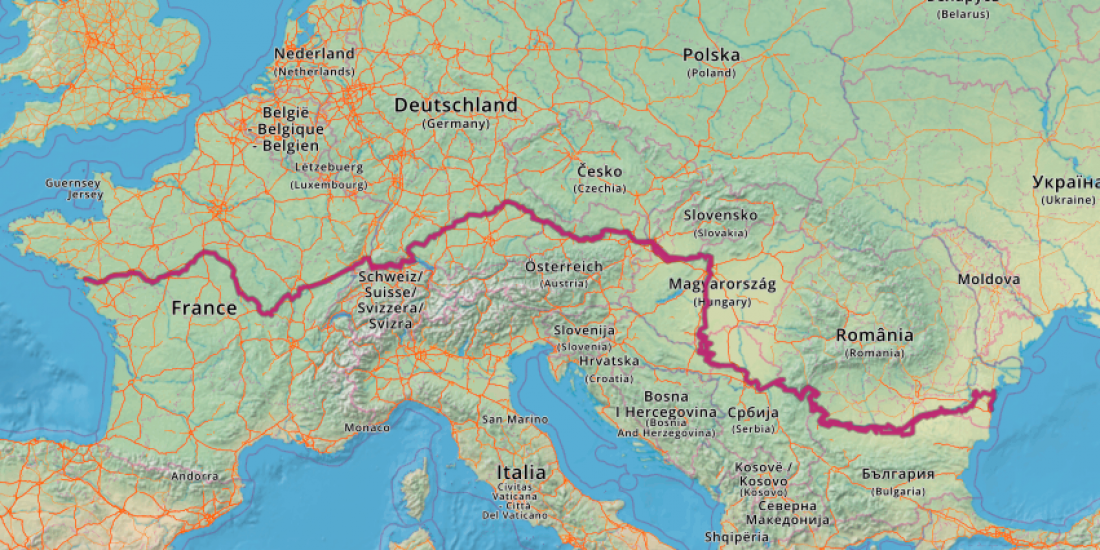
EuroVelo 6 — The Rivers Route
Quick facts (headline numbers — perfect for SEO snippets)
- Route name: EuroVelo 6 — Atlantic–Black Sea (The Rivers Route).
- Approximate length: ~3,600–4,700 km depending on chosen segments and official vs. developed tracks. (en.eurovelo.com)
- Countries crossed: 10+ (France → Switzerland → Germany → Austria → Slovakia → Hungary → Croatia/Serbia (sections vary) → Bulgaria → Romania) — multiple official variants exist. (Wikipedia)
- Major rivers used: Loire, Saône, Doubs, Rhine, and the full stretch of the Danube (one of the longest continuous river-route cycling sections in Europe). (en.eurovelo.com)
- Highlights & UNESCO sites: dozens of cultural highlights; official EuroVelo notes many UNESCO and protected sites along the route. (en.eurovelo.com)
Why EuroVelo 6 is special
EuroVelo 6 is affectionately called The Rivers Route because it links Europe’s great waterways — from the tidal Loire in western France, across central Europe via canals and the Rhine, then eastward along the mighty Danube to the Black Sea. That riverside logic makes EV6 unusually gentle, scenic, and accessible: long flat stretches, frequent towns and services, world-class heritage, and excellent camp / B&B infrastructure. It’s perfect for first-time long-distance cyclists, families, e-bike tours, and anyone who loves a mix of culture and gentle terrain. (en.eurovelo.com)
Full route overview — section by section
Note: EuroVelo maintains an official route that includes developed and developing parts. Local national partners publish the most accurate up-to-date maps and GPX files — always check the national pages before departure. (en.eurovelo.com)
Western France — Loire & Saône (Saint-Nazaire / Nantes → Nevers → Lyon / Mulhouse)
- Character: Château-dotted Loire Valley, vineyard villages, dedicated Loire à Vélo signage and fully developed bikeways in many parts. Great for wine & cultural stops. (Touraine Val de Loire)
Eastern France → Switzerland → Germany — Canal du Centre, Doubs, Rhine
- Character: Transition from the gentle Loire to canals, then the Rhine’s dramatic medieval towns and lakes (Basel → Lake Constance). The Rhine section mixes quiet riverside towpaths with high-quality paved cycleways. (en.eurovelo.com)
Germany / Austria (Donau / Danube Corridor: Donaueschingen → Passau → Linz → Vienna → Bratislava)
- Character: The Danube Cycle Path (Donauradweg) is the route’s crown: perfectly signposted, mostly flat, with café culture, abbeys (e.g., Melk), vineyards of the Wachau, and major cities like Vienna. The Austrian EV6 section is especially developed and popular. (en.eurovelo.com)
Central/Eastern Europe (Vienna → Budapest → Belgrade → Danube Gorge)
- Character: River towns, thermal spas, changing cuisine and architecture. Some sections are very well developed (Austria, Hungary); others are rural and less signed. (en.eurovelo.com)
Balkan & Danube Delta (Romania / Bulgaria → Constanța / Black Sea)
- Character: Wild river landscapes, deltas, and eastern European towns. Parts are still being developed — expect mixed surfaces and more rustic experiences in southern/eastern sections. (pro.eurovelo.com)
Distances & how long to plan
- Full route (end-to-end): plan 6–10 weeks at a relaxed pace (50–80 km/day average), or 3–5+ weeks for a focused section (e.g., Loire + Rhine, or Danube only). Estimated total kilometers reported vary (3,600–4,700 km) depending on exact lines and detours. (Wikipedia)
- Popular shorter itineraries:
- Loire Valley: 7–12 days (selectable stretches).
- Rhine (Basel → Lake Constance → Germany): 7–10 days.
- Danube Classic (Passau → Vienna): 5–7 days.
- Danube Extended (Passau → Budapest): 10–14 days.
- Danube East (Vienna → Constanța): 3–6 weeks depending on pace and routing.
Best time to ride
- Ideal months: late April–June and September–early October — mild weather, fewer crowds, and open services in most regions. High summer (July–Aug) can be hot on open sections (Loire plains, Hungary, Romania) and busier in Austria/Germany. In shoulder seasons expect some closures of minor services, but cooler cycling. (Always check local weather & river flood warnings for the Danube region.)
Surface, difficulty & rider suitability
- Terrain: Largely flat to gently rolling along riverbanks; occasional short climbs where routes leave valleys. Highway-style bike lanes exist near cities; parts of the Danube towpath and certain Balkan stretches may be unpaved gravel or compacted dirt.
- Difficulty: Easy to moderate. Lower stress for touring cyclists, families (on the well-developed western and central sections), and e-bikes. More rugged sections (remote Balkans) require touring/gravel-capable bikes. (en.eurovelo.com)
Top highlights & must-stop places
- France: Loire châteaux (Amboise, Chambord), Saône tranquil towns. (en.eurovelo.com)
- Switzerland/Germany: Basel, Rhine medieval towns, Lake Constance. (en.eurovelo.com)
- Austria (Danube): Passau (Germany border), Melk Abbey, Wachau Valley vineyards, Vienna. The Austrian Danube section (~380 km) is a highlight if you want a compact, scenic national route. (EuroVelo Österreich)
- Slovakia/Hungary: Bratislava, the Danube Bend near Visegrád, Budapest. (en.eurovelo.com)
- Balkans & Romania: Iron Gates (Djerdap Gorge), Danube Delta nature, Constanța / Black Sea coast — wild, remote, rewarding. (pro.eurovelo.com)
Sample itineraries (copyable & SEO-friendly)
10-day Danube Classic — Passau → Vienna (most popular)
- Day 1: Arrive Passau (rest & bike fit).
- Days 2–8: Daily ride 40–80 km — Passau → Schlögener Schlinge → Linz → Wachau (Melk, Dürnstein) → Krems → Tulln → Vienna.
- Day 9: Vienna sightseeing / repair day.
- Day 10: Departure by train.
Why: Flat, excellent signage, big cultural payoff, easy luggage transfers and train connections. (en.eurovelo.com)
3-week West-to-Central — Nantes → Basel → Vienna (Loire + Rhine + Danube intro)
- Combines Loire castles, Saône quiet roads, Rhine towns, and the Danube entry — a classic cross-section of EV6 character. Requires planning for cross-border logistics and GPX. (en.eurovelo.com)
Adventure Option — Vienna → Constanța (Black Sea), 3–6 weeks
- Longer, variable surfaces; unfolds Eastern Europe’s varied cultures, cuisines, and landscapes. Useful for experienced self-supported riders. (pro.eurovelo.com)
Practical planning — maps, GPX & navigation
- Official source: EuroVelo provides full-route GPX downloads and national pages with developed-track GPX. Always download the developed parts plus national GPX where available. (en.eurovelo.com)
- Local resources: National cycling organisations (France, Austria, Hungary, Romania) often maintain superior local maps, signage updates, and accommodation networks. Use Komoot / Outdooractive / local bike tourism sites for last-mile routing and accommodation. (Touraine Val de Loire)
Accommodation & logistics
- Options: hotels, guesthouses (pensions), cycle hostels, campsites, agritourism stays, and bike-specific B&Bs. Western & Central EV6 have dense options; eastern/delta sections can be sparse.
- Luggage transfer & guided tours: Many operators offer luggage-forwarding or fully guided package tours (daily hotels + luggage move), especially on the Danube & Loire. Search for Danube bike tours or Loire à Vélo tours for package options. (ExperiencePlus! Bicycle Tours)
Bikes, gearing & gear list (practical SEO content)
- Best bike types: touring bike, gravel/touring hybrid, or well-equipped e-bike (mid-drive, 500–750 Wh battery for long days). Road bikes are fine on paved sections but limit flexibility on gravel/unpaved stretches. Best gravel and road bike service probably will be here
- Essential gear: multi-tool, spare tubes/patch kit, pump/CO₂ or mini-pump, chain quick-links, lights, lock, panniers (waterproof), helmet, rain jacket, layered clothing, first-aid, phone + power bank, GPS device or phone mount.
- Packing tip: Pack light — services are frequent in western sections; carry extra spares and water for remote eastern stretches.
Borders, visas & transport
- Most EV6 countries are in the Schengen zone (France, Germany, Austria, Switzerland — note Switzerland is in Schengen but not EU), but as you head east you will leave Schengen (e.g., Romania, Serbia depending on route). Check current visa and entry rules for each nationality before travel. Trains in central Europe are bike-friendly but rules differ — reserve bike spaces on international trains (especially high-speed and night trains). Always verify bike carriage rules and ticketing locally. (Check national rail websites or EuroVelo national pages.) (eurovelo.com)
Safety & seasonal hazards
- Floods & river conditions: Rivers can flood or alter towpath usability; check local warnings in spring and after heavy rains.
- Traffic: Mostly low-traffic bikeways; be cautious near urban sections and busy ferry/bridge approaches.
- Health & services: Pharmacies and bike shops are common in towns — but sparse in remote eastern stretches; carry basic spares and a small medical kit.
Family, solo, and e-bike considerations
- Families: Choose well-developed sections (Loire or Danube Passau→Vienna/Budapest). Short daily distances, frequent stops, and towns with family services make these ideal.
- Solo riders: The route is safe but keep basic solo-travel precautions: share itinerary, keep charged comms, and have contingency plans.
- E-bikes: A huge benefit for multi-day trips. Plan charging: many towns offer tourist charging points; aim for 120–160 km/day range planning depending on battery and terrain.
Budget estimate (per day, variable)
- Low budget (camping, self-cater): €20–40 / day.
- Mid-range (guesthouses & cafes): €50–100 / day.
- Guided or hotel-based touring: €100–200+ / day (includes luggage transfers & some meals).
Costs vary wildly by country (Western Europe is more expensive than Balkan/Romania).
Top planning checklist (copy-paste friendly)
- Decide which section(s) of EV6 you want to ride.
- Download official EuroVelo GPX + national GPX files for your segment. (en.eurovelo.com)
- Book first & last night accommodation and a few key accommodation nights in peak season.
- Reserve bike space on trains as needed.
- Pack spares + suitable bike for surfaces (gravel-ready if heading east).
- Inform someone of your rough daily plan and carry offline maps.
Useful official & authoritative resources (where to check / cite)
- EuroVelo official pages — full route overview, downloadable GPX and national pages. (en.eurovelo.com)
- National EV6 pages (e.g., Austria, France, Switzerland) for best local info & developed sections. (EuroVelo Österreich)
- Detailed guides & blogs — many long-form trip reports and regional guides (Danube-specific guides are excellent for stage planning). (The Planet Edit)
Final tips & inspiration
- If you can only ride one classic, do Passau → Vienna for an unbeatable mix of vibe, scenery, and infrastructure. (en.eurovelo.com)
- Consider staging your trip: fly into Nantes / Paris for the Loire or Basel for the Rhine, finish in Budapest / Constanța depending on time.
- Keep flexible — the route’s charm is found in small towns, riverside cafés, and unexpected detours.
0 Comments